
Death Note. Bleach. Black Butler. The Shinigami has become one of the most iconic figures in Japanese popular culture — a supernatural being who presides over the moment of death, appearing to the dying, collecting souls, or simply watching from the threshold between life and whatever comes next.
But the word itself — 死神 — is two kanji pressed together, and each one tells you exactly what this creature is. There is no mystery in the name. It is one of the most direct in all of Japanese mythology.
Reading: し (shi)
Meaning: Death, to die
Stroke count: 6
死 is the kanji for death. It appears in some of the most significant vocabulary in the Japanese language — clinical, philosophical, and mythological. The character combines the radical 歹 (which suggests bones or remains) with 匕, an ancient form suggesting a person bent or fallen. The visual logic is stark: something once upright has collapsed.
Japanese learners often encounter this kanji early because it appears in so many important compound words:
In Japanese culture, 死 carries a social weight beyond its literal meaning. The number four (四, also read as shi) is considered unlucky in Japan precisely because it shares a sound with 死 — a phenomenon called kotodama, the belief that words carry spiritual power. Hospitals and hotels in Japan frequently skip the fourth floor for this reason.
Reading: かみ (kami) standalone, しん (shin) or じん (jin) in compounds
Meaning: God, deity, spirit, divine
Stroke count: 9
神 is one of the most important kanji in all of Japanese culture. It is the character for kami — the divine spirits at the heart of Shinto, Japan's indigenous spiritual tradition. Kami are not gods in the Western monotheistic sense. They are presences: in rivers, mountains, ancient trees, storms, and the forces that shape the world. The kanji 神 appears wherever the sacred meets the everyday in Japanese life.
You will find 神 woven through Japanese language and place names constantly:
In Shinto, kami are not remote or transcendent — they inhabit the world alongside humans. Which makes 死神 a particularly loaded compound. The god of death is not distant. It comes to you.
Put the two kanji together and 死神 reads exactly as:
死 (death) + 神 (god / spirit)
= Death god or God of death
Two characters. No ambiguity. The Shinigami is precisely what its name says — a divine or spirit-class being whose domain is death. The simplicity of the compound is part of what makes it so resonant. Unlike many yokai names that describe appearance or behaviour, 死神 describes essence.
The romanised form Shinigami follows the on'yomi (Chinese-derived) reading of 死 (shi) combined with the kun'yomi (Japanese native) reading of 神 (kami contracted to gami through rendaku — a sound change where the initial consonant of the second element voices itself when forming compounds).
That sound shift — kami becoming gami — is a small but important piece of Japanese phonology that appears in many compound words. 神 alone is kami. Attached to something before it, it softens to gami.
Once you know the kanji 神, you begin to see it everywhere in yokai and Shinto vocabulary — because so much of Japanese mythology is built around the concept of divine or spirit presence inhabiting the world.
The kanji 神 is a skeleton key to Japanese mythology. Learn it once and it unlocks names and concepts across the entire tradition — from the creation gods of the Kojiki to the shrine deities on every local corner of Japan.
Japanese attitudes toward death are layered in ways that a single creature article cannot fully capture. Shinto, Buddhism, and folk belief have woven together over centuries to create a rich and nuanced relationship between the living and the dead.
The Shinigami as a discrete supernatural being is relatively late in Japanese mythological history — influenced in part by contact with Western ideas about the Grim Reaper. Older Japanese conceptions of death focused less on a single death deity and more on the transition of the spirit (tamashii, 魂) and the proper rituals to guide the dead onward. The Obon festival, still observed across Japan every August, is built on the belief that ancestral spirits return to visit the living — a relationship with death that is relational rather than adversarial.
Understanding 死 as a kanji is a window into all of this. It is not merely vocabulary. It is a doorway into how Japanese culture has thought about mortality for over a thousand years.
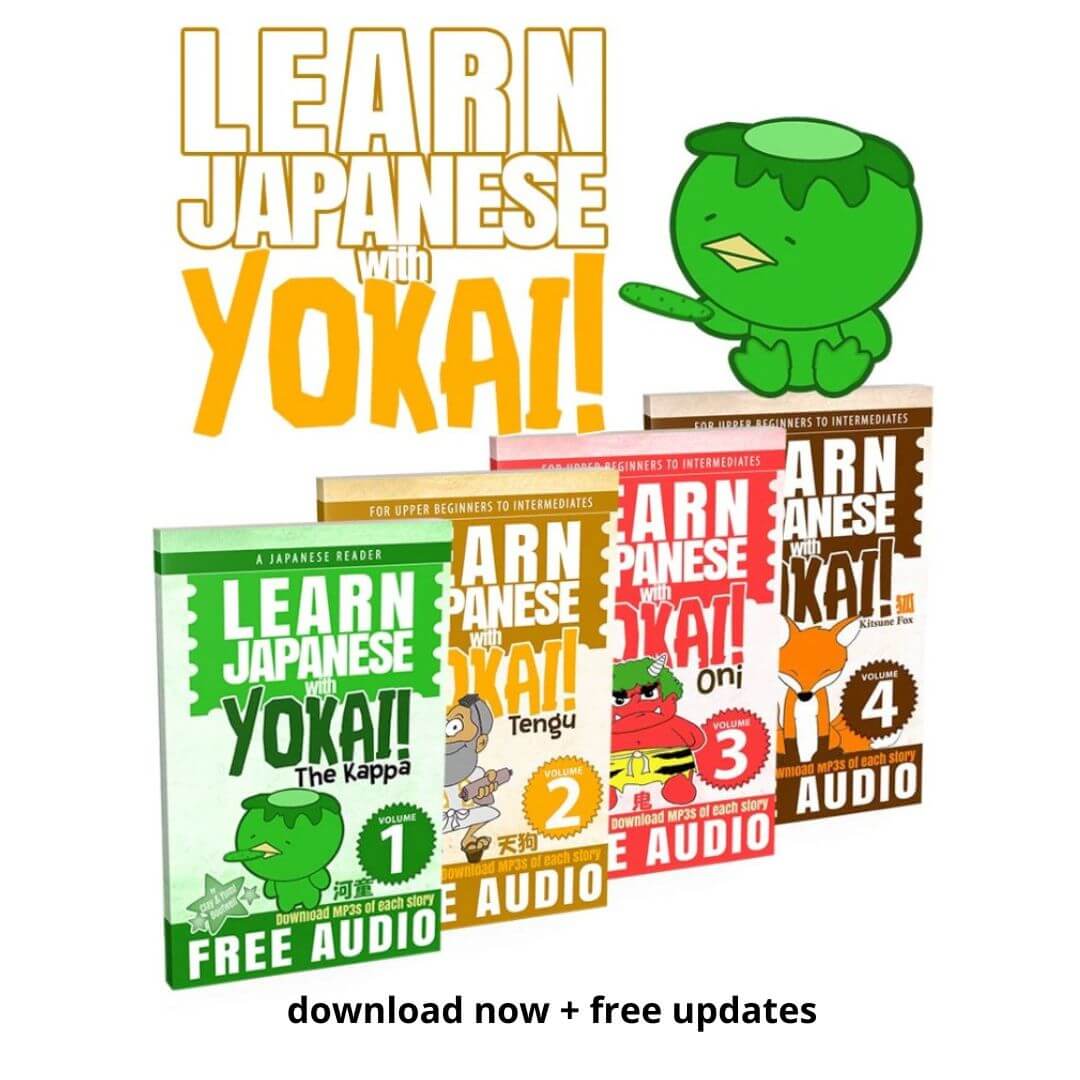
The Japan Shop's Learn Japanese with Yokai bundle uses Japanese mythology as the framework for learning real kanji, vocabulary, and grammar. If reading 死神 and understanding each character felt like something clicked — that feeling compounds rapidly when you work through it systematically.
The bundle includes vocabulary in context, kanji with stroke order and readings, audio pronunciation by native speakers, and Anki decks built around the creatures of Japanese folklore.
Kanji breakdowns, vocabulary in context, audio pronunciation, and Anki decks — all built around the yokai you already recognise.
The full mythology, cultural history, and folklore of the Shinigami — including how the concept evolved through Japanese history and its relationship to Buddhist beliefs about death.
Part of the JMC Learn Japanese series — reading Japanese mythology one creature at a time.
Yokai, oni, kitsune and spirits from folklore
Directory of Japanese board games and traditional games
Verified itch.io pixel-art gacha — fair odds, no ads
Reference guides for classic Japanese ham radios
Ancient joinery techniques of Japanese master craftsmen
Explore Japan's landmarks, shrines and hidden locations
SNES and Super Famicom collection tracker
Hoshi no Isan — a Japanese-aesthetic space RPG in development
Pixel art life sim MMO — start at zero, build your life
AI-powered educational stories for kids
Japanese-aesthetic design tokens & AI-ready UI prompts

Every day, one teaching. One moment of stillness.
Kanji, meaning, and a quiet reflection — rooted in the philosophy
behind Japan's forests, seasons, and sacred silences.
Content Warning: This website explores Japanese folklore and mythological beings—including yokai, oni, and other supernatural entities—that may be frightening to younger audiences or sensitive viewers. All material is presented for educational and cultural appreciation only. Viewer discretion is advised.
Parents and guardians are encouraged to preview content before sharing it with children. By continuing to use JapaneseMythicalCreatures.com, you acknowledge and accept this advisory.
Copyright © 2026 Japanese Mythical Creatures • All Rights Reserved.