

Kyūbi-no-kitsune (九尾の狐) literally means “nine-tailed fox” and is considered the most powerful form of a fox spirit in East Asian mythology.
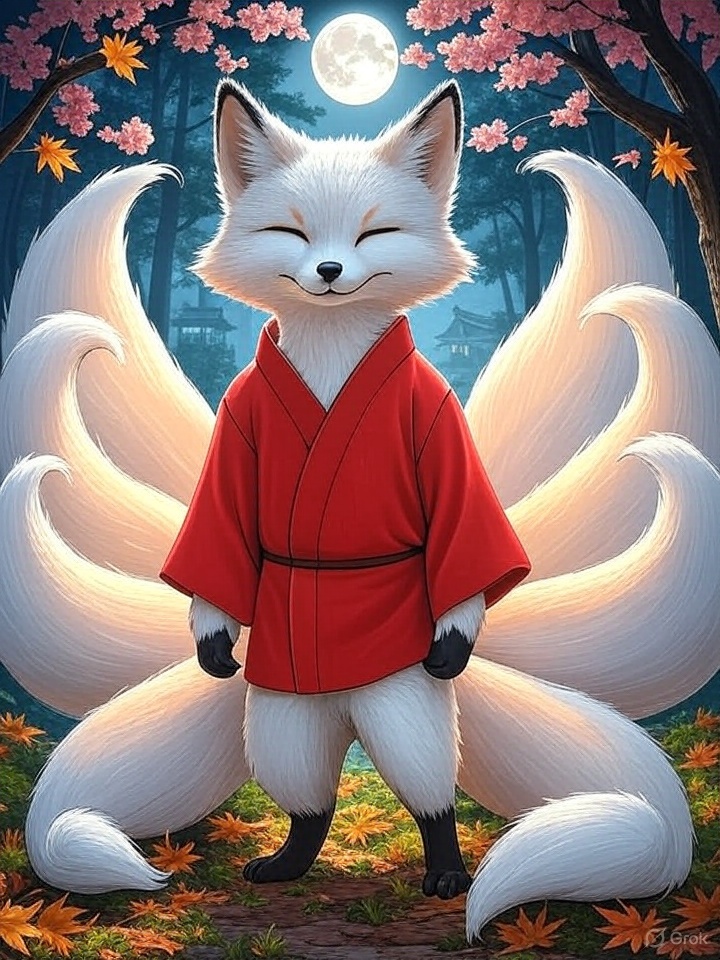
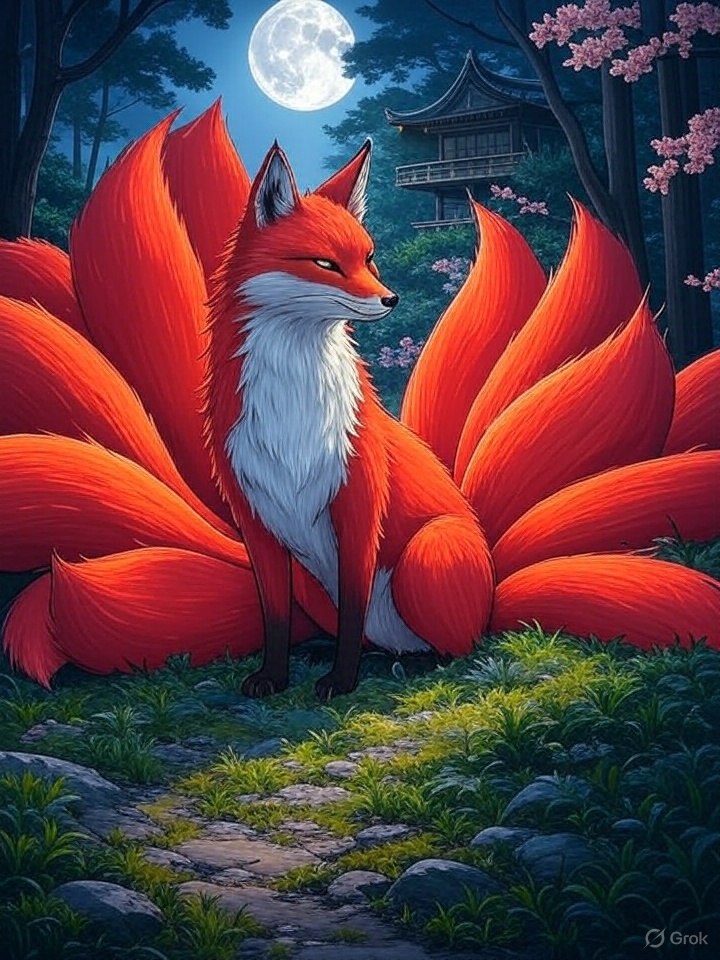
Kyūbi-no-kitsune holds significant cultural importance in Japanese mythology and folklore, representing ultimate magical power, spiritual transformation, and the dual nature of reverence and fear. The nine-tailed fox appears in art, literature, and modern media as a symbol of wisdom, longevity, and supernatural influence.
Illustrated folktale

In a secluded valley nestled between two great mountains, there lived an elderly priest named Kaito. For years, he had tended to the temple's gardens, coaxing the stone-weathered plants back to life with his gentle hands and soothing prayers. The villagers would often remark on his uncanny ability to communicate with nature itself.
One evening, as a storm rolled in from the east, Kaito ventured out into the valley, carrying a lantern made of intricately woven bamboo. He sought to tend to a particularly stubborn patch of azaleas, but instead stumbled upon an unexpected guest. A majestic Kyūbi-no-kitsune emerged from the driving rain, its nine tails streaming behind like banners in the tempest.
Kaito, awestruck by the creature's regal presence, felt his reverence wash over him like a cool breeze on a summer day. The kitsune regarded him with piercing eyes that shone like lanterns in the dark – two stars to guide sailors through treacherous waters. As she drew closer, her gaze danced across the priest's worn features, as if searching for some hidden pattern or key.
"Why do you disturb my peace?" Kaito asked, his voice barely above a whisper, lest he awaken some dormant power within the creature.
The kitsune, Tamamo-no-Mae herself, did not seem to hear him. Instead, she began to speak in a low, husky tone, weaving an entrancing melody from her words. "I seek balance," she said. "For too long, human hearts have been governed by fleeting desires, never stopping to consider the whispers of the land."
As Tamamo-no-Mae spoke, Kaito's perception shifted like a mirror reflecting a new moon. The rain-soaked landscape transformed into an intricate tapestry of connections – threads weaving together every living being within the valley, including himself.
In this ephemeral realm, Tamamo-no-Mae pointed out the roots of discord: humans' disregard for nature's subtle cues and their overreliance on fleeting power. Kaito listened, his heart absorbing her words like a sponge soaking in dew. The storm raged on outside, but within the priest, a stillness grew – an understanding that would stay with him long after the rain ceased.
Tamamo-no-Mae vanished as suddenly as she appeared, leaving behind only the faint scent of blooming cherry blossoms and Kaito's deepened connection to the land. The villagers later reported finding the elderly priest wandering the temple gardens at dawn, his eyes aglow with a knowing light – a beacon guiding those who sought balance between their desires and nature's subtle whispers.
Yokai, oni, kitsune and spirits from folklore
Directory of Japanese board games and traditional games
Verified itch.io pixel-art gacha — fair odds, no ads
Reference guides for classic Japanese ham radios
Ancient joinery techniques of Japanese master craftsmen
Explore Japan's landmarks, shrines and hidden locations
SNES and Super Famicom collection tracker
Hoshi no Isan — a Japanese-aesthetic space RPG in development
Pixel art life sim MMO — start at zero, build your life
AI-powered educational stories for kids
Japanese-aesthetic design tokens & AI-ready UI prompts

Every day, one teaching. One moment of stillness.
Kanji, meaning, and a quiet reflection — rooted in the philosophy
behind Japan's forests, seasons, and sacred silences.
Content Warning: This website explores Japanese folklore and mythological beings—including yokai, oni, and other supernatural entities—that may be frightening to younger audiences or sensitive viewers. All material is presented for educational and cultural appreciation only. Viewer discretion is advised.
Parents and guardians are encouraged to preview content before sharing it with children. By continuing to use JapaneseMythicalCreatures.com, you acknowledge and accept this advisory.
Copyright © 2026 Japanese Mythical Creatures • All Rights Reserved.