

Zunbera-bō (ずんべら坊) is a regional or colloquial name for the noppera-bō, a spirit known for having a completely smooth, featureless face.
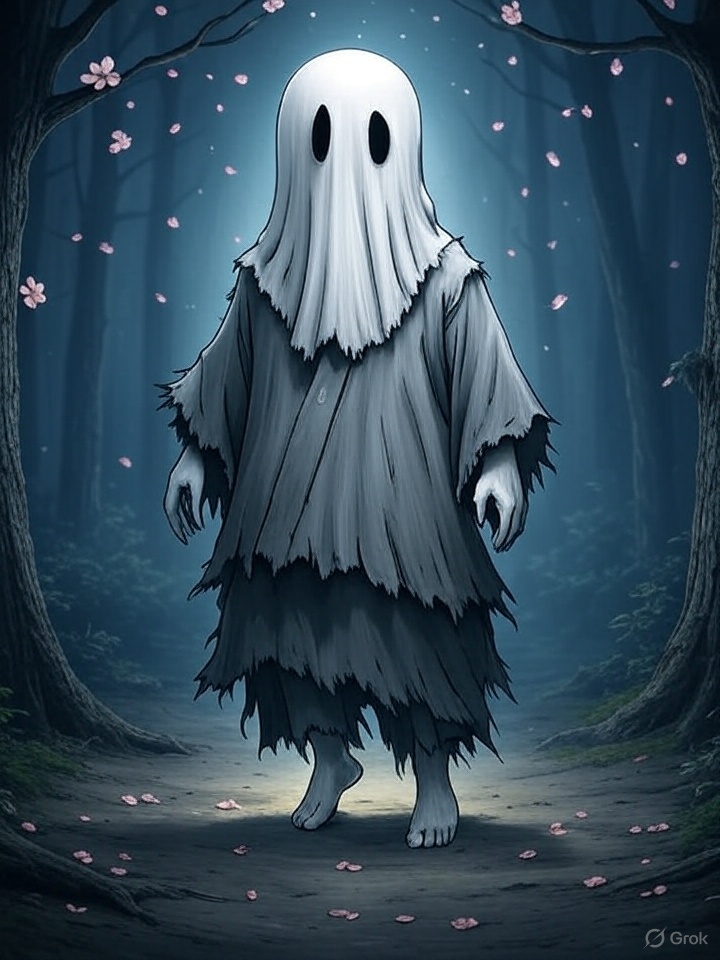
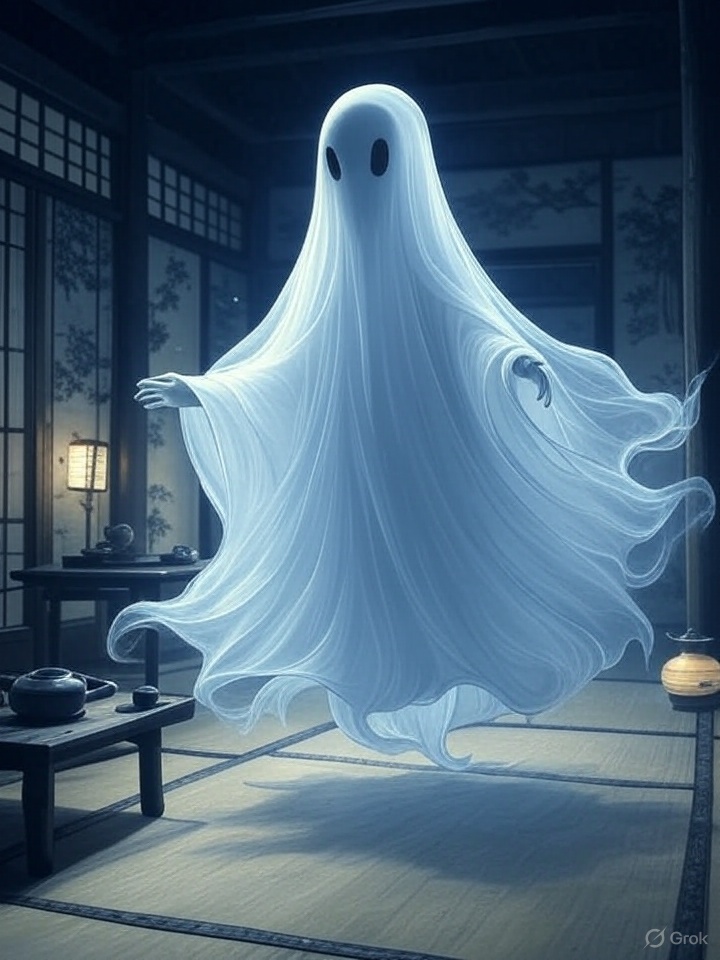
Illustrated folktale

In the quiet village of Akakawa, where the misty dawn often lingered into morning, there lived a young man named Kaito. He was a skilled weaver, renowned for his intricate patterns and vibrant hues on silk fabrics. His workshop stood near the village's sacred shrine, its stone torii gate looming over the thatched roofs of the homes.
Kaito was a proud soul, admired by all for his exceptional talent. However, beneath his charming smile and quick wit, he harbored an obsession with material wealth and social standing. The villagers, aware of his growing vanity, whispered among themselves about Kaito's increasing detachment from the simple ways of their community.
One autumn evening, as twilight shrouded Akakawa in a soft, golden light, Kaito strolled along the winding riverbank that flowed gently past the village cemetery. He had promised himself a brief respite from his loom, to clear his mind and breathe in the crisp night air. His footsteps quiet on the damp earth, he wandered, lost in thought.
Suddenly, as if conjured by the shadows themselves, two figures emerged from the darkness. They appeared as ordinary travelers, their faces obscured by hoods pulled low over their brows. Kaito, not paying them much heed, continued his stroll, humming a soft tune. The pair followed closely behind, their pace matching his.
It was on the outskirts of the cemetery, near an ancient stone statue of a Buddhist saint, that they halted alongside him. One of the figures, its features indistinguishable, gazed intently into Kaito's eyes. A fleeting sense of unease prickled at the back of his neck, but he dismissed it as mere nervousness.
The figure beside it then reached out with a hand and gently turned Kaito's face toward them. As their eyes met, the darkness seemed to coalesce around the young weaver, filling him with an unearthly coldness. His heart faltered in its beat, his mind recoiling from the visage that stared back at him – completely blank, featureless.
The two figures vanished as suddenly as they appeared, leaving Kaito shaken and bewildered. He stumbled back to his workshop, the encounter still etched vividly in his memory. As he sat before his loom, unable to muster the will to weave, he began to see himself through their empty visage: lost, faceless.
The vision did not pass quickly from his mind. Days turned into weeks as Kaito wandered, haunted by the blank face that now lurked within him. He could no longer bring himself to create beauty, for every thread and color only served to remind him of the emptiness he had glimpsed. His fingers moved listlessly over the loom, weaving nothing but confusion.
One morning, as the villagers prepared for their daily lives, they noticed Kaito standing before his workshop, a small wooden box in hand. He carried it out of the village and into the cemetery, where the two figures had first revealed themselves to him. There, amidst the shadows that clung to the ancient statues, he opened the box and cast into its darkness all the silks, threads, and dyes that had once brought him such joy.
As the wind dispersed his worldly possessions, a subtle transformation took hold within Kaito. His eyes, once bright with pride, began to see the world through new eyes – the eyes of humility. From that day forward, he walked among the villagers as an ordinary man, no longer bound by vanity and selfishness.
Yokai, oni, kitsune and spirits from folklore
Directory of Japanese board games and traditional games
Verified itch.io pixel-art gacha — fair odds, no ads
Reference guides for classic Japanese ham radios
Ancient joinery techniques of Japanese master craftsmen
Explore Japan's landmarks, shrines and hidden locations
SNES and Super Famicom collection tracker
Hoshi no Isan — a Japanese-aesthetic space RPG in development
Pixel art life sim MMO — start at zero, build your life
AI-powered educational stories for kids
Japanese-aesthetic design tokens & AI-ready UI prompts

Every day, one teaching. One moment of stillness.
Kanji, meaning, and a quiet reflection — rooted in the philosophy
behind Japan's forests, seasons, and sacred silences.
Content Warning: This website explores Japanese folklore and mythological beings—including yokai, oni, and other supernatural entities—that may be frightening to younger audiences or sensitive viewers. All material is presented for educational and cultural appreciation only. Viewer discretion is advised.
Parents and guardians are encouraged to preview content before sharing it with children. By continuing to use JapaneseMythicalCreatures.com, you acknowledge and accept this advisory.
Copyright © 2026 Japanese Mythical Creatures • All Rights Reserved.