

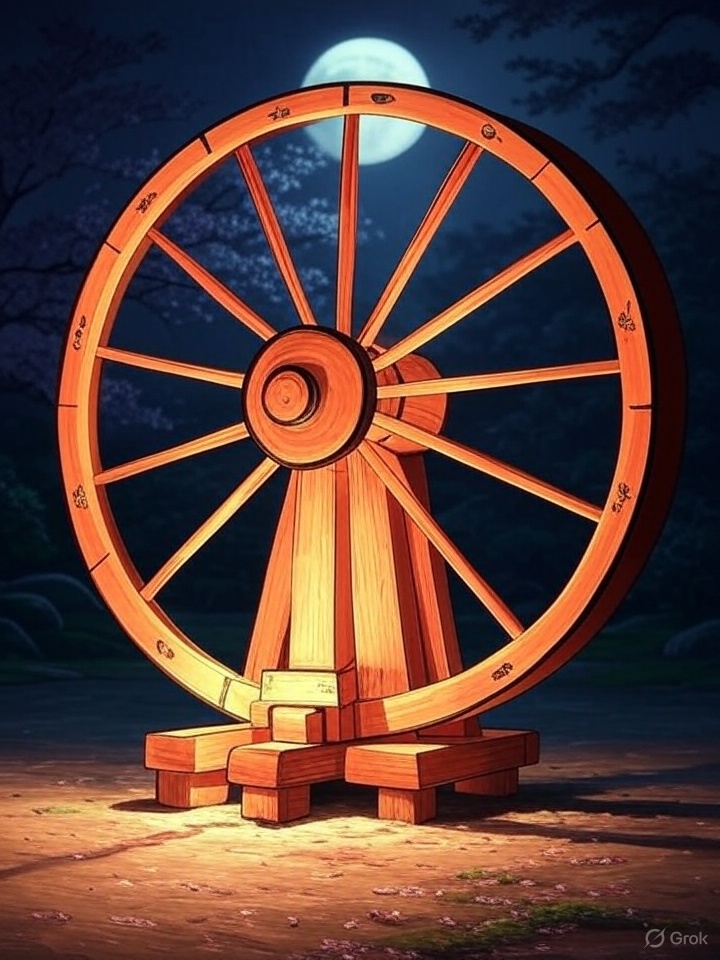
Wanyūdō (輪入道) means “wheel monk.” The name reflects its terrifying appearance—a flaming wheel bearing the tortured face of a monk or sinner.
Illustrated folktale

In the depths of autumn, when the moon hung low in the midnight sky, the villagers would huddle around their hearths, sharing tales of the Wanyūdō's nocturnal wanderings. They said it was a harbinger of doom, a spirit born from the tormented soul of a man who had lived a life of cruelty and malice.
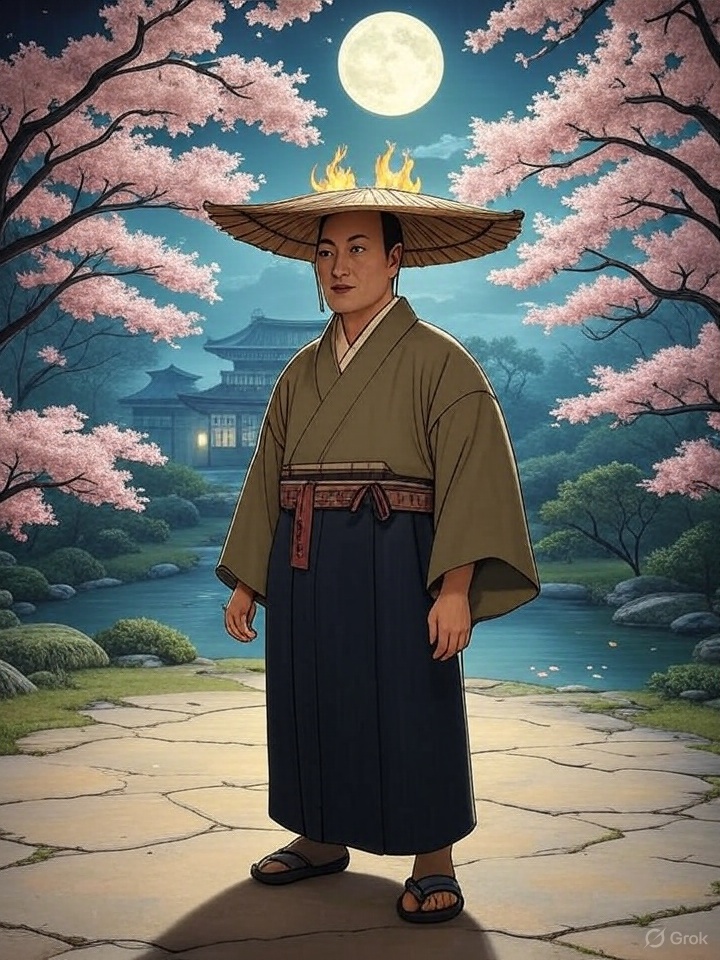
One such villager, an old monk named Kaito, would often listen to these tales with a mix of fascination and trepidation. He had spent years studying the ancient scriptures, searching for answers about the nature of suffering and redemption. As he sat by the fire, the wind outside howling like a chorus of restless spirits, Kaito felt an inexplicable connection to the Wanyūdō's story.
That night, as the villagers' voices faded into the darkness, Kaito stepped out into the chill air. The moon cast long shadows across the deserted road, and he felt a shiver run down his spine. He closed his eyes, took a deep breath, and began to walk towards the east, where the Wanyūdō was said to appear.
The wind carried the scent of burning wood and charred earth, growing stronger with each step. Kaito's heart pounded in his chest as he quickened his pace. Suddenly, a fierce gust swept through the air, extinguishing the flickering flames that danced in the nearby homes' windows. In their place, a burning oxcart wheel materialized on the road ahead.
The Wanyūdō's face contorted in agony, its human features twisted in a scream of torment. Flames licked at the edges of Kaito's vision, as if the very darkness itself was being consumed by the spirit's writhing presence. For an instant, their eyes met – the monk's calm and contemplative, the Wanyūdō's wild and despairing.
As their gazes locked, a searing pain shot through Kaito's chest. He felt his own soul tremble, as if it were being pulled from his body by unseen hands. A vision flashed before him: the village elder, once a cruel man who had tormented countless animals for sport; now a wretched spirit, doomed to ride the Wanyūdō through eternity.
Kaito stumbled back, gasping for breath. When he opened his eyes again, the Wanyūdō was gone. The flames that had surrounded it dwindled and died, leaving behind only wisps of smoke on the wind. In their place, Kaito felt a sense of compassion, as if the monk's heart had been opened to the suffering of others.
As he made his way back to the village, the villagers' whispers followed him: "The Wanyūdō has claimed another soul...". But this time, there was no fear in their voices. Only a quiet understanding that some spirits were destined to roam the earth, forever trapped between worlds, seeking solace and redemption for their past transgressions.
Kaito returned to his hut, lost in thought. In the darkness, he whispered a silent prayer for the village elder's tormented soul, now bound to the Wanyūdō's chariot of fire. As he lay down on his futon, the wind outside grew still, and an eerie silence settled over the village. The villagers knew that in this quiet night, another lesson had been imparted – a reminder of the karmic balance that governed all lives, and the possibility of redemption hidden within every soul's darkness.
Yokai, oni, kitsune and spirits from folklore
Directory of Japanese board games and traditional games
Verified itch.io pixel-art gacha — fair odds, no ads
Reference guides for classic Japanese ham radios
Ancient joinery techniques of Japanese master craftsmen
Explore Japan's landmarks, shrines and hidden locations
SNES and Super Famicom collection tracker
Hoshi no Isan — a Japanese-aesthetic space RPG in development
Pixel art life sim MMO — start at zero, build your life
AI-powered educational stories for kids
Japanese-aesthetic design tokens & AI-ready UI prompts

Every day, one teaching. One moment of stillness.
Kanji, meaning, and a quiet reflection — rooted in the philosophy
behind Japan's forests, seasons, and sacred silences.
Content Warning: This website explores Japanese folklore and mythological beings—including yokai, oni, and other supernatural entities—that may be frightening to younger audiences or sensitive viewers. All material is presented for educational and cultural appreciation only. Viewer discretion is advised.
Parents and guardians are encouraged to preview content before sharing it with children. By continuing to use JapaneseMythicalCreatures.com, you acknowledge and accept this advisory.
Copyright © 2026 Japanese Mythical Creatures • All Rights Reserved.