

Nuppefuhofu (ぬっぺふほふ) is an odd yokai name believed to mimic a slurred or muttered phrase, matching its blobby, slumped appearance.
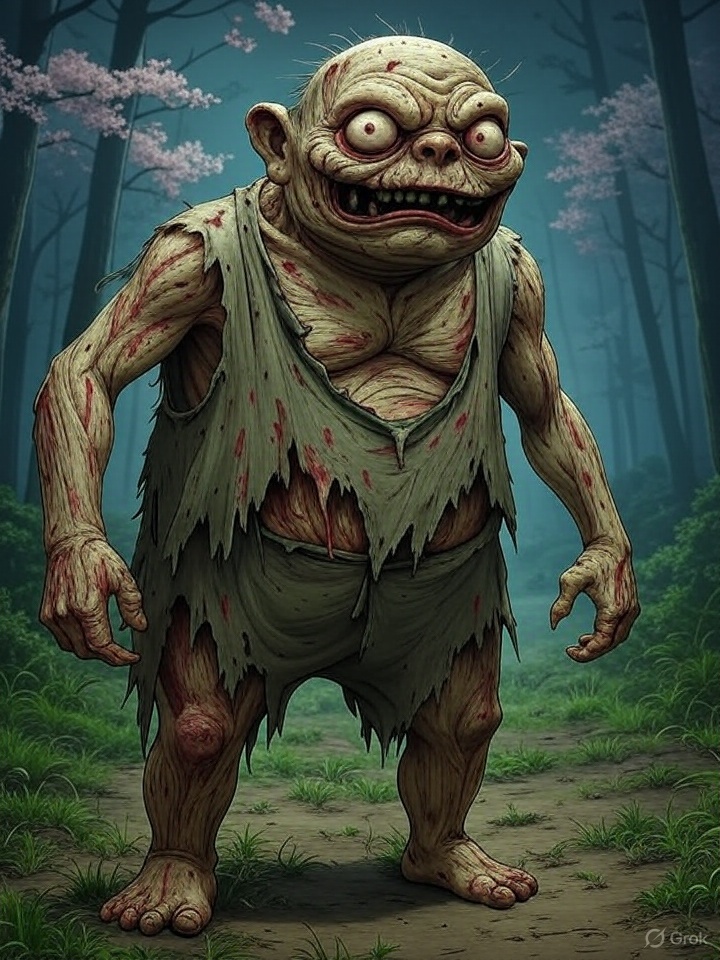
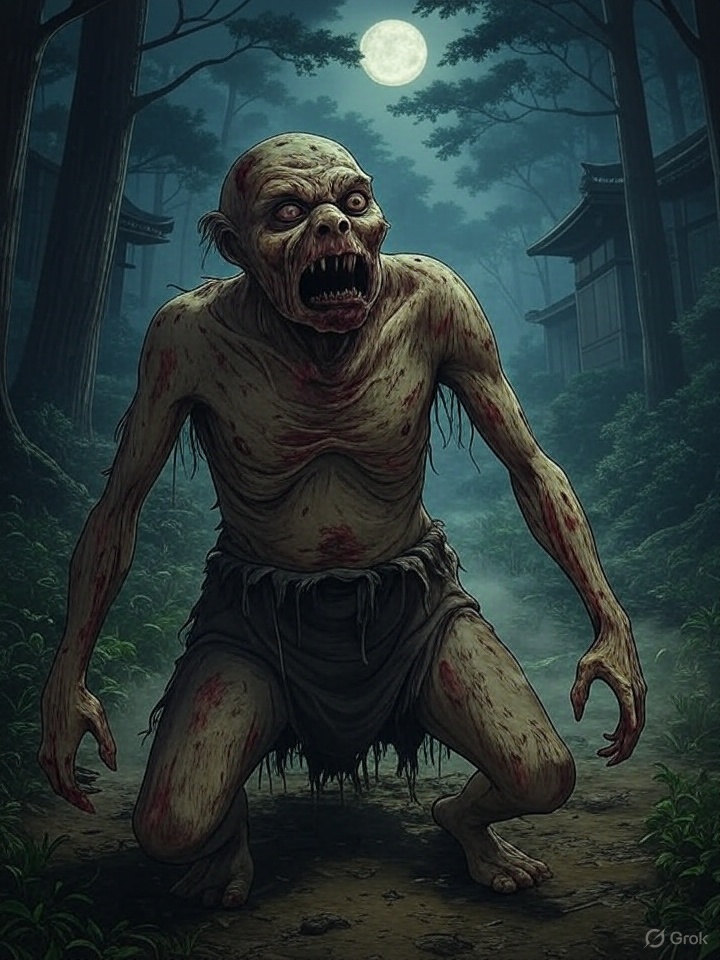
Illustrated folktale

In the depths of winter's chill, when snowdrifts shrouded the forgotten village of Kakure, a lone traveler stumbled upon the crumbling temple of Kiyomi. Weeds burst from its cracked stones, as if seeking to reclaim the place for nature's own purposes. The wind howled through the empty halls, a mournful dirge that echoed through the stillness.
Our traveler, a young monk named Kenji, had wandered into these forsaken lands in search of solace and renewal. For months, he'd tended to his mentor's grave, pouring tears onto its stone pedestal, but now he felt an insatiable longing for solitude and quiet contemplation. Kiyomi Temple beckoned with its ruined beauty, a sanctuary hidden from the world.
As Kenji ventured deeper into the temple's decaying heart, he chanced upon the Nuppefuhofu. At first, he thought it but a heap of discarded rags, or perhaps a bloated corpse left to rot in the forgotten recesses. But as his eyes adjusted to the dim light, he beheld the unshapely form – a mass of sagging flesh with no discernible features, save for two empty sockets that seemed to stare into Kenji's very soul.
The Nuppefuhofu emitted a stench so pungent it made Kenji's stomach churn. He recoiled, covering his mouth and nose, but his feet seemed rooted to the spot. The creature wandered past him, its pace as slow as the crawling mist that clung to its surface. Its very presence felt like an affront to the sacred.
Yet, in a fleeting moment of introspection, Kenji sensed something within the Nuppefuhofu's decaying mass – an aura of ancient knowledge and forgotten wisdom. The air seemed heavy with secrets, whispers from the temple's crumbling stones. It was as if the creature embodied the impermanence that Buddhist scriptures so eloquently spoke of: the transience of life, the inevitability of decay.
Kenji spent many sleepless nights beside Kiyomi Temple, observing the Nuppefuhofu's aimless wanderings. He came to understand its loneliness – not in a way that evoked sympathy, but rather an acknowledgment of its inherent place within this desolate landscape. In those moments of stillness, Kenji grasped the value of impermanence: how each being, no matter how repulsive or forgotten, contributes to the ever-changing tapestry of existence.
When spring finally brought warmth and life back to Kakure Village, Kenji departed, leaving behind only his written prayers in the temple's crumbling hall. The Nuppefuhofu remained, its presence a haunting reminder of the transience that lay beneath every fleeting moment.
Yokai, oni, kitsune and spirits from folklore
Directory of Japanese board games and traditional games
Verified itch.io pixel-art gacha — fair odds, no ads
Reference guides for classic Japanese ham radios
Ancient joinery techniques of Japanese master craftsmen
Explore Japan's landmarks, shrines and hidden locations
SNES and Super Famicom collection tracker
Hoshi no Isan — a Japanese-aesthetic space RPG in development
Pixel art life sim MMO — start at zero, build your life
AI-powered educational stories for kids
Japanese-aesthetic design tokens & AI-ready UI prompts

Every day, one teaching. One moment of stillness.
Kanji, meaning, and a quiet reflection — rooted in the philosophy
behind Japan's forests, seasons, and sacred silences.
Content Warning: This website explores Japanese folklore and mythological beings—including yokai, oni, and other supernatural entities—that may be frightening to younger audiences or sensitive viewers. All material is presented for educational and cultural appreciation only. Viewer discretion is advised.
Parents and guardians are encouraged to preview content before sharing it with children. By continuing to use JapaneseMythicalCreatures.com, you acknowledge and accept this advisory.
Copyright © 2026 Japanese Mythical Creatures • All Rights Reserved.