
Mōryō (魍魎) refers to malevolent spirits that haunt graveyards and mountains, often depicted as corpse-eating demons.
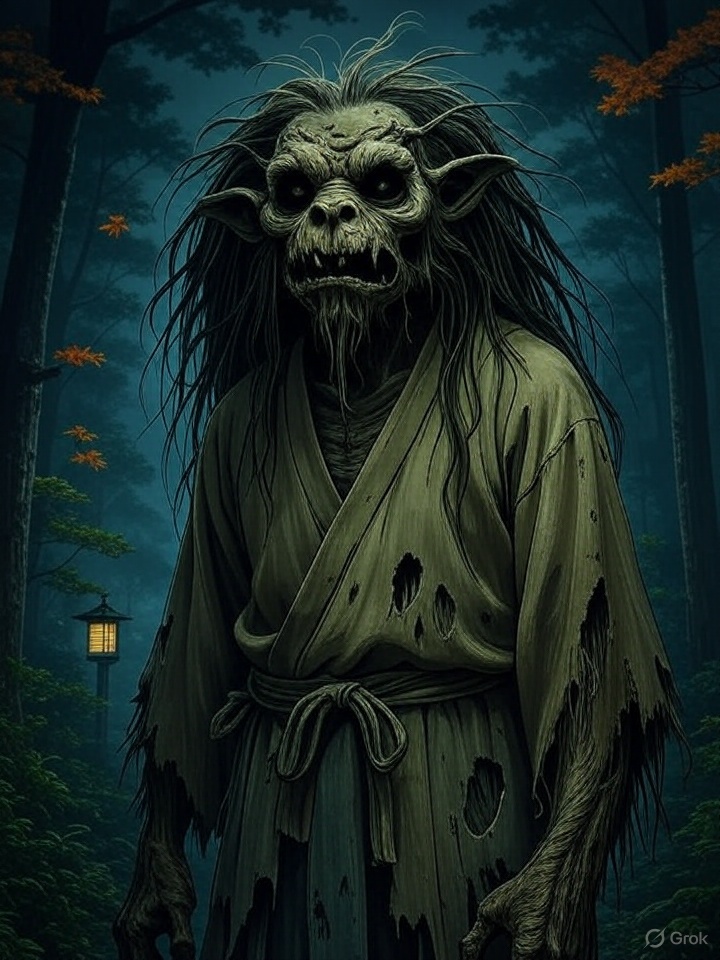
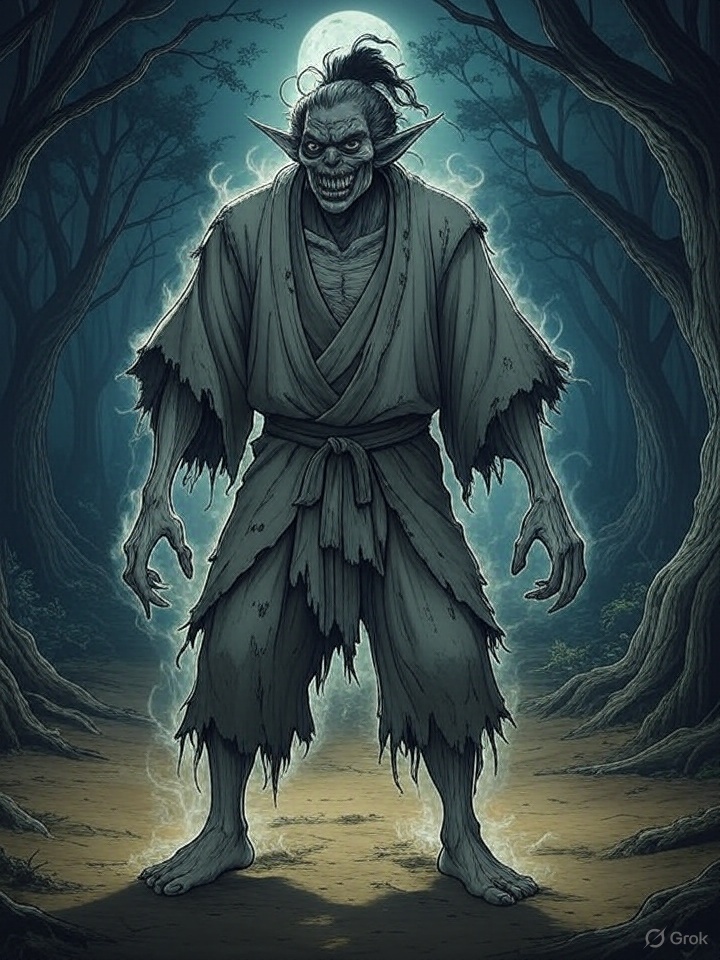
Illustrated folktale

In the shadowy depths of the ancient graveyard, where the wind whispered secrets to the stones, there lived a Mōryō named Kage. His was a form unlike any other, with skin as dark as the night sky and eyes that glowed like embers from a long-dead fire. His back hunched beneath his shoulders, as if the weight of the dead bore down upon him.
The villagers avoided Kage's realm, fearing the madness and illness that befell those who crossed paths with him. But one autumn evening, a young girl named Emiko wandered into the graveyard, seeking to pay her respects to her late grandmother. The sun had set, casting long shadows across the tombstones, but Emiko felt drawn to Kage's presence.
As she walked among the gravestones, Kage emerged from the darkness, his eyes fixed upon her. His ears perked up, and he took a step closer, his claws scraping against the stone path. Emiko tried to flee, but her feet seemed rooted to the spot. The Mōryō's gaze held a deep sadness, as if he too felt trapped between worlds.
"Why do you come here, little one?" Kage asked in a voice that sent shivers down Emiko's spine. His words were laced with an otherworldly sorrow, and she sensed that he was not merely a creature of death, but a guardian of sorts – a sentinel tasked with keeping the secrets of the graveyard.
Emiko explained her visit, and Kage listened intently, his ears twitching with understanding. As they spoke, the wind picked up, carrying the whispers of the dead on its sighs. The air grew thick with an unsettling energy, as if the very fabric of life and death was being torn apart.
Kage's form began to shift, his body contorting into a grotesque parody of humanity. His eyes burned brighter, illuminating the dark recesses of the graveyard. Emiko stumbled backward, but her feet remained rooted, as if bound by an unseen force.
In that moment, Kage revealed a terrible truth: the villagers' fear and disrespect for the dead had awakened him from his slumber. The Mōryō's hunger was not merely for flesh, but for proper reverence – for the rituals and prayers that acknowledged the passage of life into death. Without these tributes, he was forced to dig up graves, to feast on the remains of those who lay unremembered.
As Emiko listened, a weight settled upon her shoulders, as if she too bore the burden of Kage's hunger. She vowed to carry the Mōryō's message back to the village, to teach them the importance of respecting the dead and honoring their memories. And so, with a newfound understanding, Emiko left the graveyard, leaving Kage to his vigil.
From that day on, the villagers treated the graveyard with greater reverence, placing flowers and food offerings upon the tombstones. The Mōryō's presence diminished, his hunger sated by the respect shown to those who had passed into the next world. And Emiko visited her grandmother's grave often, leaving a small token of remembrance for Kage – the guardian of the graveyard's secrets, and the keeper of its sorrowful heart.
Yokai, oni, kitsune and spirits from folklore
Directory of Japanese board games and traditional games
Verified itch.io pixel-art gacha — fair odds, no ads
Reference guides for classic Japanese ham radios
Ancient joinery techniques of Japanese master craftsmen
Explore Japan's landmarks, shrines and hidden locations
SNES and Super Famicom collection tracker
Hoshi no Isan — a Japanese-aesthetic space RPG in development
Pixel art life sim MMO — start at zero, build your life
AI-powered educational stories for kids
Japanese-aesthetic design tokens & AI-ready UI prompts

Every day, one teaching. One moment of stillness.
Kanji, meaning, and a quiet reflection — rooted in the philosophy
behind Japan's forests, seasons, and sacred silences.
Content Warning: This website explores Japanese folklore and mythological beings—including yokai, oni, and other supernatural entities—that may be frightening to younger audiences or sensitive viewers. All material is presented for educational and cultural appreciation only. Viewer discretion is advised.
Parents and guardians are encouraged to preview content before sharing it with children. By continuing to use JapaneseMythicalCreatures.com, you acknowledge and accept this advisory.
Copyright © 2026 Japanese Mythical Creatures • All Rights Reserved.