

Koma-inu (狛犬) means "Korean dog" or "foreign dog" and refers to the mythical lion-dog statues that guard temples and shrines in Japan.
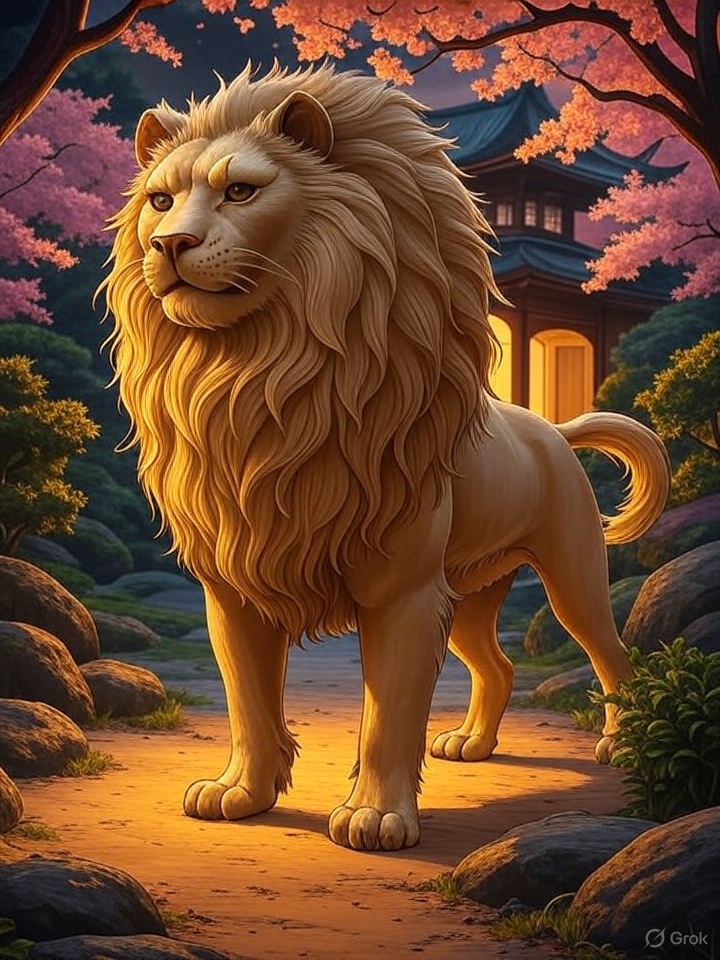
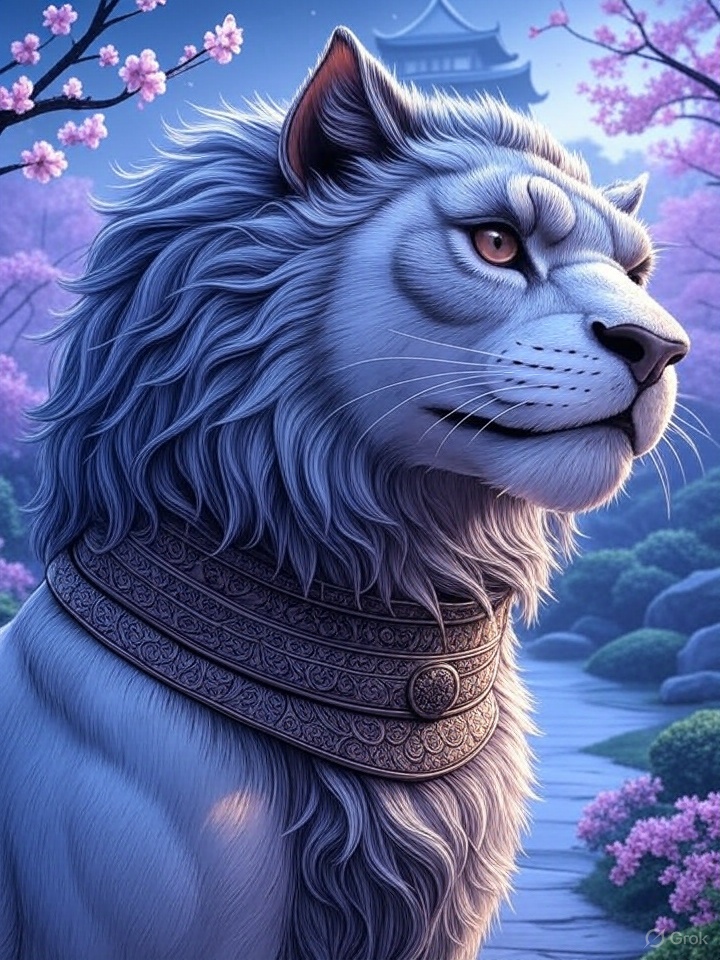
Illustrated folktale

In the quiet hours before dawn, when the moon's silver glow still lingered on the mist-shrouded mountains, two companions stood sentinel at the temple gates. Their stately forms, carved from living rock, seemed to embody the very essence of steadfastness. For as long as anyone could remember, these Koma-inu, guardian lions, had watched over the sacred precincts, their piercing gazes warning off malevolent spirits and protecting the faithful who sought refuge within.
A gentle breeze rustled the leaves of the nearby sakura trees, causing the statue with its open mouth to shift ever so slightly. The one with closed lips stood motionless, its horn-like protrusion glinting in the fading moonlight like a promise of protection. The wind whispered secrets through the temple's wooden beams, and the Koma-inu seemed to listen intently, their eyes gleaming with an otherworldly intelligence.
As the first light of dawn crept over the horizon, a young traveler, lost and weary from the night's journey, stumbled upon the temple gates. His footsteps echoed through the stillness, disturbing the morning calm. The Koma-inu regarded him gravely, their stances unyielding as they evaluated his intentions.
The open-mouthed statue spoke not a word, yet its presence seemed to enfold the traveler in a warm, golden light. It was as if the guardian lion's very breath contained the promise of new beginnings. The closed-lipped companion, on the other hand, remained stern and unyielding, its horn-like protrusion radiating an aura of judgment.
The young traveler, sensing their scrutiny, bowed deeply before the Koma-inu, his forehead touching the stone floor. He whispered a prayer, seeking guidance and protection for his uncertain journey ahead. The guardians regarded him with an unwavering gaze, weighing his sincerity and purpose.
As the traveler stood up, brushing off his robes, he felt an unseen force stirring within himself. His steps, once hesitant, now seemed guided by a newfound sense of direction. The Koma-inu, sensing the shift in his energy, inclined their heads in unison, as if acknowledging a sacred bond had been forged between them.
As the sun rose higher, bathing the temple grounds in a warm, golden light, the traveler continued on his way, his heart filled with a sense of hope and renewal. The Koma-inu watched him depart, their stances unchanged yet their presence imbued with an unseen power. They stood as sentinels not only against evil spirits but also as guardians of the sacred threshold between the worlds.
In that instant, it seemed, they embodied both the beginning and the end – the open mouth breathing life into the world, while the closed lips sealed away its shadows. As the traveler vanished into the dawn's misty veil, the Koma-inu remained steadfast, vigilant and watchful, their spiritual power a steady heartbeat in the temple's quiet core.
Yokai, oni, kitsune and spirits from folklore
Directory of Japanese board games and traditional games
Verified itch.io pixel-art gacha — fair odds, no ads
Reference guides for classic Japanese ham radios
Ancient joinery techniques of Japanese master craftsmen
Explore Japan's landmarks, shrines and hidden locations
SNES and Super Famicom collection tracker
Hoshi no Isan — a Japanese-aesthetic space RPG in development
Pixel art life sim MMO — start at zero, build your life
AI-powered educational stories for kids
Japanese-aesthetic design tokens & AI-ready UI prompts

Every day, one teaching. One moment of stillness.
Kanji, meaning, and a quiet reflection — rooted in the philosophy
behind Japan's forests, seasons, and sacred silences.
Content Warning: This website explores Japanese folklore and mythological beings—including yokai, oni, and other supernatural entities—that may be frightening to younger audiences or sensitive viewers. All material is presented for educational and cultural appreciation only. Viewer discretion is advised.
Parents and guardians are encouraged to preview content before sharing it with children. By continuing to use JapaneseMythicalCreatures.com, you acknowledge and accept this advisory.
Copyright © 2026 Japanese Mythical Creatures • All Rights Reserved.