

Kanedama (金玉) means “money ball” or “spirit of gold,” often considered an embodiment of fortune and wealth.
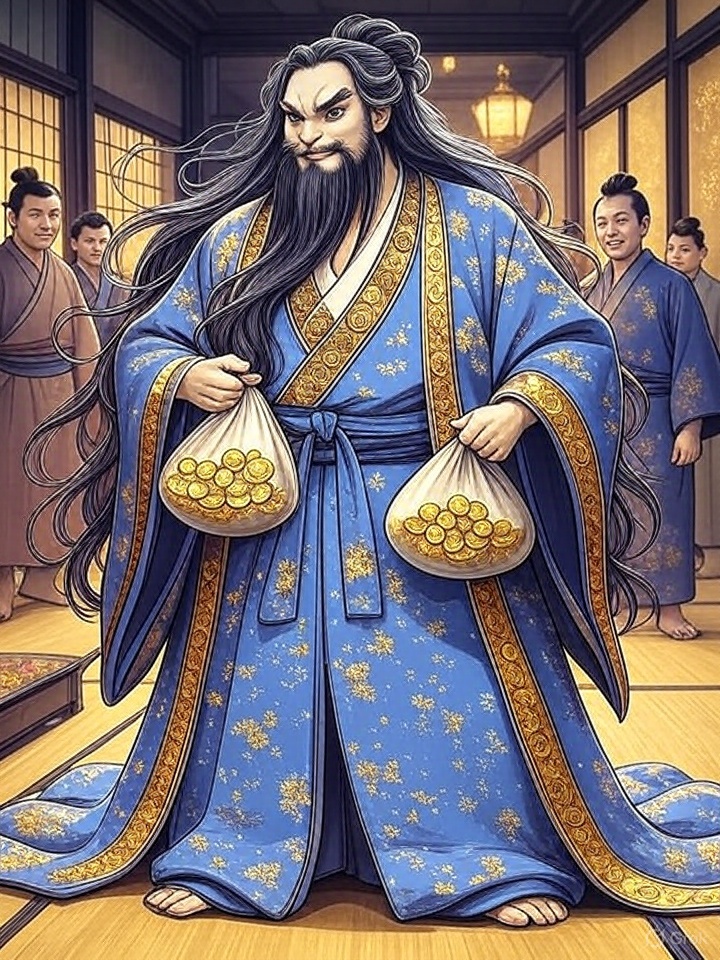
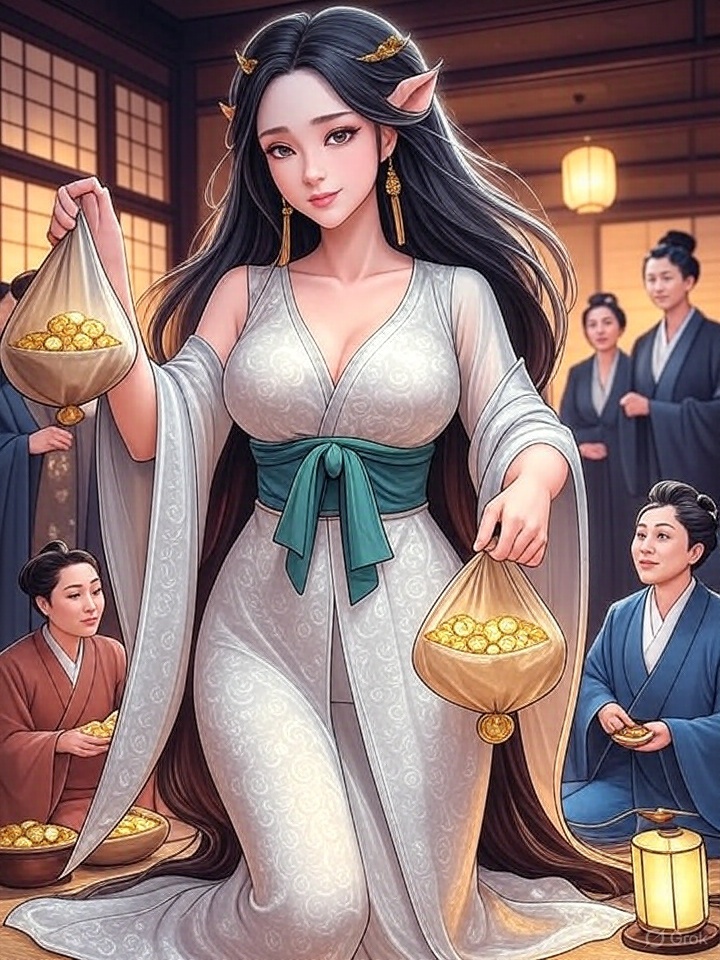
Illustrated folktale

In a small village nestled between two great mountains, there lived a young merchant named Kaito. He was known for his honest heart and fair trade, which brought him prosperity and respect from his neighbors. One evening, as he sat in his humble shop, counting his daily earnings under the soft glow of candles, a faint hum caught his attention.
Outside, beneath the waning moon, the air shimmered with an otherworldly light. The Kanedama, a golden orb, had descended upon the village. Its gentle glow illuminated the darkness, drawing Kaito's gaze. As he watched, entranced, protective spirits coalesced around the sphere, forming a delicate barrier against any who would seek to claim its treasure.
Kaito felt an insatiable longing stir within him. He knew that finding the Kanedama was said to grant immense wealth, but also spoke of trials and challenges that only the pure-hearted could overcome. The merchant's mind wrestled with doubts: Could he resist the temptation of the Kanedama's promise? Would his own desires consume him?
Days passed, and Kaito found himself increasingly preoccupied with thoughts of the Kanedama. He began to sense changes in the village – crops were thriving, customers flocked to his shop, and his family's prosperity grew. It was as if the Kanedama's presence had awakened a hidden potential within him.
One evening, under the light of a full moon, Kaito resolved to face his doubts head-on. He prepared himself for the journey by meditating beneath the cypress tree near his shop, seeking guidance from the spirits that dwelled there. As he sat in stillness, the air around him began to vibrate with an expectant energy.
With a deep breath, Kaito set out into the night, following the Kanedama's soft glow. He navigated through mist-shrouded valleys and over babbling brooks, accompanied by the gentle whispers of protective spirits. As he climbed higher, the air grew thick with anticipation.
At last, he reached an ancient temple perched atop a mountain peak. The Kanedama pulsed within its entrance, surrounded by illusions that danced like fireflies in the moonlight. Kaito approached cautiously, aware that his heart must remain pure to claim the treasure.
Within the temple's depths, the merchant discovered three trials: a riddle of wisdom, a test of courage, and a proof of generosity. Each challenge revealed itself through subtle whispers from the Kanedama and the protective spirits, guiding Kaito toward the heart of the treasure.
As he overcame each trial, the Kanedama's light intensified, filling his heart with an unwavering sense of purpose. When the final test was complete, the golden orb vanished, leaving behind only its soft whisper: "Fortune is not a treasure to be grasped, but a blessing to be shared."
Kaito returned to the village, his footsteps carrying the weight of newfound understanding. Though the Kanedama's treasure remained elusive, its legacy lived on through the merchant's changed heart and the prosperity that followed him. As he sat in his shop once more, surrounded by grateful customers and thriving trade, Kaito smiled knowingly: for in possessing a pure heart, he had discovered true wealth, and with it, the path to sharing it with others.
Yokai, oni, kitsune and spirits from folklore
Directory of Japanese board games and traditional games
Verified itch.io pixel-art gacha — fair odds, no ads
Reference guides for classic Japanese ham radios
Ancient joinery techniques of Japanese master craftsmen
Explore Japan's landmarks, shrines and hidden locations
SNES and Super Famicom collection tracker
Hoshi no Isan — a Japanese-aesthetic space RPG in development
Pixel art life sim MMO — start at zero, build your life
AI-powered educational stories for kids
Japanese-aesthetic design tokens & AI-ready UI prompts

Every day, one teaching. One moment of stillness.
Kanji, meaning, and a quiet reflection — rooted in the philosophy
behind Japan's forests, seasons, and sacred silences.
Content Warning: This website explores Japanese folklore and mythological beings—including yokai, oni, and other supernatural entities—that may be frightening to younger audiences or sensitive viewers. All material is presented for educational and cultural appreciation only. Viewer discretion is advised.
Parents and guardians are encouraged to preview content before sharing it with children. By continuing to use JapaneseMythicalCreatures.com, you acknowledge and accept this advisory.
Copyright © 2026 Japanese Mythical Creatures • All Rights Reserved.