

Kage-onna (影女) literally means "shadow woman." It refers to a ghostly figure whose shadow is cast on shoji (paper doors), even though no one is there.
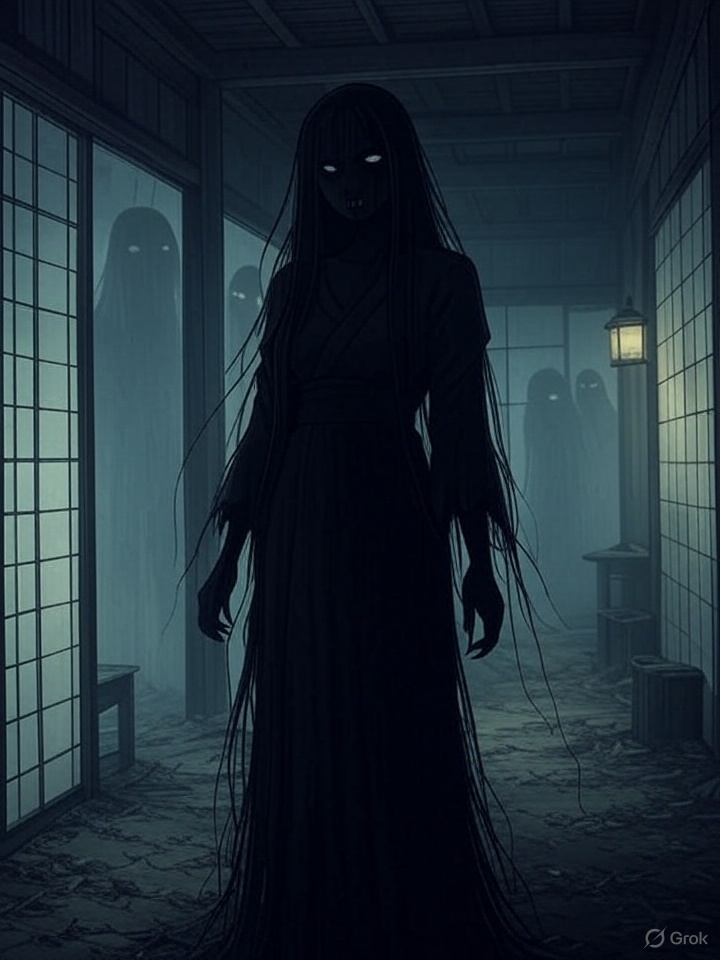
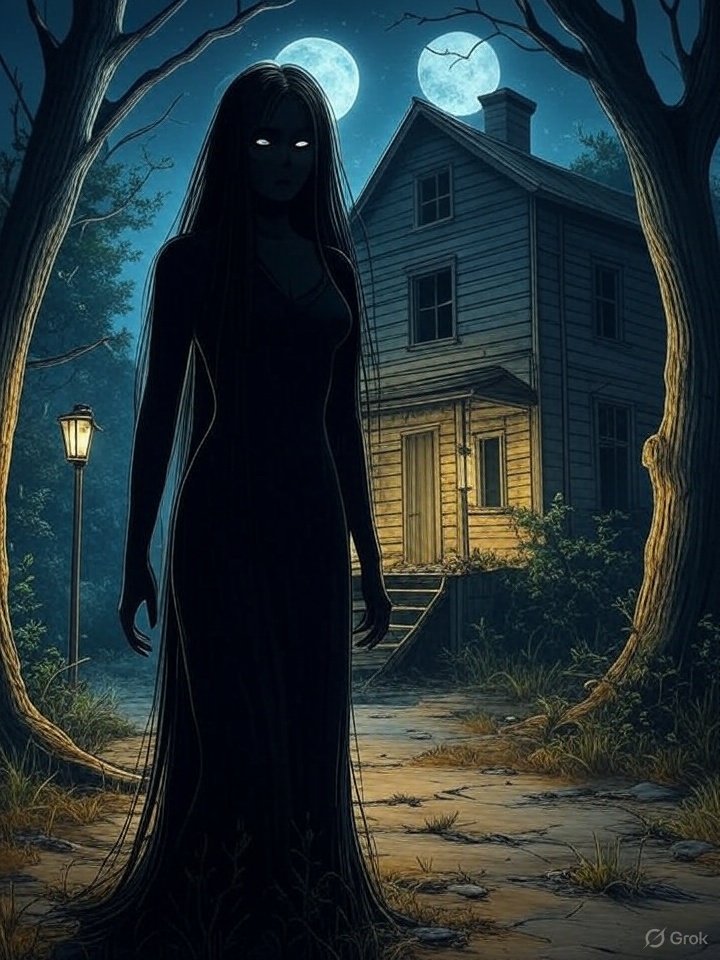
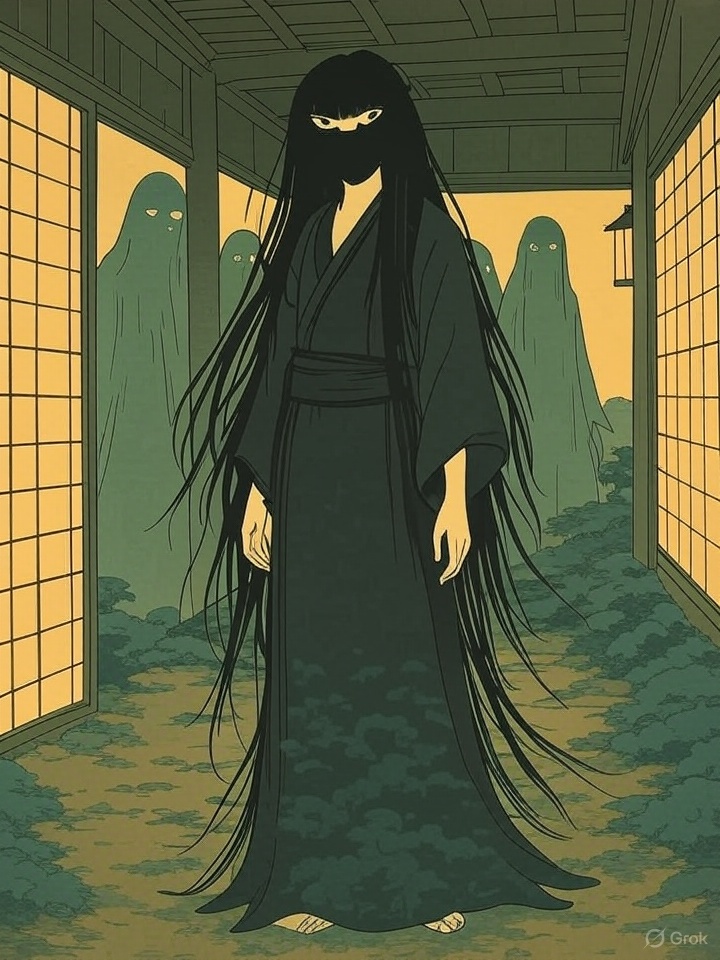
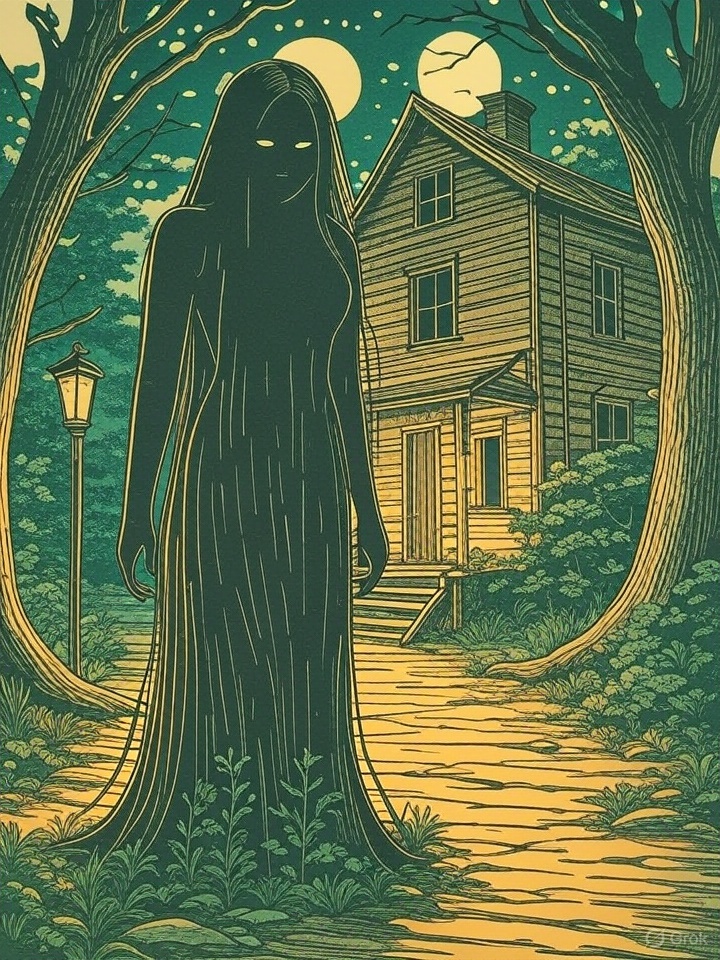
Illustrated folktale

In the village of Akakawa, where cherry blossoms bloomed in profusion and willows wept for the seasons' passage, there stood an old house that had seen better days. Its wooden boards creaked with every breeze, and its paper doors seemed to whisper secrets to the wind. The villagers avoided it, whispering tales of a ghostly presence that lingered within.
Iyori, a young woman from Akakawa, had always been drawn to the old house. She'd heard stories of Kage-onna, the shadow woman, said to inhabit such places. Some claimed she was a harbinger of misfortune, while others believed she was a restless soul, trapped between worlds. Iyori's curiosity got the better of her; one autumn evening, as the sun dipped behind the mountains, she decided to investigate.
As she approached the house, Iyori felt an unsettling presence, like a cold finger tracing the back of her neck. She pushed open the creaking door and stepped inside. The air within was heavy with dust and the scent of decay. In the fading light, Iyori noticed something peculiar – a faint outline on one of the paper doors. It took shape as she drew closer: a woman's silhouette, frozen in time.
The shadow stood motionless, its features indistinct yet unmistakable. Iyori felt no fear, only a deep sense of sorrow. She sensed that Kage-onna was not a malevolent spirit, but one bound to this world by some unknown force. The silence within the house seemed to amplify her presence; it was as if the woman's emotions hung in the air like autumn leaves.
Iyori wandered through the empty rooms, searching for clues about the shadow's identity. In the kitchen, she found a small, intricately carved wooden box with a delicate lock on its lid. The door creaked open, revealing a collection of old photographs and a faded letter. Iyori recognized the handwriting as belonging to Emiko, a young woman who had lived in this very house many years ago.
As she read through the letter, tears pricked at Iyori's eyes. Emiko wrote of her love for a young man, taken from her by war. The pain and longing seeped off the page, and Iyori felt the weight of Kage-onna's sorrow settle upon her shoulders. In that moment, she understood – the shadow woman was not a warning sign or an omen, but a testament to the enduring power of love and loss.
As night descended, casting the village in shadows, Iyori bid farewell to Emiko's spirit. She felt Kage-onna's presence fade, like the last wisps of autumn fog. From that day on, Iyori visited the old house often, leaving offerings for Emiko's memory and sitting with the shadow woman in silence. And as she did, the villagers noticed a change – the creaking doors seemed less ominous, the wind no longer howled through the empty rooms with such desperation.
Perhaps, in time, Kage-onna would find peace, and her presence would transform from one of sorrow to one of remembrance. For Iyori knew that even in death, love can linger, a shadow on the wall of our hearts.
Yokai, oni, kitsune and spirits from folklore
Directory of Japanese board games and traditional games
Verified itch.io pixel-art gacha — fair odds, no ads
Reference guides for classic Japanese ham radios
Ancient joinery techniques of Japanese master craftsmen
Explore Japan's landmarks, shrines and hidden locations
SNES and Super Famicom collection tracker
Hoshi no Isan — a Japanese-aesthetic space RPG in development
Pixel art life sim MMO — start at zero, build your life
AI-powered educational stories for kids
Japanese-aesthetic design tokens & AI-ready UI prompts

Every day, one teaching. One moment of stillness.
Kanji, meaning, and a quiet reflection — rooted in the philosophy
behind Japan's forests, seasons, and sacred silences.
Content Warning: This website explores Japanese folklore and mythological beings—including yokai, oni, and other supernatural entities—that may be frightening to younger audiences or sensitive viewers. All material is presented for educational and cultural appreciation only. Viewer discretion is advised.
Parents and guardians are encouraged to preview content before sharing it with children. By continuing to use JapaneseMythicalCreatures.com, you acknowledge and accept this advisory.
Copyright © 2026 Japanese Mythical Creatures • All Rights Reserved.