

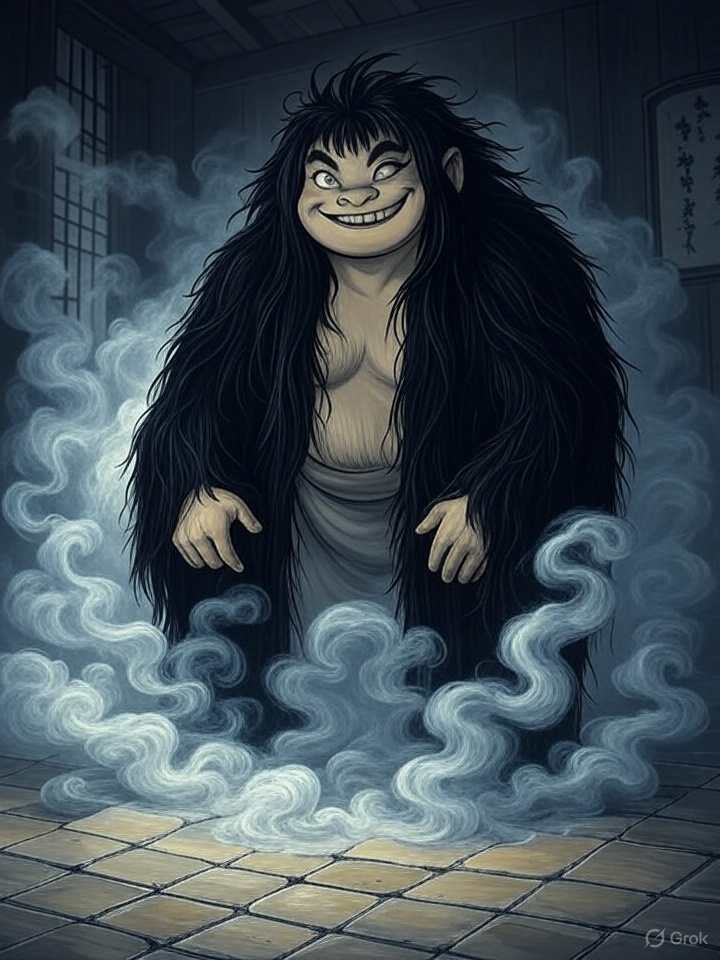
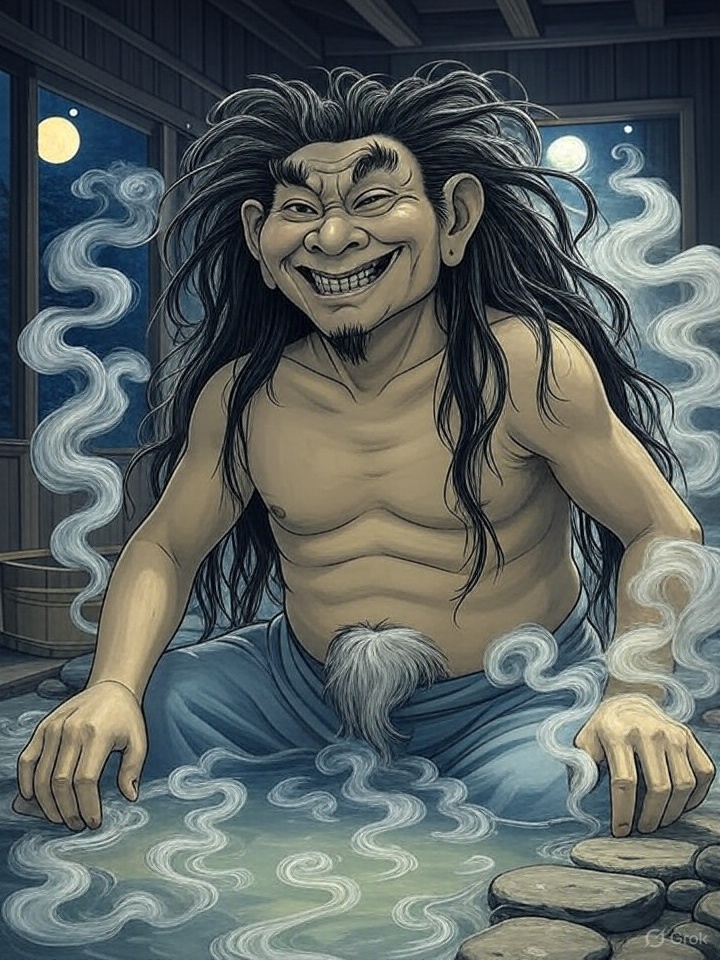
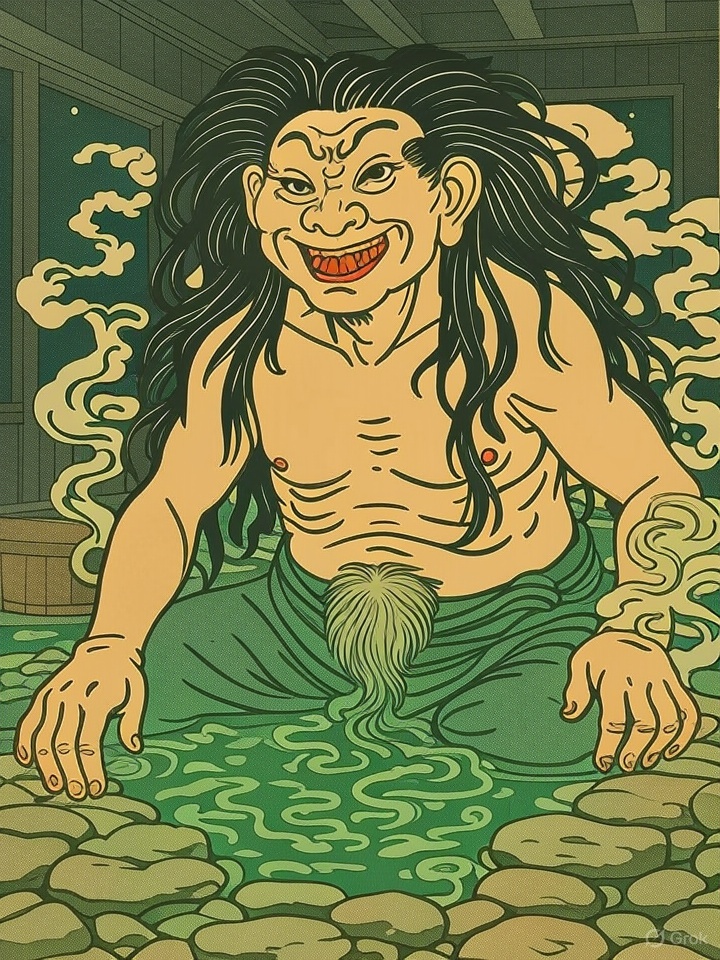
Hyōsube (兵主部) is a lesser-known yet feared yokai resembling a hairy kappa. It is the best-documented hairy kappa variant: it sneaks into homes and bathe without invitation, leaving behind a curse if mistreated. In regional lore it is also linked to stealing crops, challenging humans to sumo (like the classic kappa), and smelling of fish.

Illustrated folktale

In a small village nestled between two great rivers, there lived an innkeeper named Kaito. His family had run the humble abode for generations, and it was said that their baths held the magic of the mountains themselves – warm water drawn from the snowmelt of the distant peaks.
One autumn evening, as the sun dipped low behind the rice paddies, a peculiar guest arrived at the inn. He appeared silently, without so much as a knock on the door or a rustle in the leaves outside. The travelers who had come to rest for the night whispered among themselves about the stranger's odd appearance – wild hair sprouting from his shoulders like thorns, and eyes that seemed to hold an otherworldly glow.
The guest requested the warmest bath the inn had to offer, and Kaito, though wary, showed him to a steaming tub filled with fragrant herbs. As he waited for his turn to bathe, Kaito noticed something strange: each time one of the guests tried to enter the bathing area, they would hesitate, their faces twisted in distaste.
"What's amiss?" Kaito asked a young traveler who had been about to join him in the bath.
"I saw something move," the youth replied, eyes darting toward the water. "Hair and ripples – it was like the very water itself was alive."
Kaito's heart quickened as he realized that this must be no ordinary guest. The stories told by his elders whispered of such creatures: beings born from misfortune and ill-luck, with bodies made to traverse the realms between worlds.
The stranger emerged from the bath, his wild hair slicked back like a river of darkness. His gaze met Kaito's, and in that moment, the innkeeper knew he had encountered something beyond mortal comprehension.
"You must understand," the creature spoke in a low rumble, "I enter homes to cleanse myself, just as you would seek solace in your baths. But when I depart, I leave behind tokens of my presence – trails of water and wisps of hair. These are but signs that I have walked among you."
Kaito bowed deeply, aware that some spirits demanded respect above all else. "We will honor your presence," he promised. "The bath shall be cleaned with care, and a small offering made in the morning to show our gratitude for sharing your home with us."
As if sensing their sincerity, the creature nodded its great head. Its eyes seemed to soften, losing some of their otherworldly sheen.
From that night on, Kaito made sure that his inn was always prepared for visitors from beyond the veil. Cucumbers and sacred herbs adorned the bathing area, a token of respect for those like Hyōsube who strayed into human realms. The villagers came to trust in the gentle giant's power to bring good fortune – so long as they treated him with kindness and reverence.
As winter descended upon the village, Kaito would often gaze out at the snow-covered peaks, whispering a silent prayer for the well-being of his unseen guest. And when travelers passed through the inn, they would speak in hushed tones about the peculiar being who lived in the mountains – a guardian of hospitality and balance between worlds.
Yokai, oni, kitsune and spirits from folklore
Directory of Japanese board games and traditional games
Verified itch.io pixel-art gacha — fair odds, no ads
Reference guides for classic Japanese ham radios
Ancient joinery techniques of Japanese master craftsmen
Explore Japan's landmarks, shrines and hidden locations
SNES and Super Famicom collection tracker
Hoshi no Isan — a Japanese-aesthetic space RPG in development
Pixel art life sim MMO — start at zero, build your life
AI-powered educational stories for kids
Japanese-aesthetic design tokens & AI-ready UI prompts

Every day, one teaching. One moment of stillness.
Kanji, meaning, and a quiet reflection — rooted in the philosophy
behind Japan's forests, seasons, and sacred silences.
Content Warning: This website explores Japanese folklore and mythological beings—including yokai, oni, and other supernatural entities—that may be frightening to younger audiences or sensitive viewers. All material is presented for educational and cultural appreciation only. Viewer discretion is advised.
Parents and guardians are encouraged to preview content before sharing it with children. By continuing to use JapaneseMythicalCreatures.com, you acknowledge and accept this advisory.
Copyright © 2026 Japanese Mythical Creatures • All Rights Reserved.