

Hoji (霍之) is the name attributed to the lingering spirit of Tamamo-no-Mae, a notorious kitsune (nine-tailed fox) who became a cursed force of misfortune after her death.
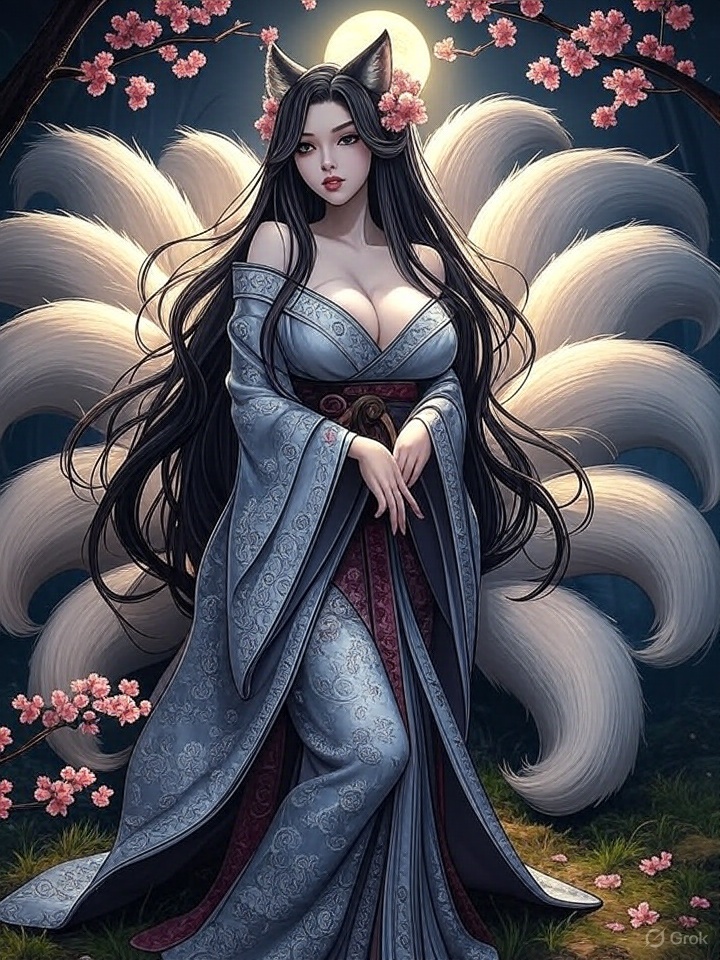
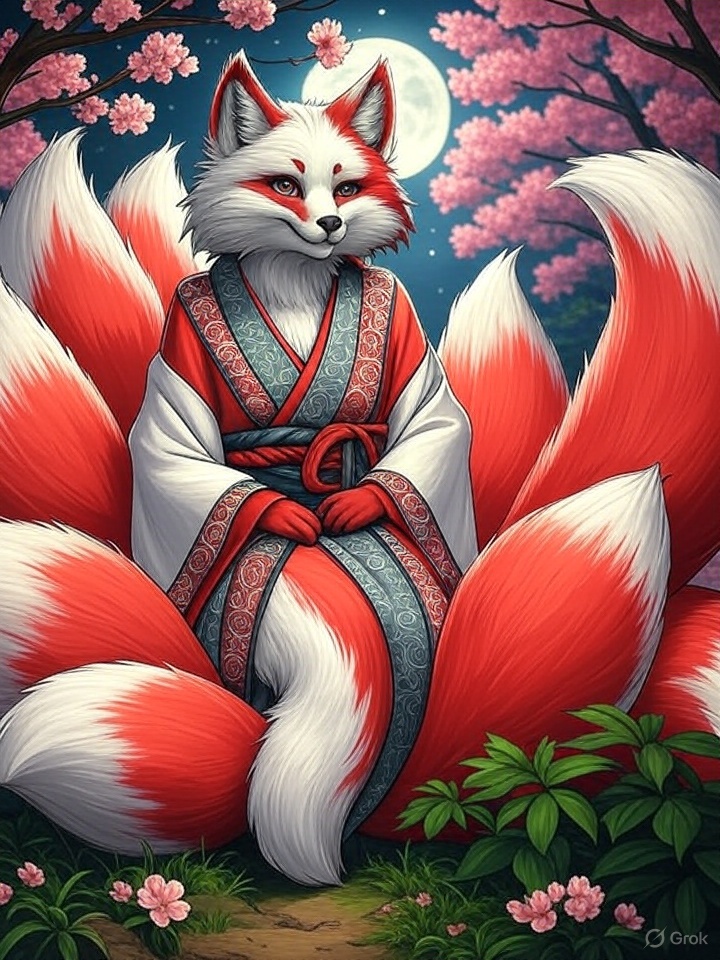
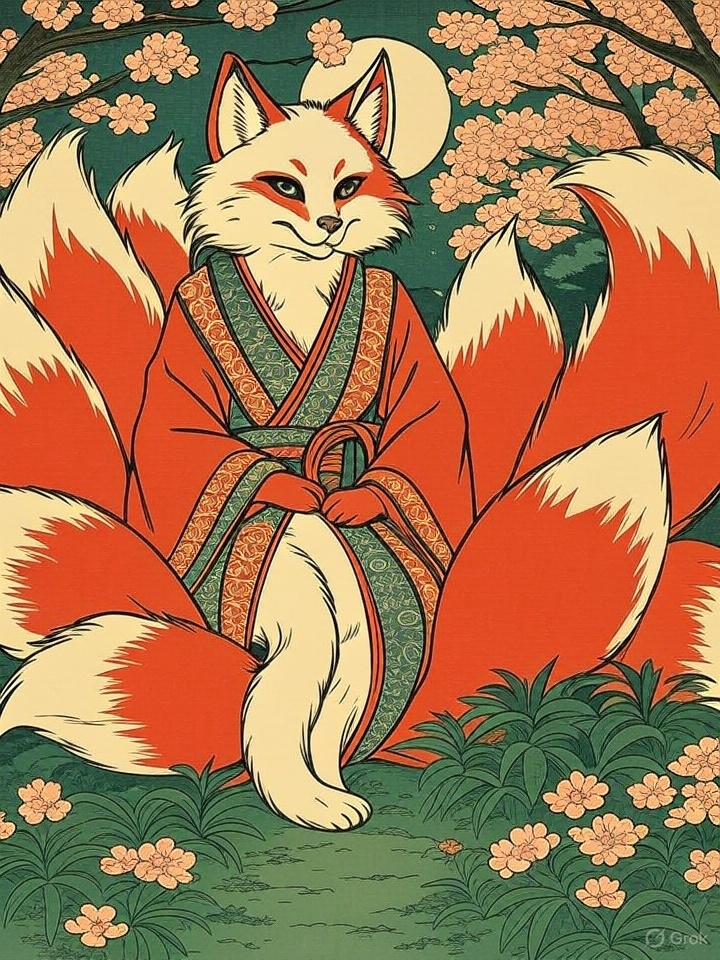
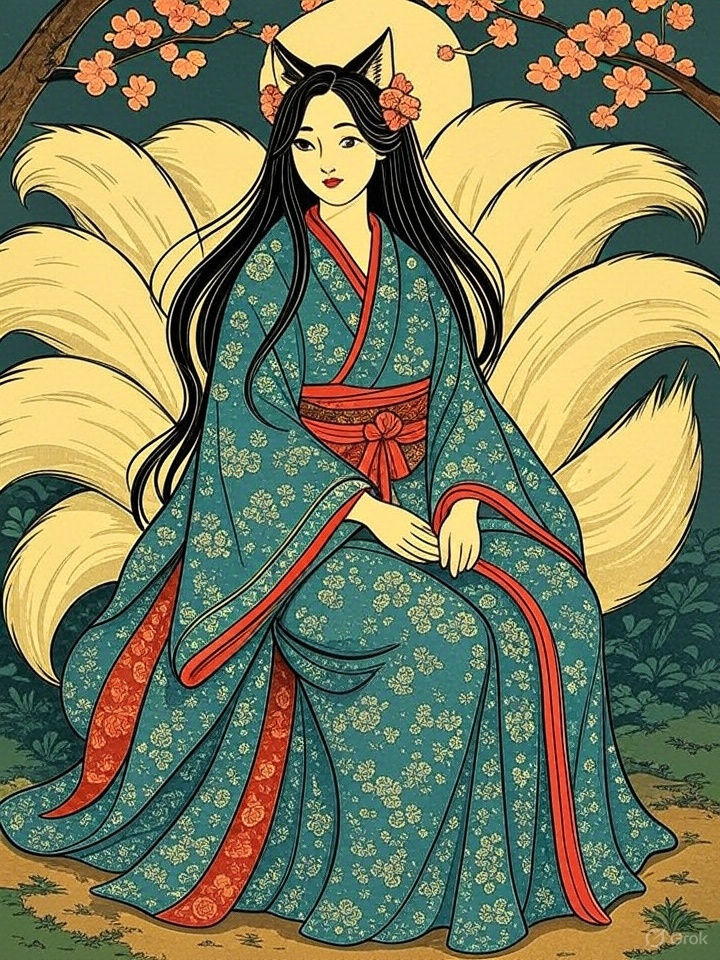
Illustrated folktale

In the depths of autumn, when the maple leaves whispered secrets to the wind, a young weaver named Emiko wandered into the mist-shrouded forest near the Sesshō-seki. Her village had always warned her about this cursed place, where spirits lingered and death stalked the living. Yet, driven by curiosity and a sense of restlessness, Emiko approached the Killing Stone.
As she drew near, a chill ran down her spine. The air seemed to thicken around her, heavy with an unseen presence. Emiko's heart quickened, but she steeled herself, convinced that the villagers' tales were mere superstition. She reached out a trembling hand to touch the ancient stone, and in that instant, a shiver coursed through her body.
A faint scent of cherry blossoms wafted on the breeze, carrying with it an unsettling feeling of familiarity. Emiko's thoughts turned to the stories of Tamamo-no-Mae, the beautiful fox spirit who had once roamed these woods. Could this be more than mere coincidence? The weaver's fingers grazed the stone again, and a low hum vibrated through her being.
Suddenly, the trees seemed to lean in, their branches tangling above Emiko like skeletal fingers. A faint rustle of leaves signaled the presence of Hoji, its misty form coalescing into a shadowy shape that watched her with unblinking eyes. The air grew colder still, heavy with an oppressive energy.
Emiko tried to flee, but her feet felt rooted to the spot. Hoji's ethereal gaze pierced her very soul, sensing the disrespect in her heart. A whispered warning echoed through the trees: "You disturb what lies at rest." As she stood transfixed, a wave of dizziness washed over Emiko, and she stumbled backwards.
When she came to herself, lying on the forest floor, she saw that the sun had set long ago, casting the woods in darkness. The stone loomed before her, an ancient monolith covered in moss and lichen. Hoji's presence still lingered, its malevolent aura palpable even as Emiko stumbled towards the edge of the forest.
Days passed, but the weaver's body weakened, her usually skilled hands faltering with each stitch. Her family found her pale and listless, barely able to weave a single thread. When they asked about her journey, Emiko hesitated, knowing that to speak of Hoji would bring only sorrow. As winter descended upon their village, she slipped away, her spirit lingering near the Sesshō-seki.
In time, villagers reported sightings of a ghostly weaver, often seen near the Killing Stone on autumnal evenings. Her presence served as a warning: disrespect the spirits, and Hoji's curse would come for you, bearing illness or death. The once-beautiful spirit, trapped between worlds, continued to whisper cautionary tales through the wind.
Years later, when winter's snows had long since melted, travelers reported an inexplicable chill near the Sesshō-seki. A faint scent of cherry blossoms still lingered, and those who dared approach the stone would catch a glimpse of Emiko's ghostly form – or perhaps Hoji itself – watching over its sacred domain.
Yokai, oni, kitsune and spirits from folklore
Directory of Japanese board games and traditional games
Verified itch.io pixel-art gacha — fair odds, no ads
Reference guides for classic Japanese ham radios
Ancient joinery techniques of Japanese master craftsmen
Explore Japan's landmarks, shrines and hidden locations
SNES and Super Famicom collection tracker
Hoshi no Isan — a Japanese-aesthetic space RPG in development
Pixel art life sim MMO — start at zero, build your life
AI-powered educational stories for kids
Japanese-aesthetic design tokens & AI-ready UI prompts

Every day, one teaching. One moment of stillness.
Kanji, meaning, and a quiet reflection — rooted in the philosophy
behind Japan's forests, seasons, and sacred silences.
Content Warning: This website explores Japanese folklore and mythological beings—including yokai, oni, and other supernatural entities—that may be frightening to younger audiences or sensitive viewers. All material is presented for educational and cultural appreciation only. Viewer discretion is advised.
Parents and guardians are encouraged to preview content before sharing it with children. By continuing to use JapaneseMythicalCreatures.com, you acknowledge and accept this advisory.
Copyright © 2026 Japanese Mythical Creatures • All Rights Reserved.