

Goryō (御霊) translates to "honorable spirit" and refers to spirits of individuals, often nobles, who died with unresolved grievances and became vengeful after death.
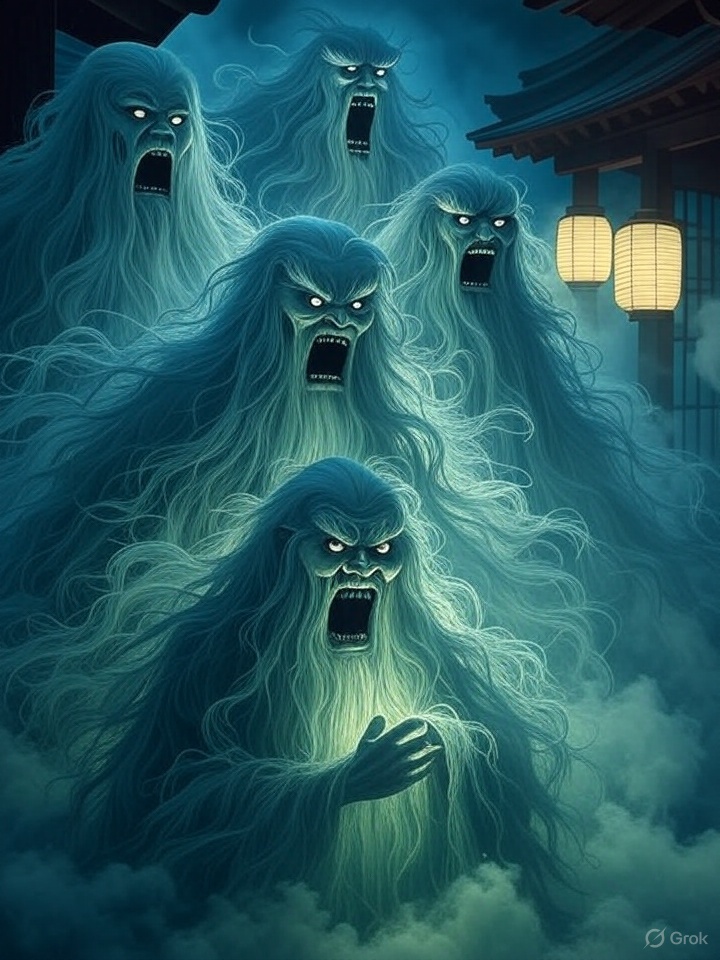
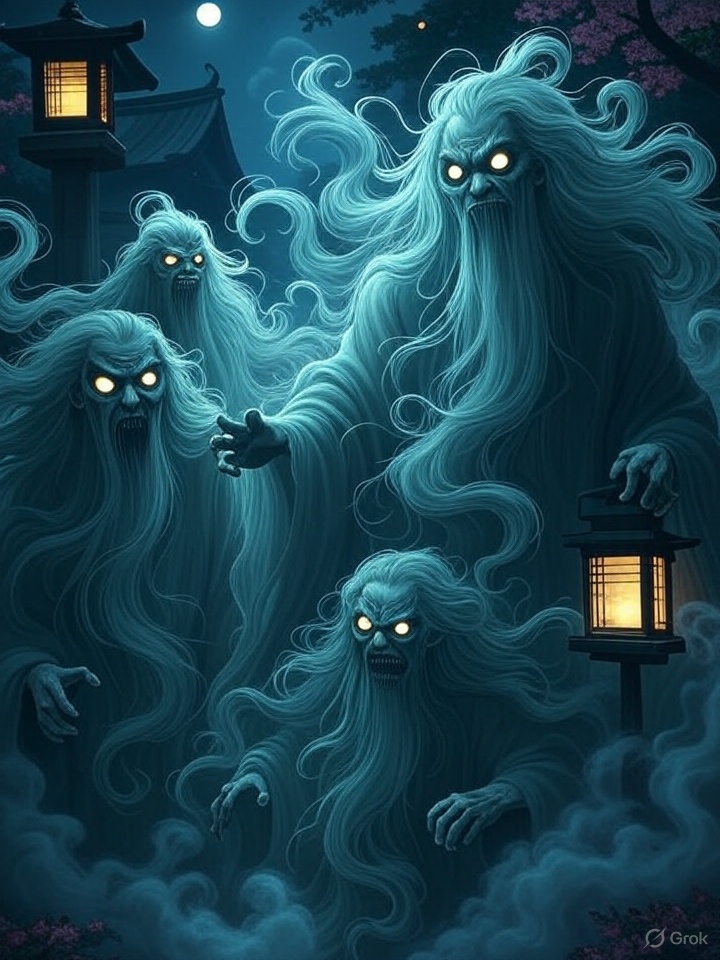
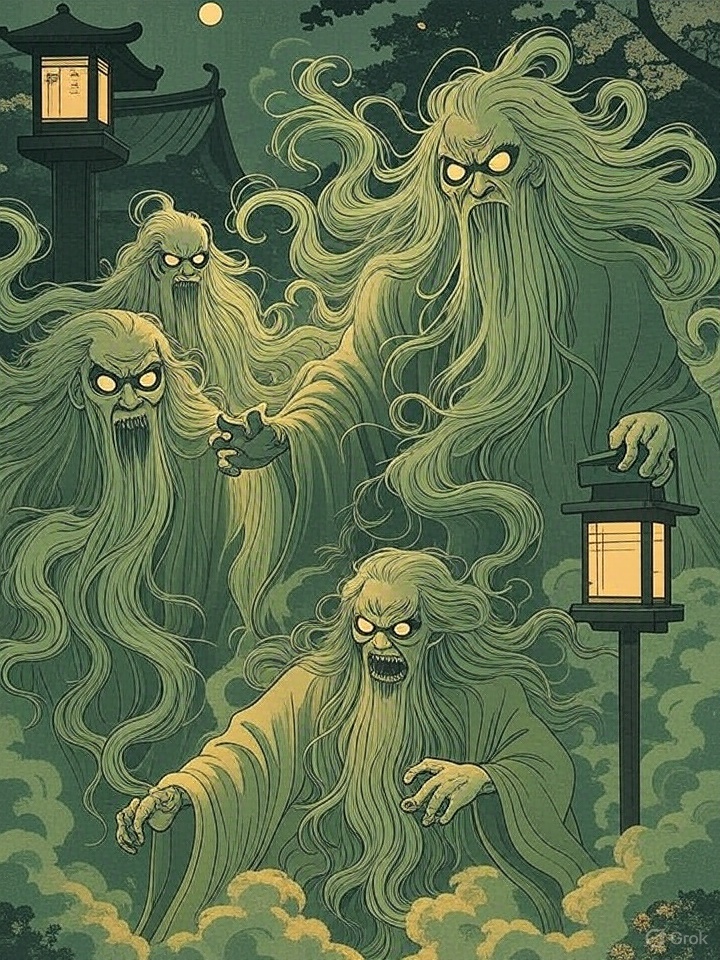
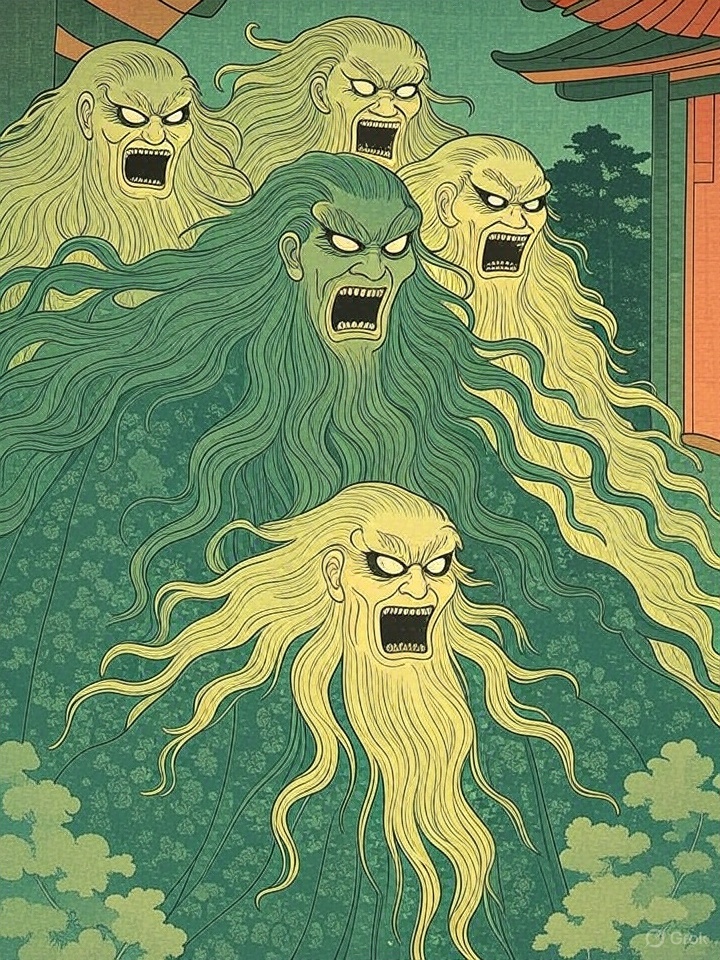
Illustrated folktale

In the misty twilight of autumn, when the wind whispers secrets through the pines, a village lay shrouded in unease. The rice fields, once golden and lush, had withered and turned grey as the stones that lined the riverbank. Crops failed, livestock fell ill, and the villagers' laughter grew scarce.
A young girl named Emiko, with hair like the night sky and eyes like the morning dew, wandered the village paths, searching for answers. Her own father, a just and fair man, had passed away suddenly, his body found by the river with no signs of struggle or violence. The villagers whispered of Goryō, spirits of high status who fell under unjust circumstances, bringing misfortune to those who wronged them.
Emiko's mother, a wispy woman named Kiyomi, sat in silence at their hearth, weaving tales of Sugawara no Michizane, the deified noble whose spirit had been calmed by reverence and offerings. Emiko listened intently as Kiyomi spoke of the storms that raged when Michizane's spirit was displeased, of the plague that swept through villages until they built shrines to honor his memory.
As Emiko walked, she encountered an old man, a wind-dried sage named Hiroji, who sensed her unease. He took her to the village shrine, where a rusted bell hung from a creaking wooden beam. Hiroji whispered secrets of the Goryō: their hunger for justice, their anger at those who wronged them in life. Emiko's eyes widened as she realized her father might be trying to send a message.
That night, under the watchful gaze of the crescent moon, Emiko offered rice and sake at the shrine, praying for her father's peace. She spoke words of apology, of regret for any injustices that might have led to his untimely passing. A fierce gust swept through the village, extinguishing lanterns and sending chutes of leaves dancing in the darkness.
The storm raged for three nights, with bolts of lightning striking the rice fields like a thousand tiny drums. The villagers huddled together, praying for the Goryō's calmness to descend upon their homes. On the fourth morning, Emiko awoke to an eerie silence. Outside, she saw her father's spirit, dressed in worn robes, standing before the shrine. His eyes, empty and hollow as the pines, slowly brightened with recognition.
Emiko approached him cautiously, offering a gift of woven silk, a symbol of the respect due to those who came before. Her father's gaze softened; his hands, once so strong, now held a small wooden comb made from a nearby tree branch. He began to weave threads of memory into the air: threads of rice stalks swaying in the wind, of family laughter and warm hearths.
As Emiko watched, mesmerized, her father's spirit merged with the shrine, becoming one with the Goryō who dwelled within. The storm dissipated, leaving behind a tranquil mist that carried the scent of damp earth and new life. From that day forward, the villagers' crops began to flourish once more, and Emiko found solace in the knowledge that her father's spirit now watched over them all, its anger soothed by reverence and respect.
The villagers whispered among themselves: "Kaze no kokoro" – The Wind carries their hearts. And though it would be many seasons before the rice fields shone golden again, they knew the Goryō still walked among them, its power tempered by compassion and the threads of memory.
Yokai, oni, kitsune and spirits from folklore
Directory of Japanese board games and traditional games
Verified itch.io pixel-art gacha — fair odds, no ads
Reference guides for classic Japanese ham radios
Ancient joinery techniques of Japanese master craftsmen
Explore Japan's landmarks, shrines and hidden locations
SNES and Super Famicom collection tracker
Hoshi no Isan — a Japanese-aesthetic space RPG in development
Pixel art life sim MMO — start at zero, build your life
AI-powered educational stories for kids
Japanese-aesthetic design tokens & AI-ready UI prompts

Every day, one teaching. One moment of stillness.
Kanji, meaning, and a quiet reflection — rooted in the philosophy
behind Japan's forests, seasons, and sacred silences.
Content Warning: This website explores Japanese folklore and mythological beings—including yokai, oni, and other supernatural entities—that may be frightening to younger audiences or sensitive viewers. All material is presented for educational and cultural appreciation only. Viewer discretion is advised.
Parents and guardians are encouraged to preview content before sharing it with children. By continuing to use JapaneseMythicalCreatures.com, you acknowledge and accept this advisory.
Copyright © 2026 Japanese Mythical Creatures • All Rights Reserved.