

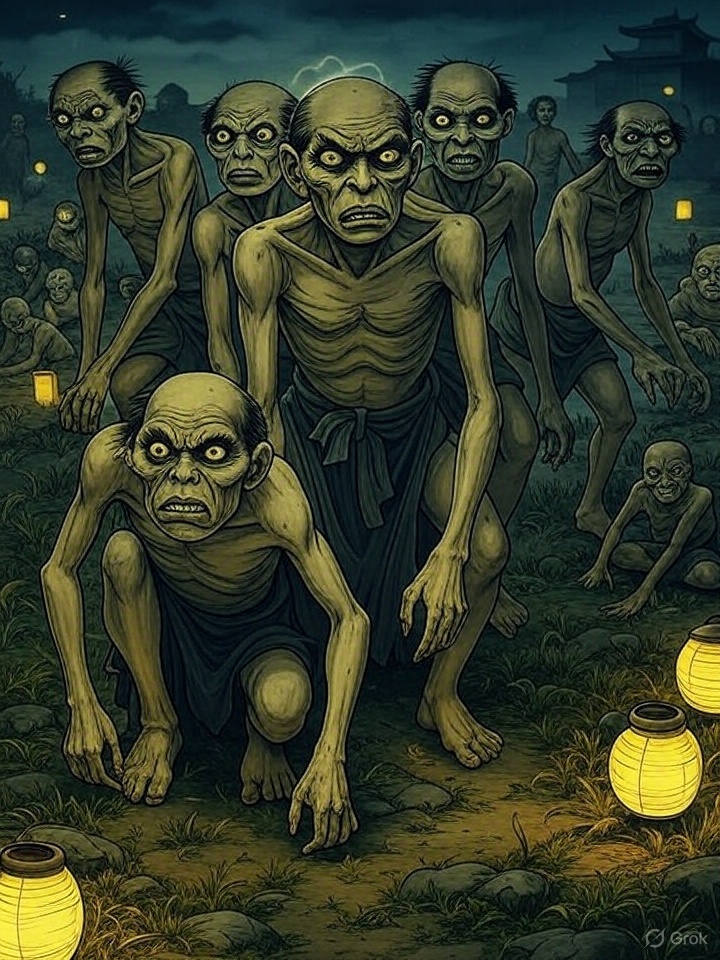
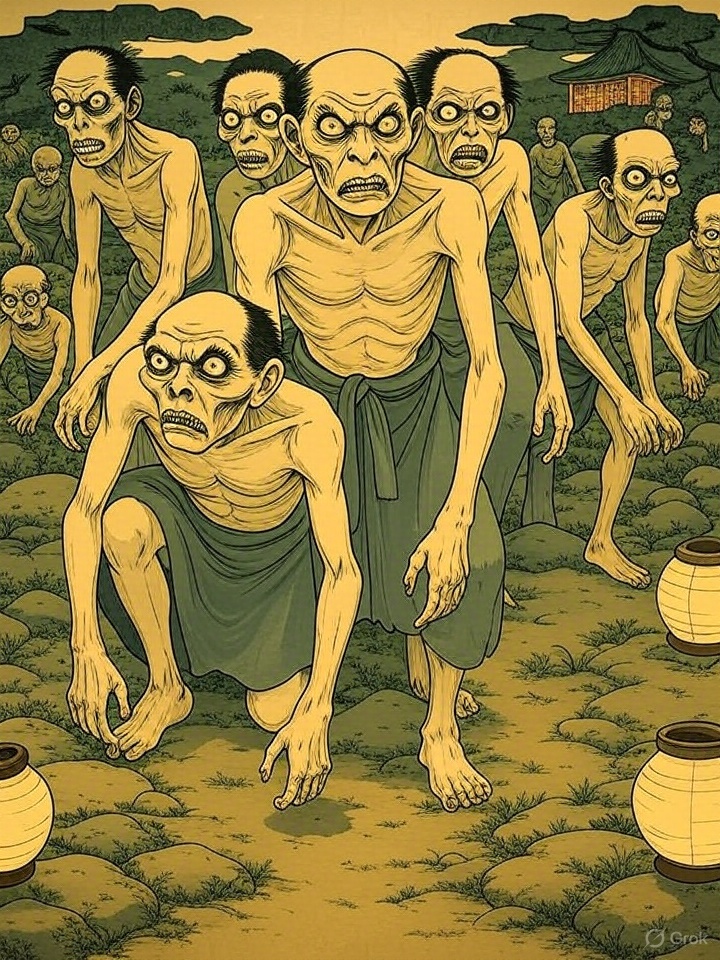
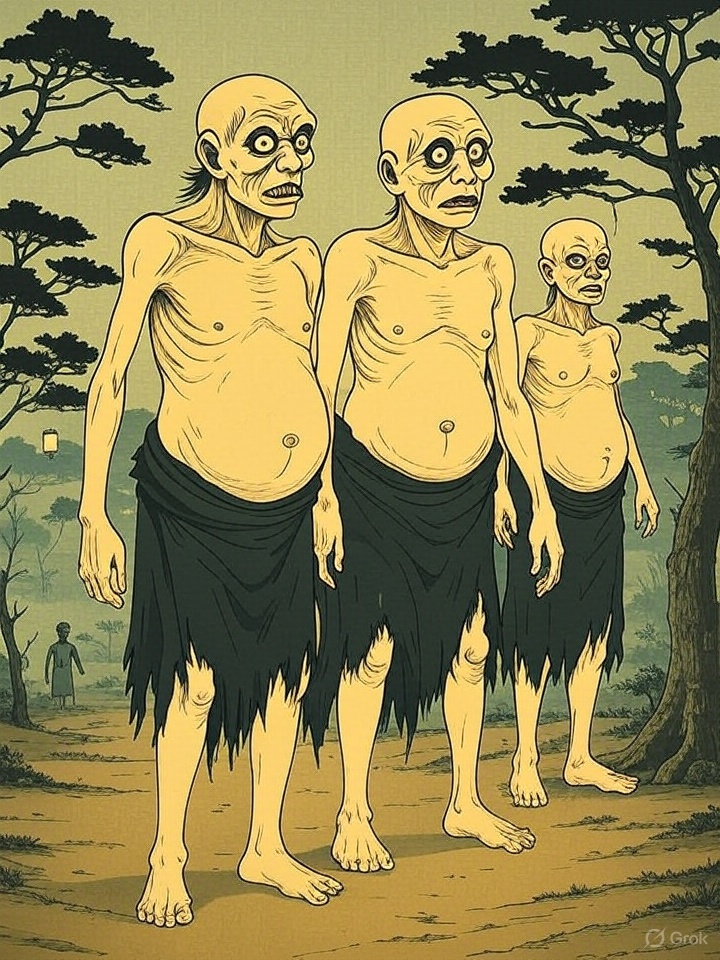
Gaki (餓鬼) refers to “hungry ghosts” in Buddhist teachings. These are spirits cursed by karma to experience eternal hunger, often portrayed as suffering souls with exaggerated features.

Illustrated folktale

In the shadowed alleys of a small rural town, where cherry blossoms bloomed pale and sparse in the spring, there lived an old woman named Omi. She was known for her exceptional kindness and generosity to all who crossed her path, but few knew that she possessed a secret: every night, as the moon rose high over the village, she would slip out of her humble abode to tend to the Gaki.
For years, whispers had circulated about a haunted graveyard on the outskirts of town. Locals avoided it, crossing themselves in reverence as they walked by. But Omi understood that these spirits were not malevolent; rather, they were trapped, bound by their own desires and left to suffer.
The Gaki would gather around her like familiars, their hollow eyes aglow with an otherworldly light. They would whisper tales of the lives they had lived in torment: of great feasts attended but never savored, of refreshing waters that remained forever out of reach. Their long claws would flex and release, echoing the pangs of unfulfilled longing.
Omi would listen intently, offering gentle words and fragments of food from her own meager store. She'd place them on the ground before each Gaki, their faces contorted in an eternal expression of hunger. Some claimed to have seen her do this under the light of the full moon; others swore she was seen at dawn, as the sun rose over the graveyard, tending to the restless spirits.
One evening, a traveler stumbled upon Omi amidst the gravestones, surrounded by the Gaki. He was taken aback by their twisted forms and her gentle interaction with them. As he watched, an elderly Gaki stepped forward, its eyes blazing with sorrow. It grasped for a handful of rice offered by Omi's hands but couldn't bring itself to partake.
The traveler realized that these wretched beings were a reminder of the transience of life: the pursuit of fleeting desires leads only to emptiness and suffering. He felt a pang in his own heart, as if the weight of their collective longing settled upon him.
Omi noticed his presence but didn't acknowledge it. Instead, she offered a gentle smile and continued her work among the Gaki. When the moon dipped below the horizon, they vanished into the shadows, leaving behind a silence broken only by Omi's quiet murmurs as she collected the remnants of their meal.
From that night on, the traveler returned each evening to witness Omi's ritual, learning from the example set before him: compassion for those trapped in their own desires, and recognition of the delicate balance between moderation and excess. As he watched the old woman tend to the Gaki under the light of the moon, he felt a small portion of his own darkness lift, carried away by the night's gentle breeze.
And when he eventually departed the village, rumors spread: that Omi still tended to the Gaki in secret, guiding them toward release and peace. Locals whispered about her kindness to those who dwelled beyond mortal sight, ensuring their souls could find rest from their eternal longing for things they could never truly possess.
Yokai, oni, kitsune and spirits from folklore
Directory of Japanese board games and traditional games
Verified itch.io pixel-art gacha — fair odds, no ads
Reference guides for classic Japanese ham radios
Ancient joinery techniques of Japanese master craftsmen
Explore Japan's landmarks, shrines and hidden locations
SNES and Super Famicom collection tracker
Hoshi no Isan — a Japanese-aesthetic space RPG in development
Pixel art life sim MMO — start at zero, build your life
AI-powered educational stories for kids
Japanese-aesthetic design tokens & AI-ready UI prompts

Every day, one teaching. One moment of stillness.
Kanji, meaning, and a quiet reflection — rooted in the philosophy
behind Japan's forests, seasons, and sacred silences.
Content Warning: This website explores Japanese folklore and mythological beings—including yokai, oni, and other supernatural entities—that may be frightening to younger audiences or sensitive viewers. All material is presented for educational and cultural appreciation only. Viewer discretion is advised.
Parents and guardians are encouraged to preview content before sharing it with children. By continuing to use JapaneseMythicalCreatures.com, you acknowledge and accept this advisory.
Copyright © 2026 Japanese Mythical Creatures • All Rights Reserved.