
Datsue-ba (奪衣婆) literally means "Old Woman Who Takes Clothes." She is a gatekeeper figure in Japanese Buddhist afterlife beliefs, punishing the dead by taking their clothes and weighing their sins.
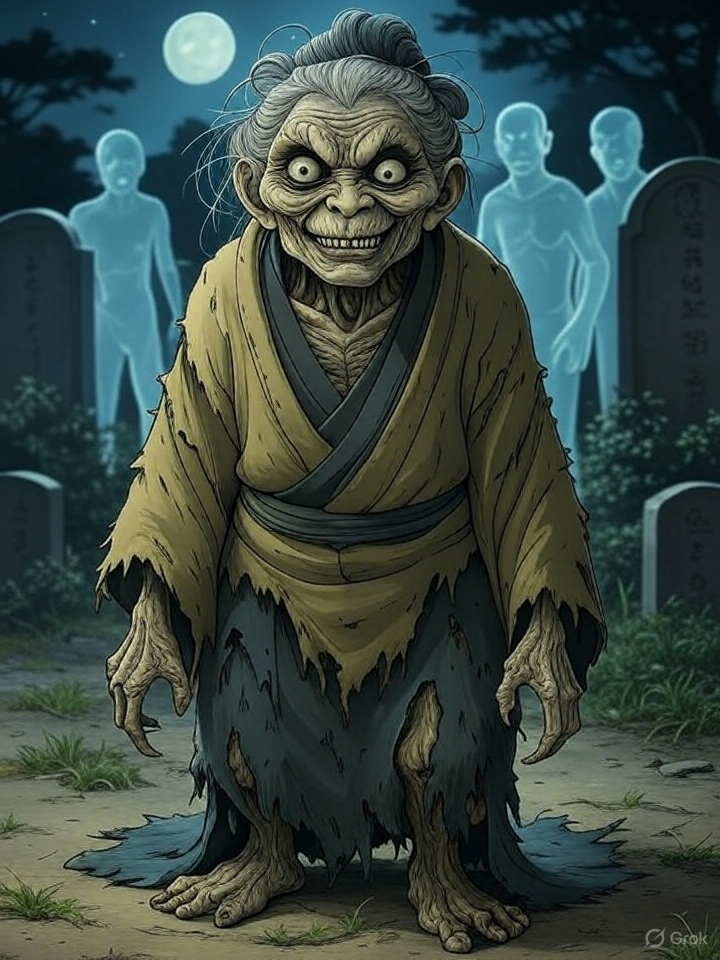
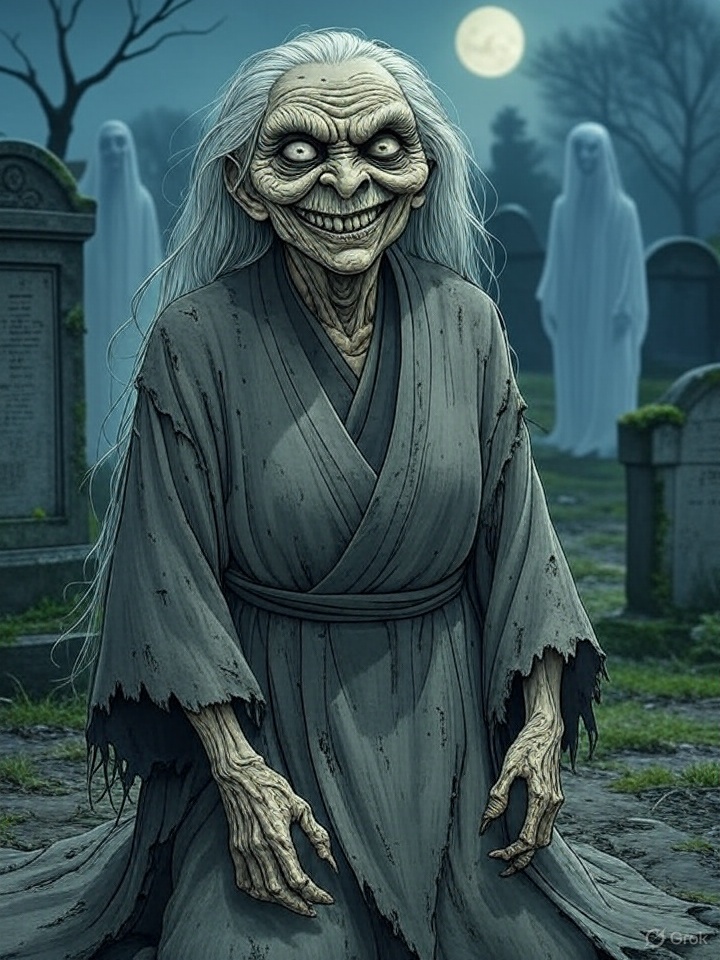
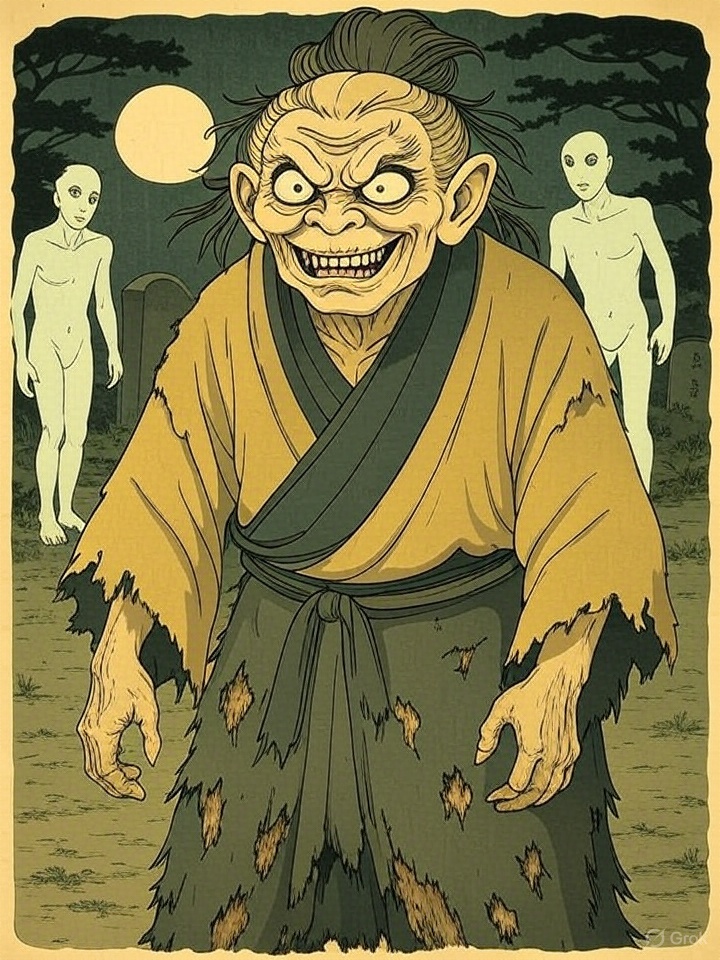
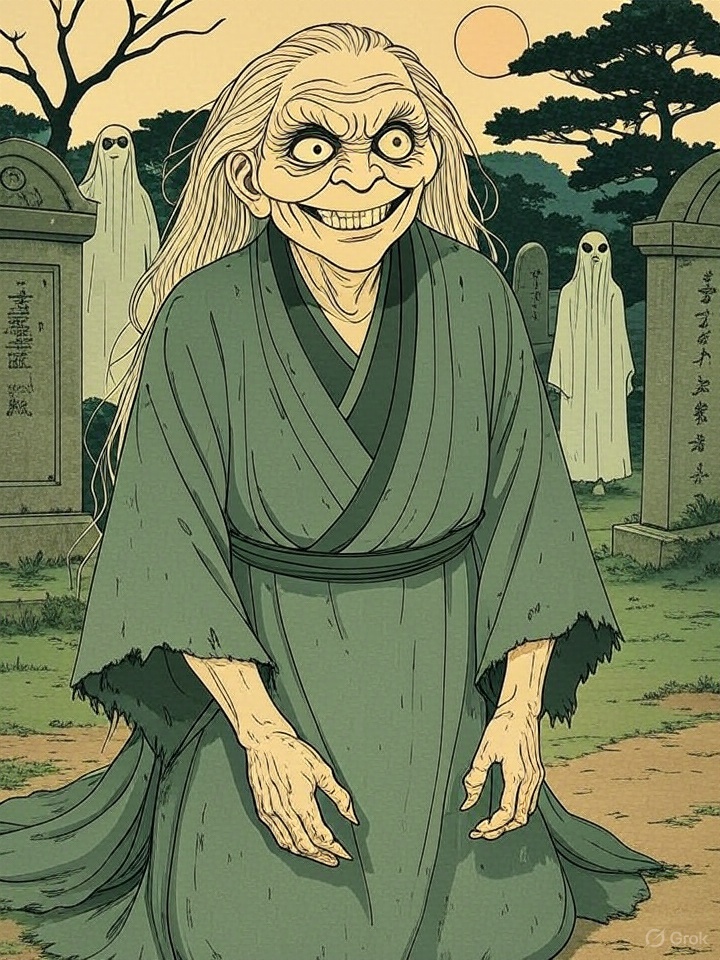
Illustrated folktale

In the twilight hours when shadows stretched across the Sanzu River, an old woman stirred from her stone seat. Her bony fingers grasped the staff she had leaned against the twisted tree, its gnarled branches like withered arms reaching for the sky. The wind rustled her tattered robes as she rose to attend to her duties.
As night descended, souls began their solitary journeys across the river. Some walked with purpose, others hesitated at the water's edge. Among them was a young woman named Emiko, who clutched a worn sash and a small bundle of belongings. Her eyes shone with fear as she gazed upon Datsue-ba.
The old woman's face, a map of wrinkles and creases, seemed chiseled from the very stones of the riverbank. Her long fingers closed around Emiko's wrist like a vice. "Strip your garment, young one," Datsue-ba croaked, her voice an ancient echo in the darkness.
Emiko trembled as she unwound the sash and handed it to Datsue-ba. The old woman examined it briefly before casting it aside into the river's depths. Emiko felt a pang of loss, for that had been her mother's gift to her, passed down through generations.
Datsue-ba turned away, disappearing behind a veil of mist that clung to the tree's branches like silk. When she reappeared, a staff in hand, Emiko saw that it was no longer just a simple wooden rod. Its length seemed to have grown, adorned with an intricate pattern of tiny bones and shells.
With each step across the river, souls were met by Ken'e-o, who hung their garments on the tree's twisted limbs. The garments' weights determined the path they would take – toward heaven's gentle gates or the depths of hell. Datsue-ba watched over this balance, ensuring that justice was served.
Emiko's gaze followed the old woman as she wove in and out of the shadows, her eyes taking in every detail of each soul's journey. The young woman wondered if she had lived a virtuous life, as Datsue-ba judged so ruthlessly. Her thoughts were a jumble of memories – kindnesses shown to others, transgressions, and moments of doubt.
Datsue-ba reappeared before Emiko once more, this time holding a small, intricately woven basket. "Your skin is bare," the old woman declared, her voice dripping with solemnity. "It shall be stripped in its stead." Emiko's eyes widened as Datsue-ba began to peel back her own skin, revealing the tender flesh beneath.
In that moment, Emiko remembered a life filled with kindness and compassion – the words of comfort she had shared with her mother on their deathbed, the late-night vigils spent praying for loved ones lost. Tears welled up within her as she realized the value of a virtuous life, one that shone like a beacon across the darkness.
The old woman's task was done; Emiko's fate was sealed. With a final glance, Datsue-ba vanished into the mist, leaving behind only the faint scent of blooming cherry blossoms and the gentle lapping of the river against its banks.
Yokai, oni, kitsune and spirits from folklore
Directory of Japanese board games and traditional games
Verified itch.io pixel-art gacha — fair odds, no ads
Reference guides for classic Japanese ham radios
Ancient joinery techniques of Japanese master craftsmen
Explore Japan's landmarks, shrines and hidden locations
SNES and Super Famicom collection tracker
Hoshi no Isan — a Japanese-aesthetic space RPG in development
Pixel art life sim MMO — start at zero, build your life
AI-powered educational stories for kids
Japanese-aesthetic design tokens & AI-ready UI prompts

Every day, one teaching. One moment of stillness.
Kanji, meaning, and a quiet reflection — rooted in the philosophy
behind Japan's forests, seasons, and sacred silences.
Content Warning: This website explores Japanese folklore and mythological beings—including yokai, oni, and other supernatural entities—that may be frightening to younger audiences or sensitive viewers. All material is presented for educational and cultural appreciation only. Viewer discretion is advised.
Parents and guardians are encouraged to preview content before sharing it with children. By continuing to use JapaneseMythicalCreatures.com, you acknowledge and accept this advisory.
Copyright © 2026 Japanese Mythical Creatures • All Rights Reserved.