

Ashimagari (足曲がり) literally means “leg entangler.” It is an invisible or semi-invisible yōkai known for causing travelers to stumble or trip on otherwise clear paths.
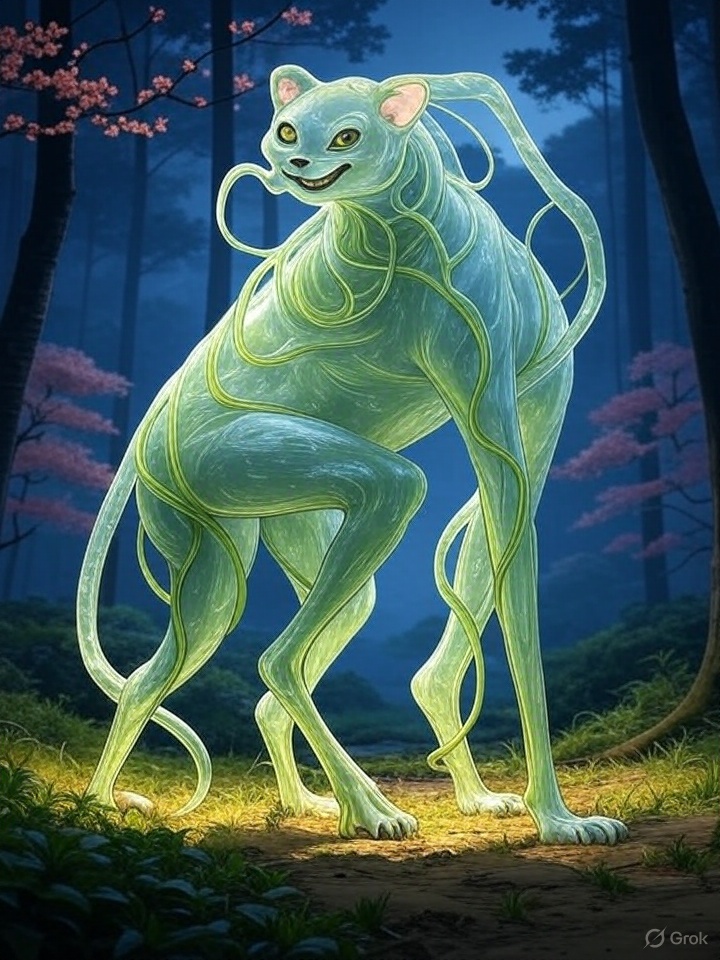
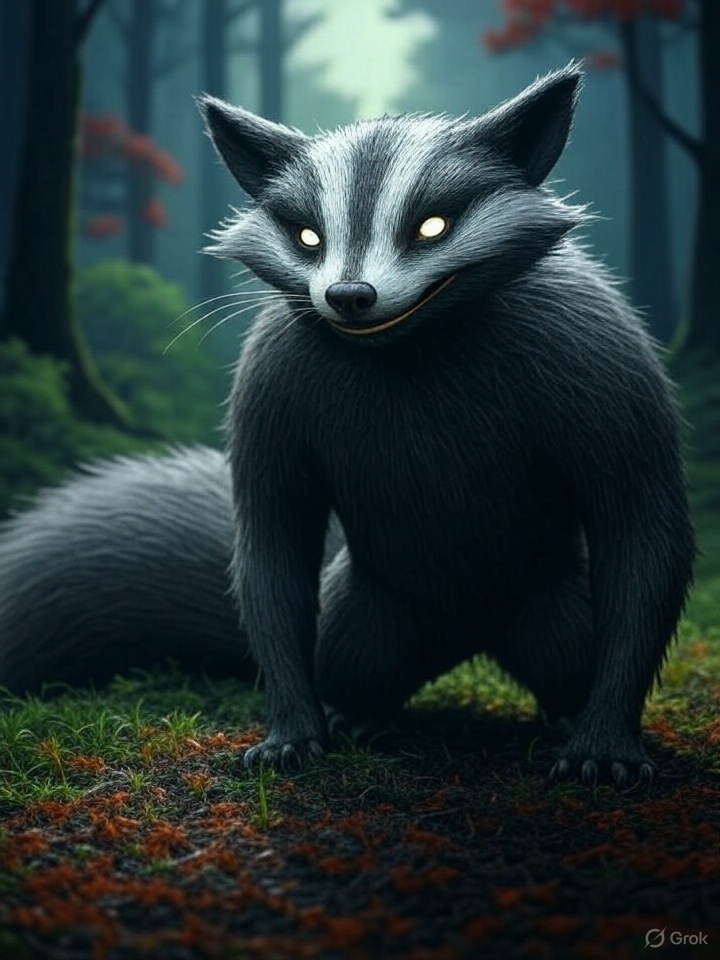
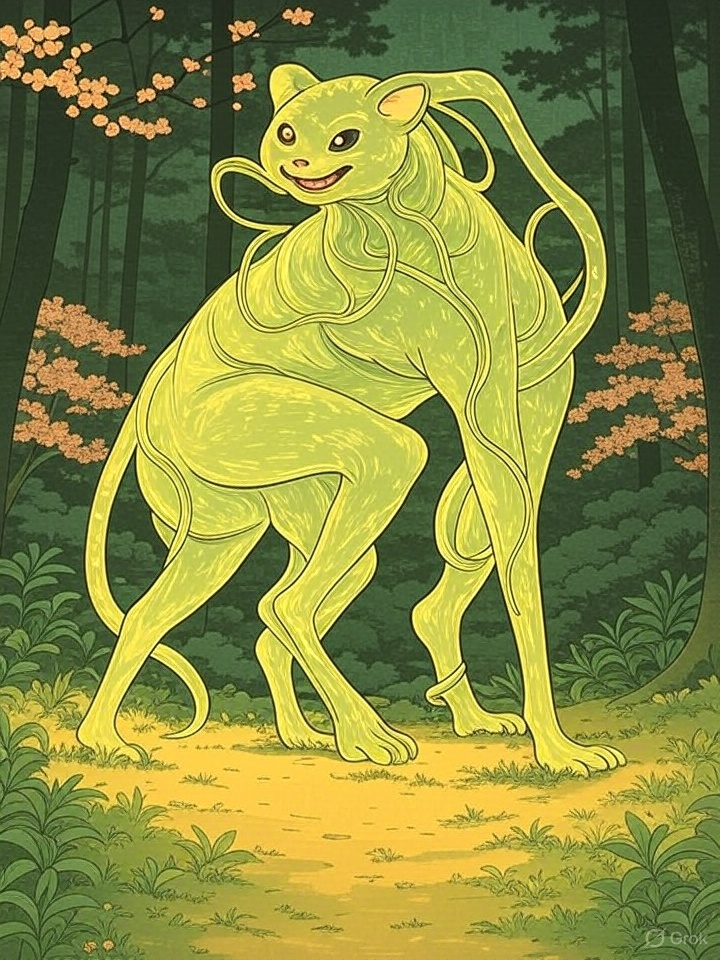
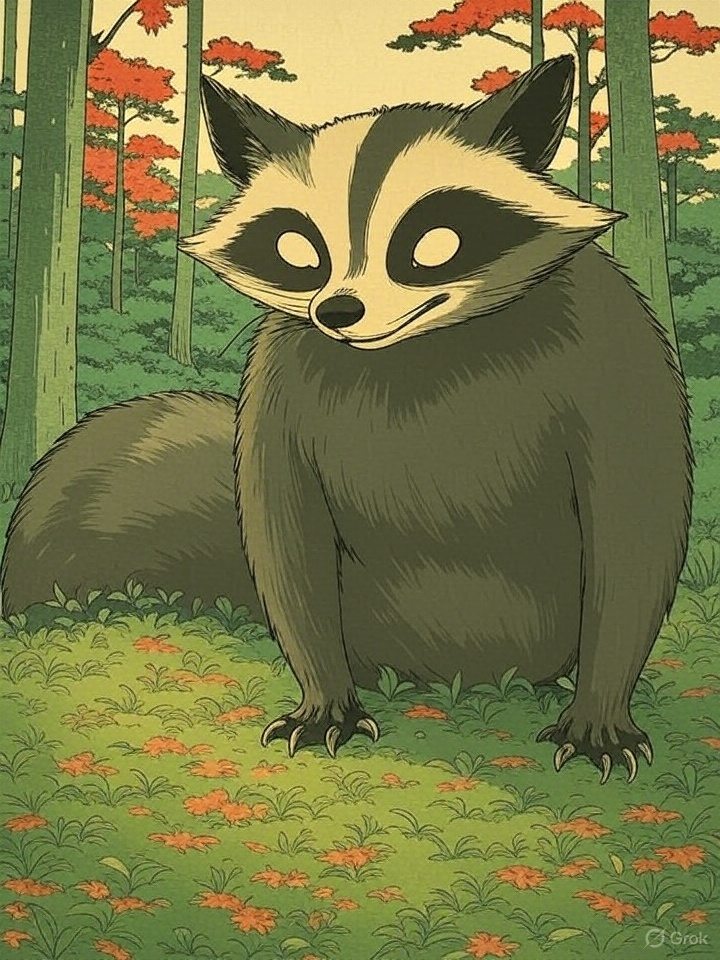
Illustrated folktale

In days long past, when misty dawn crept over the mountains of Ōita, a young traveler named Kaito set out to find his way back home. His family's village lay many hours' journey north, but he had strayed far from the beaten path while gathering firewood in the woods.
As he walked, the wind began to pick up, rustling leaves and sending Kaito's kimono fluttering behind him like a ghostly bridal veil. The forest paths grew narrower, winding through dense thicket and scrubby trees that seemed to lean in, as if sharing secrets. A faint fog crept up from the valley below, veiling the trail ahead.
Suddenly, without warning, Kaito's feet flew out from under him. He stumbled, lost his balance, and fell hard onto a bed of pine needles. Scrambling to rise, he glanced about, but saw nothing out of the ordinary: only the forest, its trees swaying in the growing gale.
A chill crept up Kaito's spine as he recalled the whispers from his village elders: "Beware the Ashimagari on windy nights." Some said it was a spirit that darted between legs, causing travelers to stumble. Others whispered it was a trickster, playing pranks on unsuspecting wanderers.
Kaito took a deep breath, steadying himself against a nearby tree trunk. He bowed his head, made a respectful gesture with his hands, and called out softly: "Forgive me, Ashimagari-san. I meant no disrespect to your forest home."
The wind howled louder now, but Kaito stood firm, listening intently for any sign of the phantom creature. A faint rustle caught his ear – not the creaking of branches this time, but a soft, almost imperceptible movement between his legs.
Kaito's heart skipped a beat as he watched, transfixed, a shadowy shape flicker and disappear into thin air. He bowed again, this time more deeply, acknowledging the spirit's presence. From that moment on, the wind died down, and the fog began to clear.
As Kaito continued on his way, the forest seemed to yield its secrets gradually, like a hidden door creaking open. He noticed subtle markers – a sprig of bamboo leaning in one direction, a pinecone fallen at an unusual angle – that told him he walked along a path often traversed by the Ashimagari.
Eventually, the sun broke through the clouds, casting dappled shadows on the forest floor. Kaito quickened his pace, feeling the weight of his journey lifting with each step. His family's village came into view, its rice paddies shimmering like molten gold in the morning light.
Upon returning home, Kaito shared his encounter with the Ashimagari, recounting every detail to his astounded family and friends. From that day forward, whenever he traveled through those woods, he would nod respectfully at each narrow trail crossing, acknowledging the spirit's presence – and earning a deeper respect for the delicate balance between the world of men and the realm of spirits.
Yokai, oni, kitsune and spirits from folklore
Directory of Japanese board games and traditional games
Verified itch.io pixel-art gacha — fair odds, no ads
Reference guides for classic Japanese ham radios
Ancient joinery techniques of Japanese master craftsmen
Explore Japan's landmarks, shrines and hidden locations
SNES and Super Famicom collection tracker
Hoshi no Isan — a Japanese-aesthetic space RPG in development
Pixel art life sim MMO — start at zero, build your life
AI-powered educational stories for kids
Japanese-aesthetic design tokens & AI-ready UI prompts

Every day, one teaching. One moment of stillness.
Kanji, meaning, and a quiet reflection — rooted in the philosophy
behind Japan's forests, seasons, and sacred silences.
Content Warning: This website explores Japanese folklore and mythological beings—including yokai, oni, and other supernatural entities—that may be frightening to younger audiences or sensitive viewers. All material is presented for educational and cultural appreciation only. Viewer discretion is advised.
Parents and guardians are encouraged to preview content before sharing it with children. By continuing to use JapaneseMythicalCreatures.com, you acknowledge and accept this advisory.
Copyright © 2026 Japanese Mythical Creatures • All Rights Reserved.