

Arikura-no-baba (有倉の婆) means “Old Woman of Arikura.” She is a mystical figure known for her supernatural abilities, wisdom, and association with the mountains.
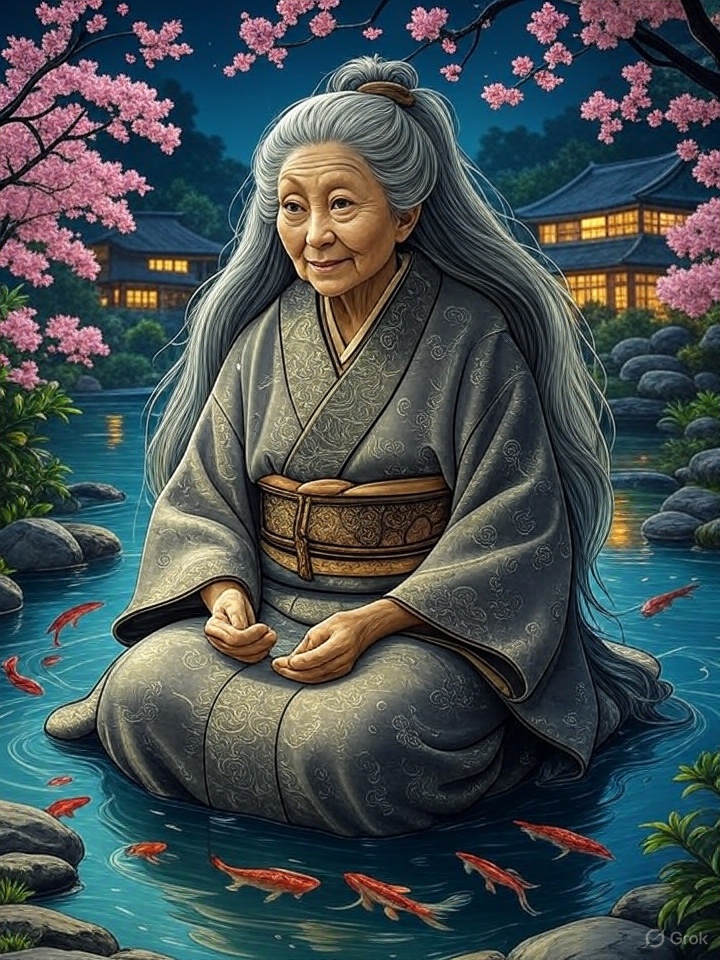
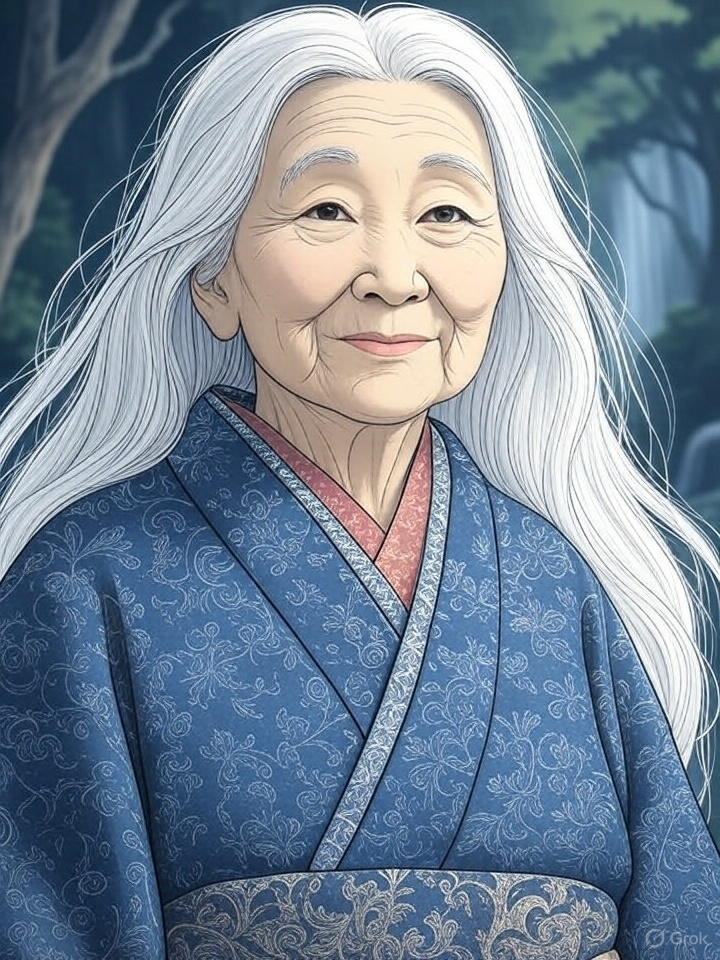
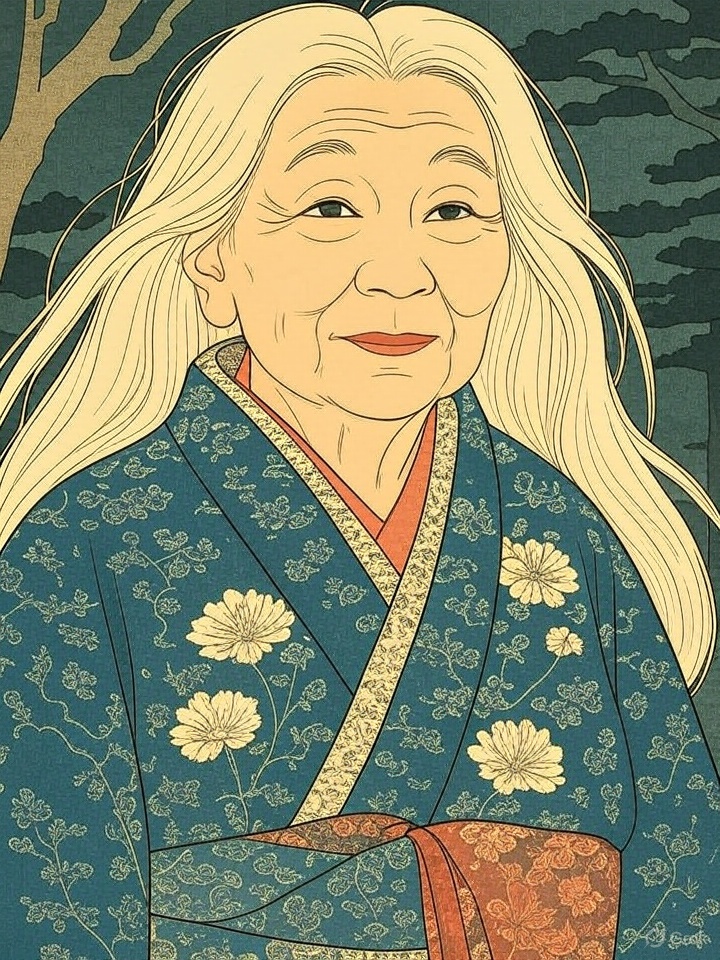
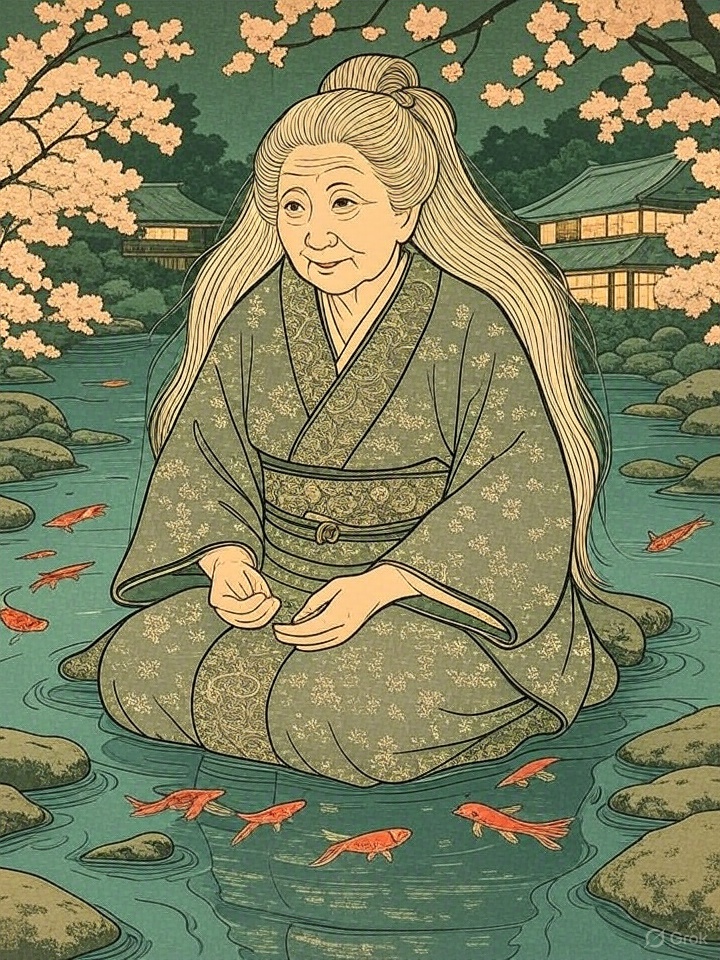
Illustrated folktale

In the misty mountains of Akaishi, where the air was sweet with cherry blossoms and the trees whispered secrets to the wind, there lived an ancient crone named Arikura-no-baba. Her home was a tiny cottage nestled among the roots of a gnarled tree, its branches twisted like withered fingers reaching for the sky.
Travelers rarely ventured into those remote mountains, but one stormy evening, a young man named Kaito stumbled upon the cottage, seeking refuge from the torrential rain. As he pushed open the creaking door, Arikura-no-baba's eyes glowed like lanterns in the dark, illuminating the dim interior.
Kaito, drenched and shivering, was startled by the old woman's piercing gaze. But instead of attacking him with a spell or curse, she beckoned him closer, her staff crooked over her shoulder like a bent branch. The gourd attached to the staff seemed to quiver with an otherworldly power.
"A long journey, young one?" Arikura-no-baba asked, her voice like the rustling of dry leaves.
Kaito explained his quest: to find the mythical spring of Kanayama, said to heal any wound or ailment. The old woman listened intently, her eyes aglow with an ancient wisdom.
"You seek a gift from the mountains," she declared, "but first, you must prove yourself worthy."
Arikura-no-baba presented Kaito with three riddles, each more enigmatic than the last. With each answer, she watched him closely, as if gauging his spirit's depth. The riddles spoke of balance and harmony: a bird singing in silence, a stone carrying water on its back, a shadow that was also light.
Kaito thought deeply, feeling the weight of the old woman's scrutiny. His answers were not always straightforward, but Arikura-no-baba nodded her head with each response, as if acknowledging a hidden truth.
As the night wore on, the storm outside subsided, leaving an eerie stillness in its wake. The fire crackled, casting flickering shadows on the walls. In the silence, Kaito realized that he had been tested not just by the riddles but also by his own doubts and fears.
When the final question was asked, Arikura-no-baba's eyes blazed like stars, illuminating the secrets hidden within Kaito's soul. She smiled, her face creasing into a map of lines and wrinkles.
"You have passed the test," she declared, "and I will grant you the gift of Kanayama."
As Kaito left the cottage at dawn, Arikura-no-baba presented him with a small gourd filled with clear water. "Drink from this when you need guidance," she said. "But remember, true wisdom lies within yourself, hidden like the spring's waters beneath the mountain's surface."
Kaito descended into the valleys below, carrying the precious gift and the lessons of Arikura-no-baba. He never forgot the wise words: that the secrets of nature were hidden in plain sight, waiting to be discovered by those who listened with their hearts rather than just their minds.
Yokai, oni, kitsune and spirits from folklore
Directory of Japanese board games and traditional games
Verified itch.io pixel-art gacha — fair odds, no ads
Reference guides for classic Japanese ham radios
Ancient joinery techniques of Japanese master craftsmen
Explore Japan's landmarks, shrines and hidden locations
SNES and Super Famicom collection tracker
Hoshi no Isan — a Japanese-aesthetic space RPG in development
Pixel art life sim MMO — start at zero, build your life
AI-powered educational stories for kids
Japanese-aesthetic design tokens & AI-ready UI prompts

Every day, one teaching. One moment of stillness.
Kanji, meaning, and a quiet reflection — rooted in the philosophy
behind Japan's forests, seasons, and sacred silences.
Content Warning: This website explores Japanese folklore and mythological beings—including yokai, oni, and other supernatural entities—that may be frightening to younger audiences or sensitive viewers. All material is presented for educational and cultural appreciation only. Viewer discretion is advised.
Parents and guardians are encouraged to preview content before sharing it with children. By continuing to use JapaneseMythicalCreatures.com, you acknowledge and accept this advisory.
Copyright © 2026 Japanese Mythical Creatures • All Rights Reserved.