

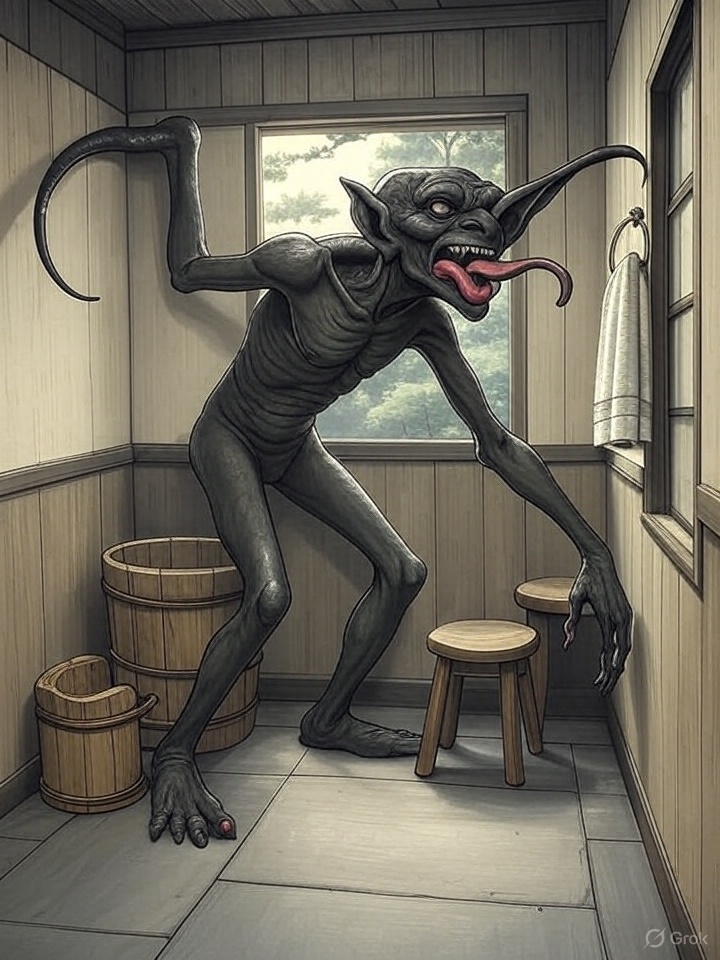
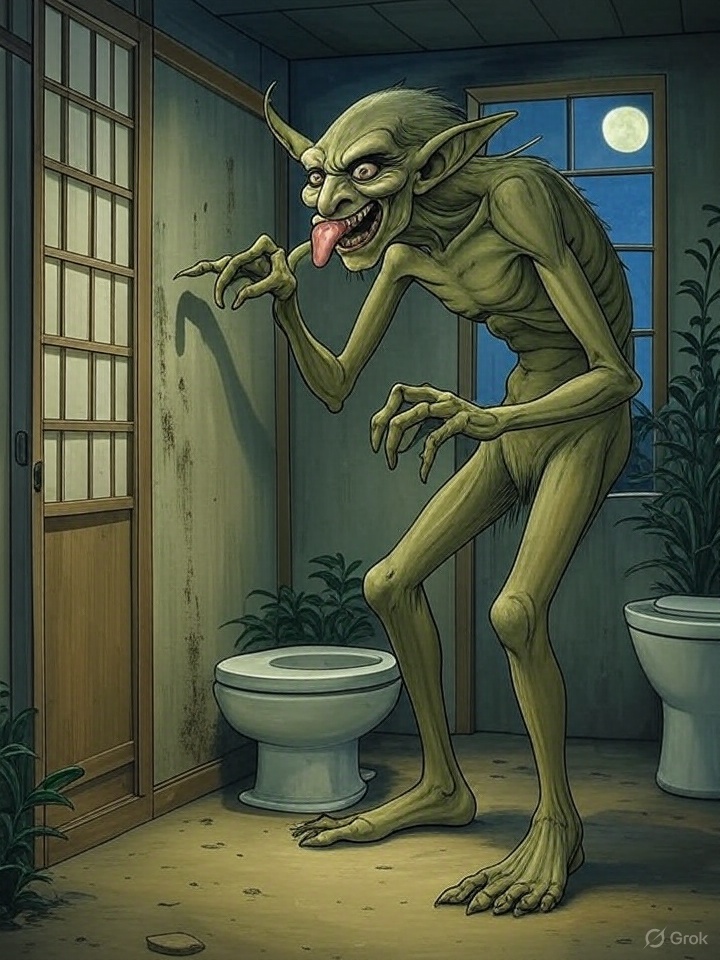
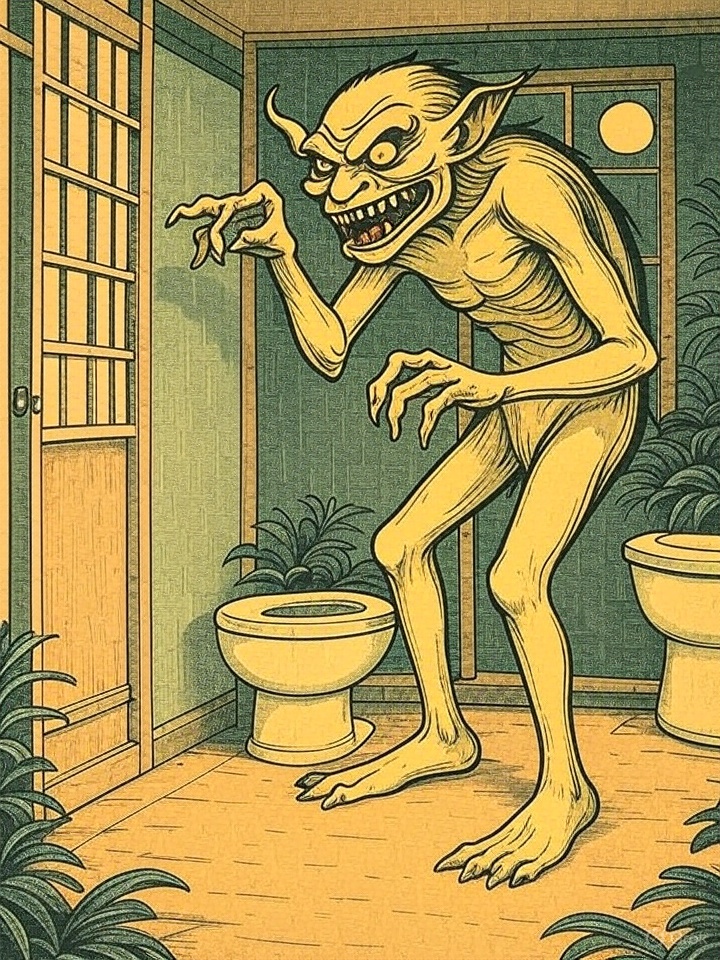
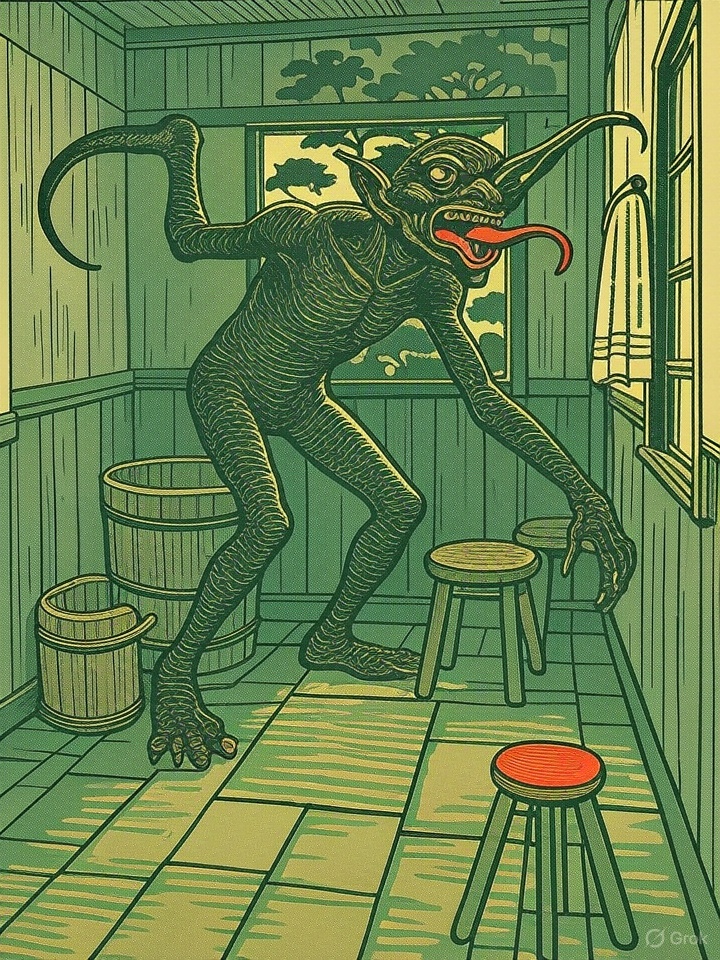
Akaname (垢嘗) is one of the more bizarre and unsettling yōkai from Japanese folklore, known for its filthy habits and grotesque appearance. Its name literally means “filth licker”, and it embodies the fears and superstitions surrounding uncleanliness in the home.
Illustrated folktale

In the depths of autumn, when the misty rain clung to the thatched roofs and the air reeked of damp earth, the villagers of Kakurin's village grew wary of their bathhouse. Strange noises echoed through the night: scraping, licking sounds that sent shivers down the spines of even the bravest young men.
They called it Akaname's presence – a harbinger of shame and neglect. It was said that in every village, where the water was fouled with grime and soap scum, an Akaname would emerge to feast on the accumulated filth.
One autumn evening, as the full moon hung low over the paddy fields, a young apprentice named Kaito ventured into the bathhouse to clean out the stagnant tubs. He had always been particular about cleanliness, but the villagers whispered that even his zeal for scrubbing and sweeping would not keep Akaname at bay.
As he swept the stone floor, Kaito spotted an eerie shape huddled in a corner – its skin like cracked earth, mottled with crimson blotches. Its long tongue darted out, lapping up the grime that coated every surface. Wild hair sprouted from its skull, as if infused with the dampness itself.
Kaito froze, unsure whether to shoo the creature or flee in terror. But Akaname did not seem aggressive; it merely went about its work with a grim, deliberate pace. It began to lick up soap scum from the edges of the tubs, leaving behind gleaming patches that glistened like miniature ponds.
A kaname's presence was not to be trifled with, but Kaito felt an odd sense of unease rather than fear. He recalled his grandmother's tales of purification rituals and the strict codes of cleanliness observed by rural communities. Akaname seemed a twisted manifestation of these traditions – a grim reminder that even the most well-intentioned efforts could falter in the face of neglect.
As Kaito watched, transfixed, Akaname's tongue swept across the stone floor with increasing speed and ferocity, as if driven by an unspoken hunger. The air thickened with an eerie, tingling presence – not unlike the feeling that preceded a sudden rainstorm on a summer afternoon.
Suddenly, the creature vanished into the shadows, leaving behind a clean but eerily spotless bathhouse. Kaito breathed easier, realizing that Akaname had fulfilled its task: reminding the villagers of their responsibility to keep their surroundings pure.
From that autumn night forward, Kaito approached his duties with an even greater sense of dedication – knowing that in every grubby corner, a watching eye might lurk, ever vigilant for neglect. And though some claimed to have spotted Akaname prowling the village's dark corners at dusk, none dared challenge its quiet vigilance.
Years later, when Kaito became a respected elder, his own grandchildren would huddle around him by the lantern, listening with rapt attention as he retold the tale of the gaunt creature that roamed the shadows – Akaname, ever vigilant guardian of cleanliness and purity.
Yokai, oni, kitsune and spirits from folklore
Directory of Japanese board games and traditional games
Verified itch.io pixel-art gacha — fair odds, no ads
Reference guides for classic Japanese ham radios
Ancient joinery techniques of Japanese master craftsmen
Explore Japan's landmarks, shrines and hidden locations
SNES and Super Famicom collection tracker
Hoshi no Isan — a Japanese-aesthetic space RPG in development
Pixel art life sim MMO — start at zero, build your life
AI-powered educational stories for kids
Japanese-aesthetic design tokens & AI-ready UI prompts

Every day, one teaching. One moment of stillness.
Kanji, meaning, and a quiet reflection — rooted in the philosophy
behind Japan's forests, seasons, and sacred silences.
Content Warning: This website explores Japanese folklore and mythological beings—including yokai, oni, and other supernatural entities—that may be frightening to younger audiences or sensitive viewers. All material is presented for educational and cultural appreciation only. Viewer discretion is advised.
Parents and guardians are encouraged to preview content before sharing it with children. By continuing to use JapaneseMythicalCreatures.com, you acknowledge and accept this advisory.
Copyright © 2026 Japanese Mythical Creatures • All Rights Reserved.