

The Shiga Prefecture in central Japan is known for lakeside legends and mysterious fires seen at night.
Abura-bō is a type of atmospheric ghost light or hitodama, similar to will-o’-the-wisps in Western folklore.
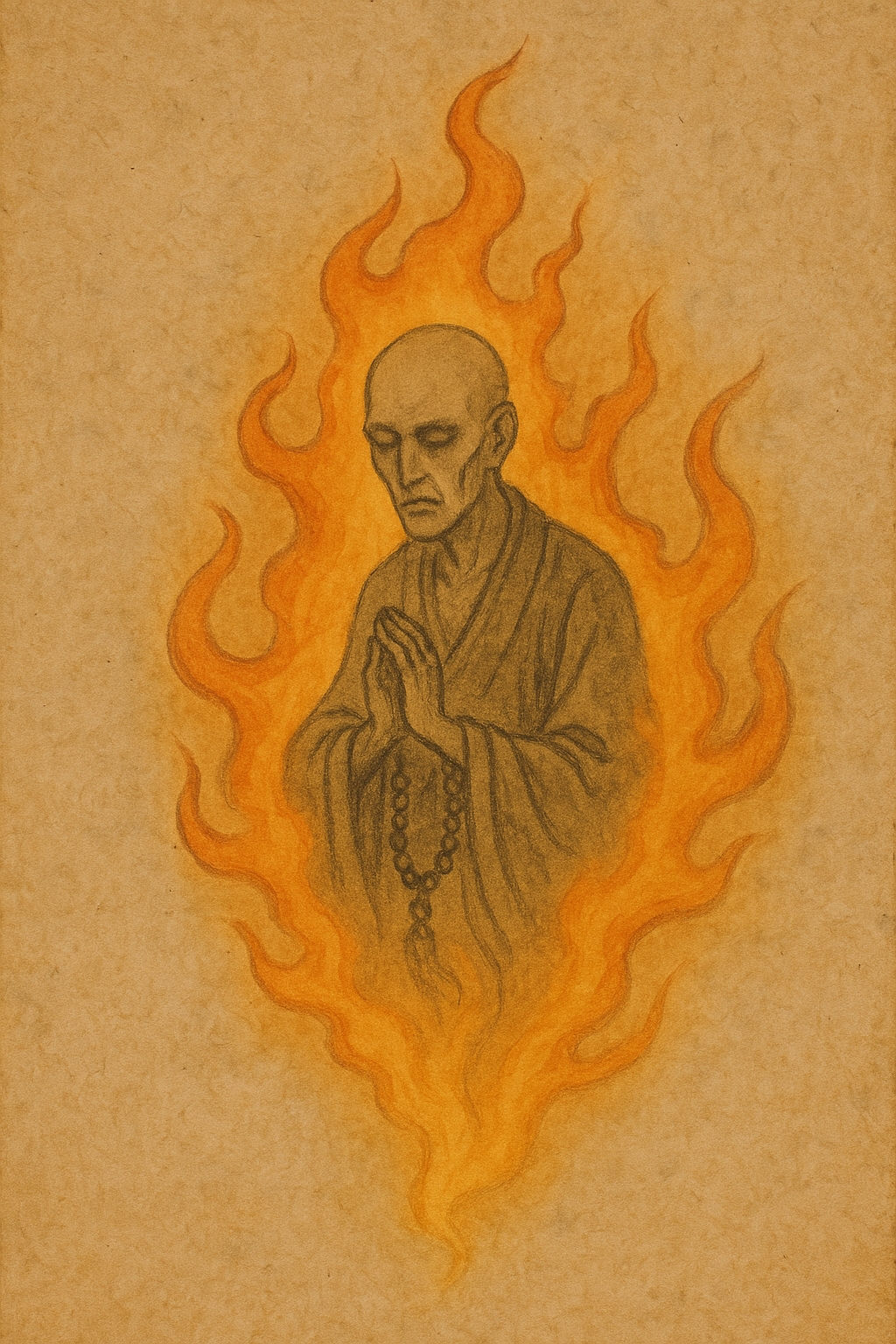
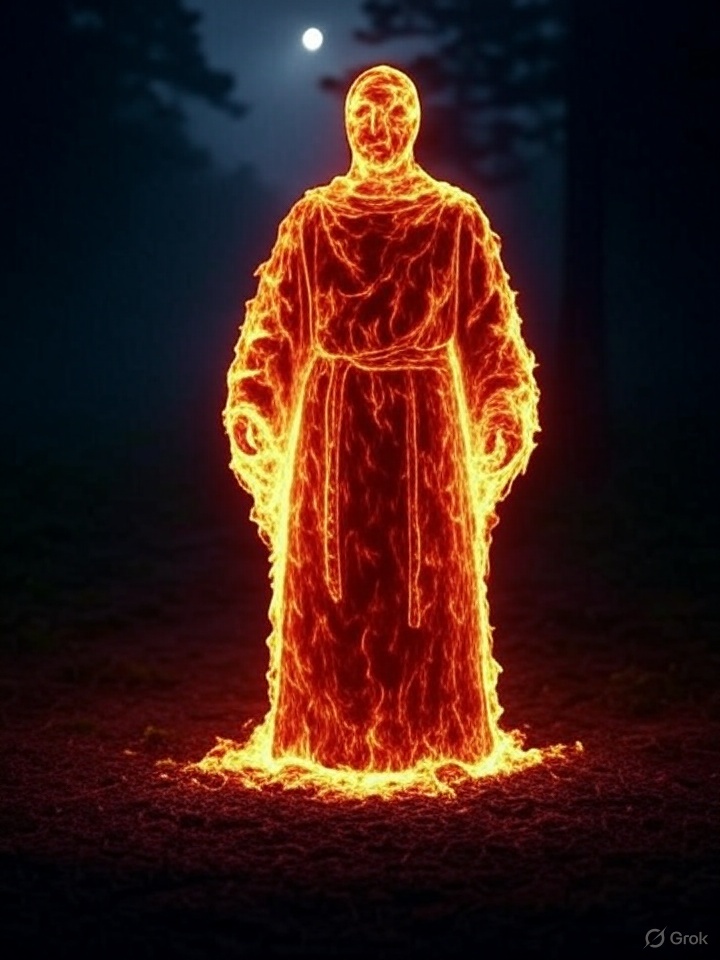

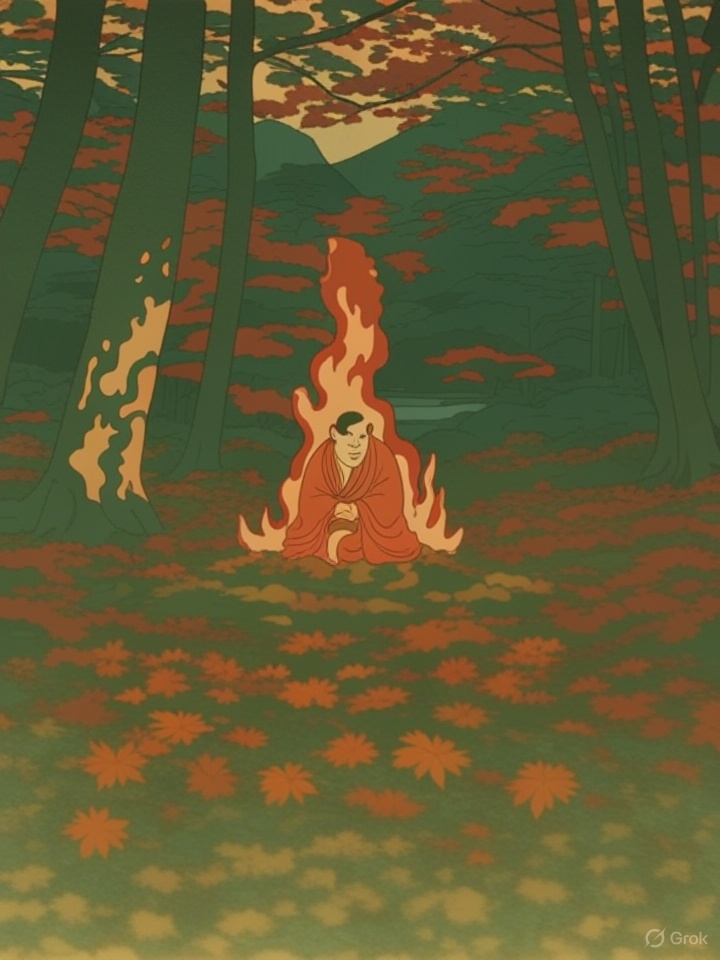
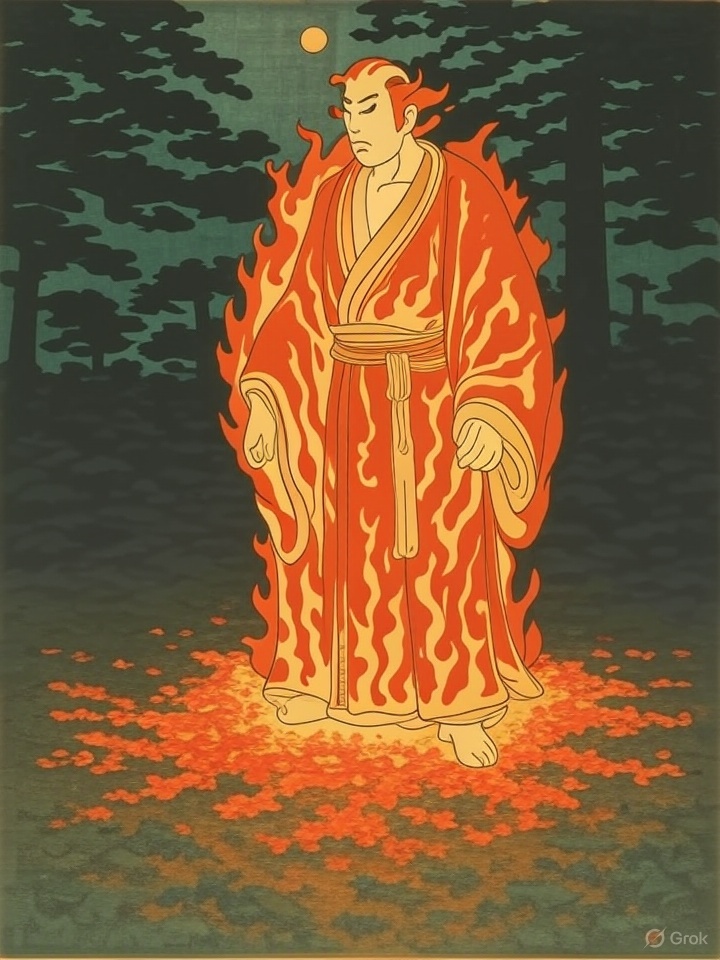
Illustrated folktale

In the depths of summer, when Shiga's mist veiled the lake shores and humid air clung to skin like a damp shroud, it was said that the Abura-bō appeared. A soft glow, akin to the warm ember of an oil lamp, hovered above the fields and paths, guiding travelers through the darkness.
It was a night just like this when Hiroji, a young monk from a distant temple, found himself walking alone along the lake's edge. His thoughts were troubled by the weight of his studies, and he had wandered further than he meant to. The path behind him disappeared into the fog, leaving only an eerie silence.
As he walked, a faint light materialized in front of him, dancing on the water's surface like a firefly on summer's eve. Hiroji felt an inexplicable sense of calm wash over him, and his footsteps slowed. Within the flame, he made out the shadowy form of a monk – bald head bowed, prayer beads wrapped around slender fingers.
The Abura-bō drifted closer, its radiance illuminating Hiroji's worn robes and the weathered wooden staff slung over his shoulder. For a moment, they floated together, suspended in an unspoken understanding. Then, as swiftly as it had appeared, the light vanished into the mist, leaving Hiroji disoriented.
He found himself lost, alone, and shrouded in an unsettling uncertainty. The fog seemed to cling to him like a damp shroud, making every step uncertain. Hiroji stumbled forward, searching for landmarks or signs of civilization, but there was only darkness. His breath grew labored as fear began to creep into his heart.
Days passed before he found his way back to the temple. Weak and shaken, Hiroji sought solace in meditation, seeking answers for his ordeal. As he sat on his cushion, eyes closed, a vision arose – the face of an old monk, wise and kind, with eyes that seemed to hold a deep sorrow.
"You followed the Abura-bō," the old one's voice whispered within Hiroji's mind, "but did you listen? The light showed you your own path, but it was not what you sought. You were drawn to its warmth, its gentle guidance, like a moth to flame."
Hiroji's eyes snapped open as understanding washed over him. He realized that the Abura-bō had led him astray not with malice, but by revealing his own desires – a longing for comfort and reassurance in times of doubt. The young monk bowed his head in shame, acknowledging the error of his ways.
As the sun rose on a new day, Hiroji made a vow to himself: to temper his heart's desires with wisdom, and to seek guidance not from fleeting lights or external sources, but from the depths of his own spirit. And though he never forgot the Abura-bō, it no longer held sway over him – for in its glowing presence, he had discovered a deeper truth about himself.
Yokai, oni, kitsune and spirits from folklore
Directory of Japanese board games and traditional games
Verified itch.io pixel-art gacha — fair odds, no ads
Reference guides for classic Japanese ham radios
Ancient joinery techniques of Japanese master craftsmen
Explore Japan's landmarks, shrines and hidden locations
SNES and Super Famicom collection tracker
Hoshi no Isan — a Japanese-aesthetic space RPG in development
Pixel art life sim MMO — start at zero, build your life
AI-powered educational stories for kids
Japanese-aesthetic design tokens & AI-ready UI prompts

Every day, one teaching. One moment of stillness.
Kanji, meaning, and a quiet reflection — rooted in the philosophy
behind Japan's forests, seasons, and sacred silences.
Content Warning: This website explores Japanese folklore and mythological beings—including yokai, oni, and other supernatural entities—that may be frightening to younger audiences or sensitive viewers. All material is presented for educational and cultural appreciation only. Viewer discretion is advised.
Parents and guardians are encouraged to preview content before sharing it with children. By continuing to use JapaneseMythicalCreatures.com, you acknowledge and accept this advisory.
Copyright © 2026 Japanese Mythical Creatures • All Rights Reserved.