

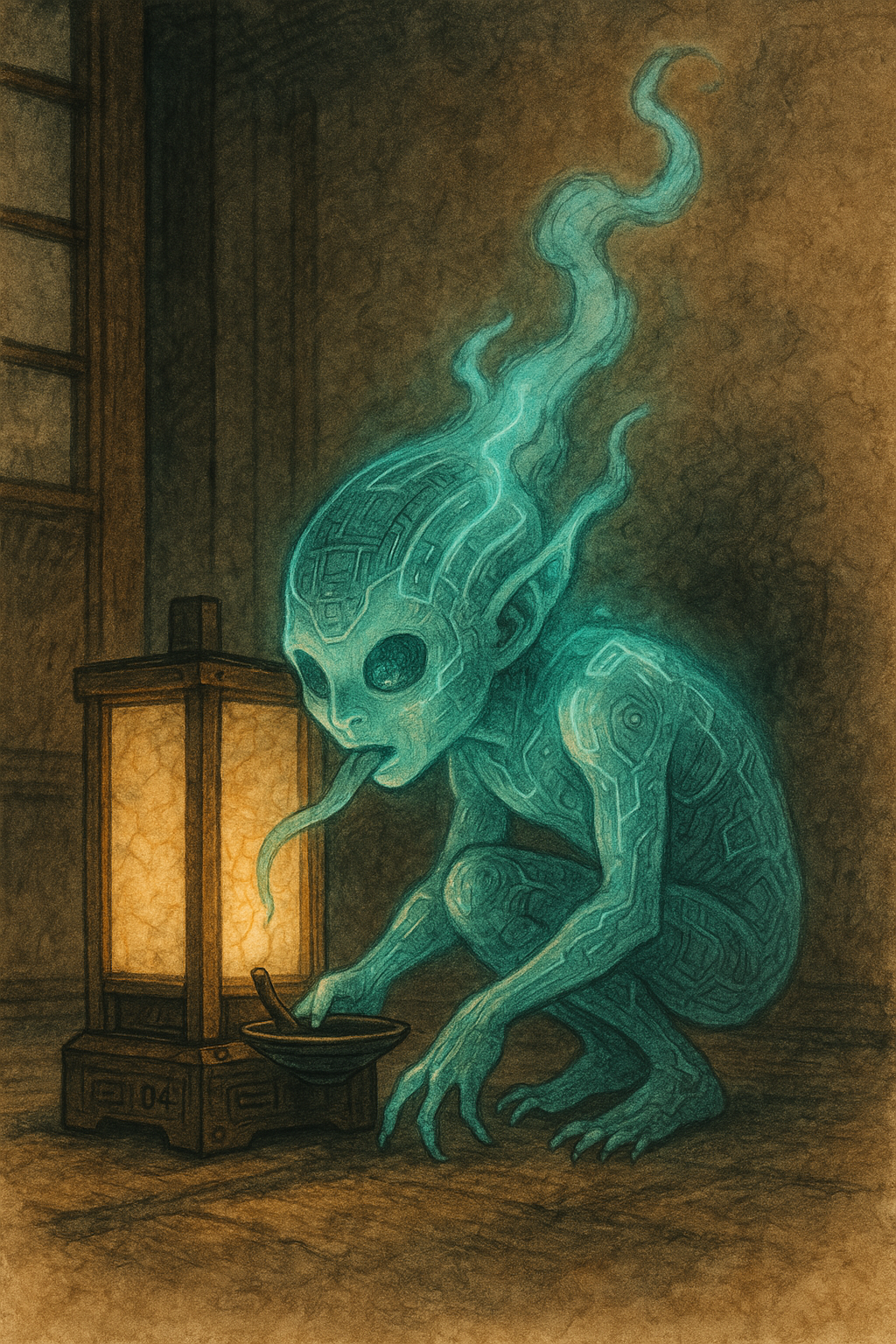
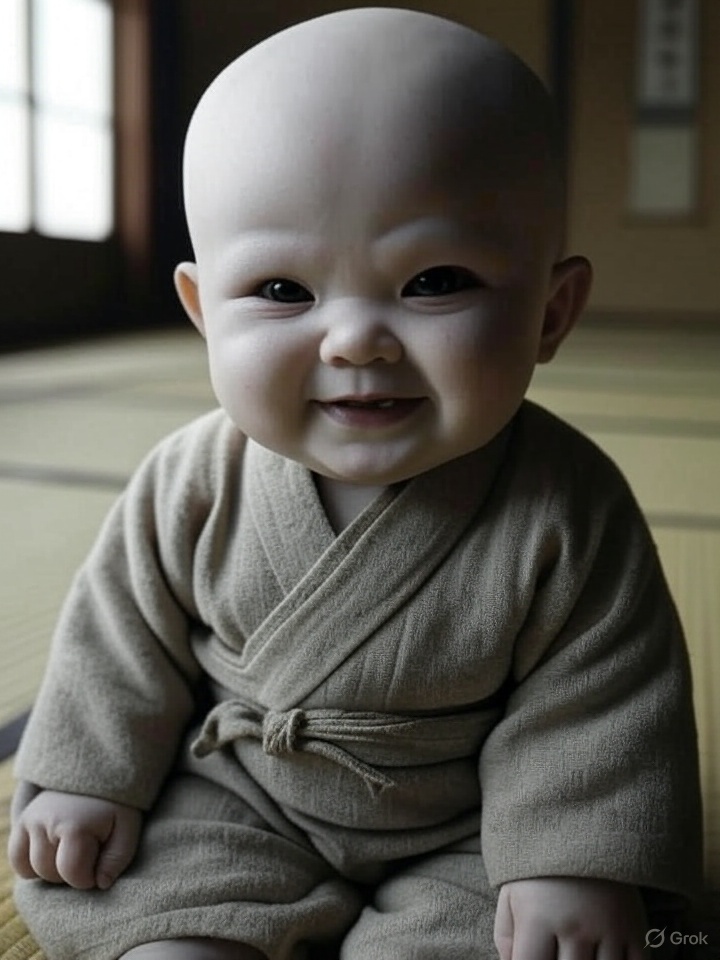
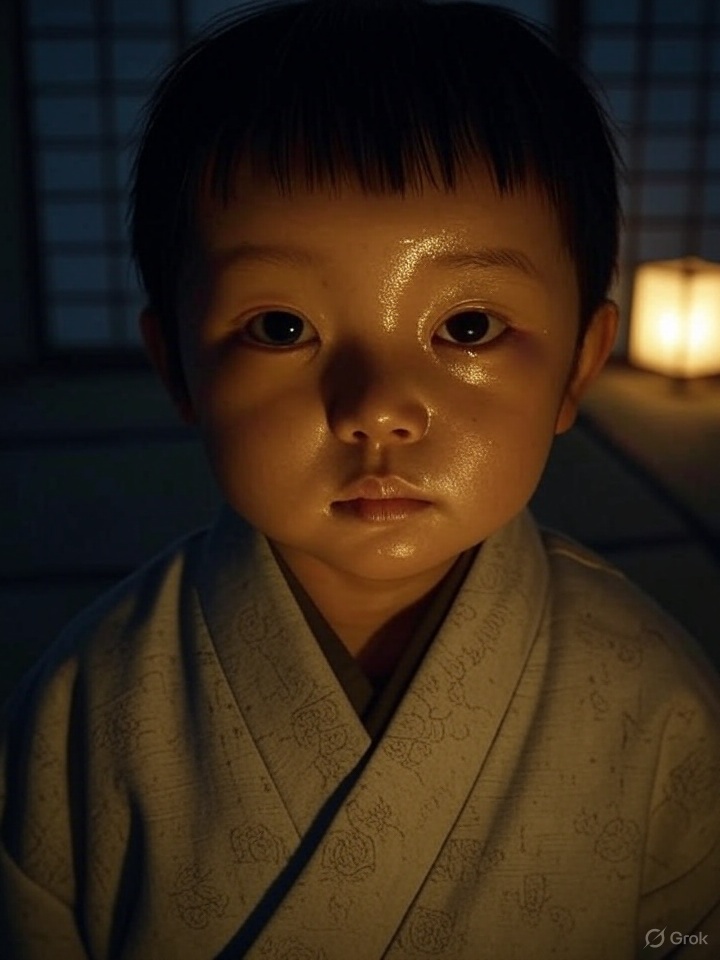
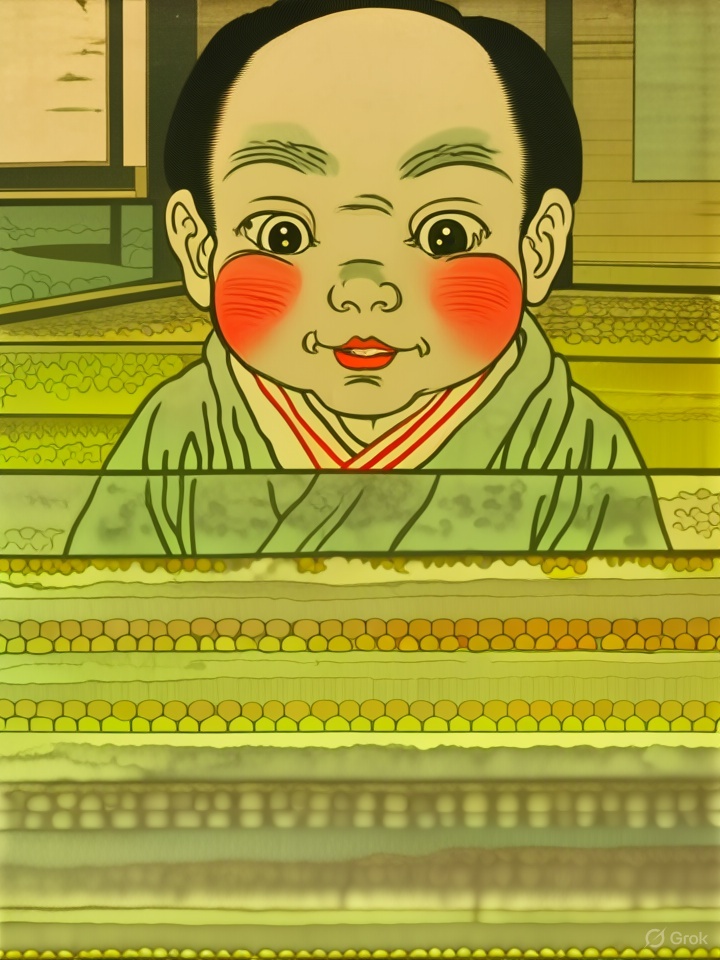
Abura-akago is described as the ghost or spirit of an infant that appears at night, often seen licking the oil from traditional andon lamps (paper-covered oil lanterns used in Edo-period Japan).
This yōkai is believed to have originated from the spirit of someone who stole oil—a highly valuable commodity in the past—or from a soul that is deeply gluttonous or greedy, reborn in this ghostly infantile form.
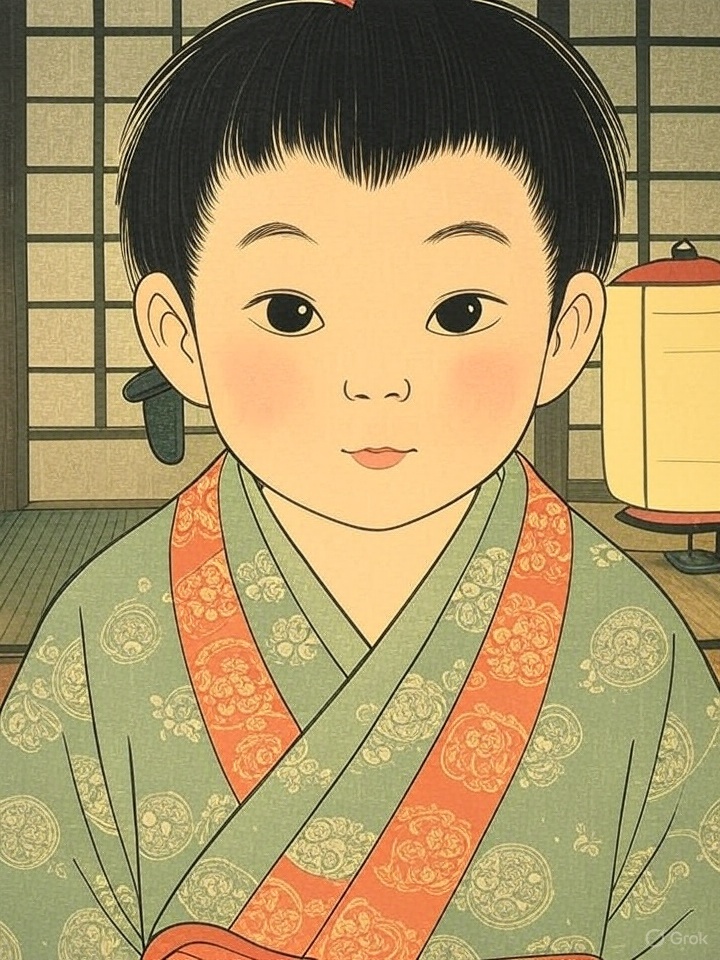
Illustrated folktale

In the quiet hours before dawn, when the moon cast its silvery glow upon the streets of Kyoto, a lone andon lamp flickered to life within the Nakamura household. Its paper wrapping rustled softly as it lit up the sleeping forms of the family, their faces serene in slumber.
But amidst this peaceful scene, an unsettling presence stirred outside. A faint, crimson glow seeped from beneath the entranceway, growing brighter with each passing moment. It was said that those who dwelled in these old streets could sense when Abura-akago came near – a sign that their household's balance of yin and yang had shifted.
Kiyomi, the eldest daughter, woke to an inexplicable feeling of unease. She rubbed her eyes, wondering if the dream she'd been having still lingered within her mind. But as she swung her legs over the side of the futon, a faint rustling caught her attention. Her gaze fell upon the andon lamp, its oil now dwindling at an alarming rate.
A tiny, red-faced creature crawled out from beneath the bedding, its eyes fixed intently on the dwindling pool of oil within the lamp. Kiyomi's breath caught in her throat as she beheld Abura-akago for the first time – a being both wondrous and foreboding. The ghostly infant seemed to embody the very essence of excess: an insatiable hunger that could never be satiated.
As Kiyomi watched, transfixed by morbid curiosity, the creature lapped up the oil with reckless abandon. Its tiny hands moved in slow motion, as if savoring each drop's fleeting presence. When the lamp's oil was finally gone, Abura-akago let out a mournful wail that sent shivers down Kiyomi's spine.
In that moment, she recalled the whispers of her elderly grandmother: "The Abura-akago roams our streets in search of succor for its hunger. Its presence reminds us that even the smallest actions can bring ruin." The words echoed through Kiyomi's mind as she pondered the ghostly infant's true nature.
As the night wore on, a faint haze gathered above the Nakamura household. A subtle shift within their family dynamics had occurred – one that would be revealed only with the passage of time. Abura-akago vanished into the shadows, leaving behind a faint crimson glow that lingered long after its departure. The andon lamp, now empty, stood as a poignant reminder: even in stillness, excess can seep from the very fabric of our lives.
When dawn finally broke, Kiyomi rose to assist her mother with the morning chores. Together they tended the garden, where a cluster of sesame plants bloomed in the morning light. As they worked, their grandmother's words returned to mind – this time with a newfound understanding: "Abura-akago comes not just to drink oil, but also to prompt self-reflection within those who dwell on our streets." With a gentle smile, Kiyomi planted her seed of awareness among the sesame plants, knowing that it would grow strong and unshakeable with each passing day.
Yokai, oni, kitsune and spirits from folklore
Directory of Japanese board games and traditional games
Verified itch.io pixel-art gacha — fair odds, no ads
Reference guides for classic Japanese ham radios
Ancient joinery techniques of Japanese master craftsmen
Explore Japan's landmarks, shrines and hidden locations
SNES and Super Famicom collection tracker
Hoshi no Isan — a Japanese-aesthetic space RPG in development
Pixel art life sim MMO — start at zero, build your life
AI-powered educational stories for kids
Japanese-aesthetic design tokens & AI-ready UI prompts

Every day, one teaching. One moment of stillness.
Kanji, meaning, and a quiet reflection — rooted in the philosophy
behind Japan's forests, seasons, and sacred silences.
Content Warning: This website explores Japanese folklore and mythological beings—including yokai, oni, and other supernatural entities—that may be frightening to younger audiences or sensitive viewers. All material is presented for educational and cultural appreciation only. Viewer discretion is advised.
Parents and guardians are encouraged to preview content before sharing it with children. By continuing to use JapaneseMythicalCreatures.com, you acknowledge and accept this advisory.
Copyright © 2026 Japanese Mythical Creatures • All Rights Reserved.