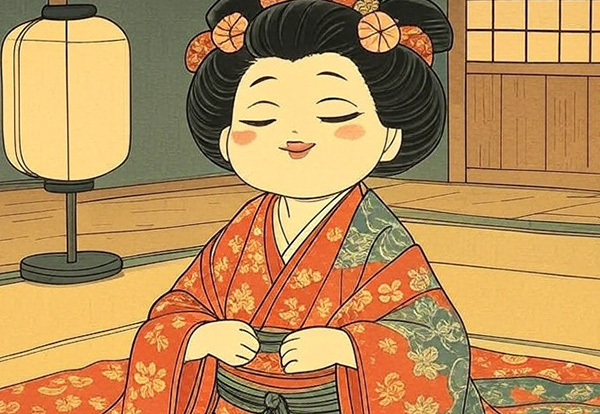

Zashiki-warashi (座敷童子) translates to “parlor child” or “child in the sitting room,” referencing its appearance and behavior as a child-like spirit residing in traditional Japanese homes.
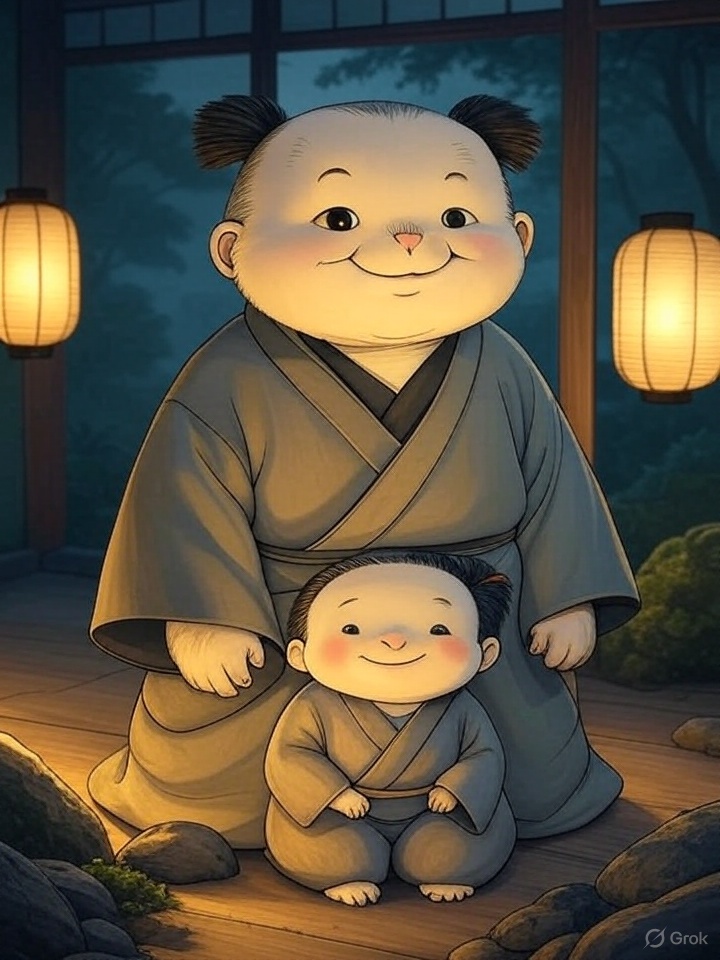
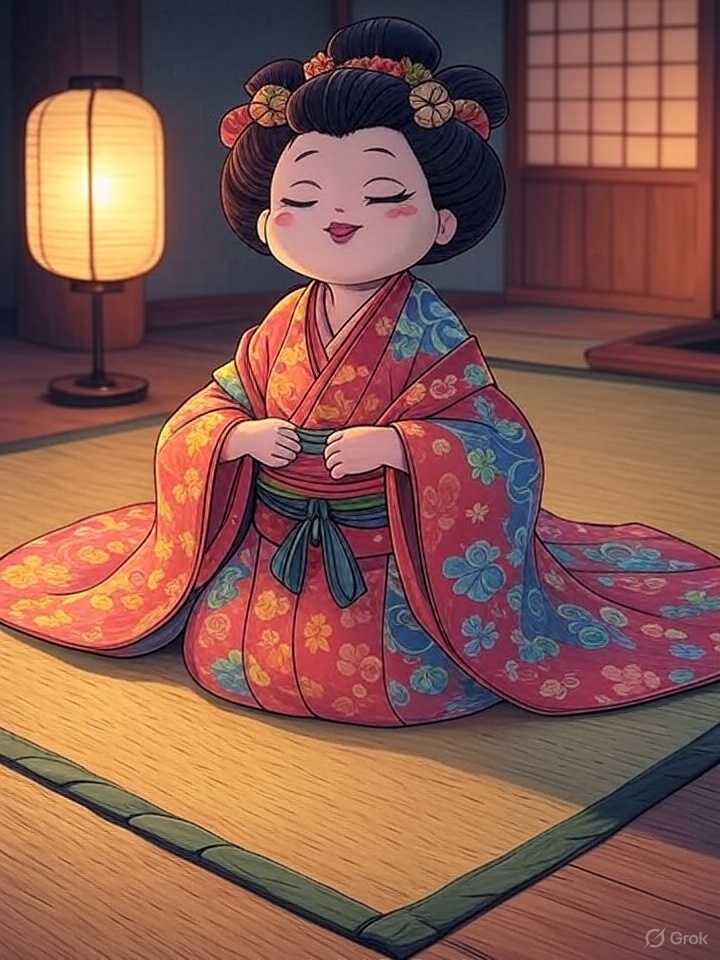
Illustrated folktale

In the mist-shrouded mountains of Iwate's countryside, there stood an old inn, its wooden sign creaking in the gentle breeze. The sign, painted with faded characters, read "Kaze no Yado" – Wind's Rest. Few travelers ventured to this remote haven, but those who did often spoke of a young spirit, Zashiki-warashi, who watched over the establishment.
Aokichi, the innkeeper's daughter, was said to have seen the child most clearly on a winter evening, when snowflakes danced in the flickering candles' light. She had been tasked with sweeping the tatami-mat floor of the main hall, but her broom remained still, as if enchanted, while she gazed out at the whirling snow. That was when she noticed him – a small figure, about five winters old, dressed in a worn kimono, his dark hair styled in traditional bangs.
Aokichi's eyes met those of Zashiki-warashi, and for an instant, they shared a quiet understanding. He vanished into thin air, leaving behind only a faint scent of sandalwood and a sprinkle of dust on the floor mat. Yet, from that moment on, the inn prospered. Guests came in droves, seeking shelter from the harsh winter winds, and Kaze no Yado's reputation as a sanctuary for weary travelers spread.
One evening, as Aokichi poured tea for a group of weary samurai, she noticed Zashiki-warashi watching from a corner of the room. He seemed to be playing a trick on the men – their chopsticks kept getting entangled in an invisible thread, causing them to laugh and curse in equal measure. The innkeeper's daughter smiled knowingly; this was but one of many harmless pranks the young spirit played.
As winter turned to spring, Kaze no Yado continued to thrive. Aokichi would often catch glimpses of Zashiki-warashi flitting about the inn – dusting off old scrolls in the library or rearranging the tea utensils with a mischievous grin. Some said he brought good fortune by playing his favorite tune on a hidden flute, its melancholy notes echoing through the empty corridors at dawn.
But as summer's heat bore down upon the mountains, whispers began to spread of an impending change. One morning, Aokichi awoke to find that Kaze no Yado was deserted – all signs of life had vanished, leaving behind only an eerie silence and an unsettling feeling that the inn's protection had been lifted.
Some said that on stormy nights, when wind whipped through the mountains like a restless spirit, you could still hear Zashiki-warashi's faint laughter carried on the gusts. Others claimed to have seen him walking alongside travelers, guiding them toward safe harbors and promising prosperity for those who treated the old inn with kindness.
Aokichi, now grown wise in her understanding of the young guardian spirit, smiled whenever she thought of Kaze no Yado's future. She knew that as long as the wind whispered through its wooden beams, Zashiki-warashi would return – to play his tricks, share laughter, and keep watch over those who sought refuge within its humble walls. For in a world fraught with uncertainty, only a childlike spirit of innocence could truly bring prosperity and protection to those seeking shelter from life's tempests.
Take our eight-question quiz and see if Zashiki-warashi is your true yokai match — or discover another spirit from Japanese folklore.
Take the quizYokai, oni, kitsune and spirits from folklore
Directory of Japanese board games and traditional games
Verified itch.io pixel-art gacha — fair odds, no ads
Reference guides for classic Japanese ham radios
Ancient joinery techniques of Japanese master craftsmen
Explore Japan's landmarks, shrines and hidden locations
SNES and Super Famicom collection tracker
Hoshi no Isan — a Japanese-aesthetic space RPG in development
Pixel art life sim MMO — start at zero, build your life
AI-powered educational stories for kids
Japanese-aesthetic design tokens & AI-ready UI prompts

Every day, one teaching. One moment of stillness.
Kanji, meaning, and a quiet reflection — rooted in the philosophy
behind Japan's forests, seasons, and sacred silences.
Content Warning: This website explores Japanese folklore and mythological beings—including yokai, oni, and other supernatural entities—that may be frightening to younger audiences or sensitive viewers. All material is presented for educational and cultural appreciation only. Viewer discretion is advised.
Parents and guardians are encouraged to preview content before sharing it with children. By continuing to use JapaneseMythicalCreatures.com, you acknowledge and accept this advisory.
Copyright © 2026 Japanese Mythical Creatures • All Rights Reserved.