

Yanari (家鳴) means “house sounds,” referring to strange creaks, knocks, or shakes heard in buildings, attributed to yokai.
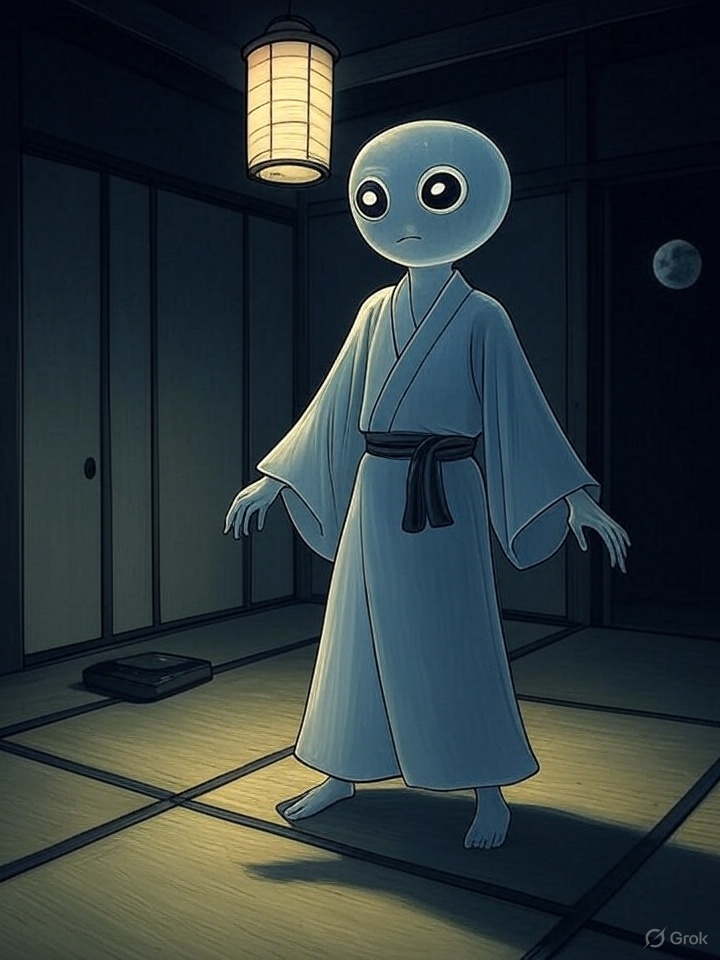
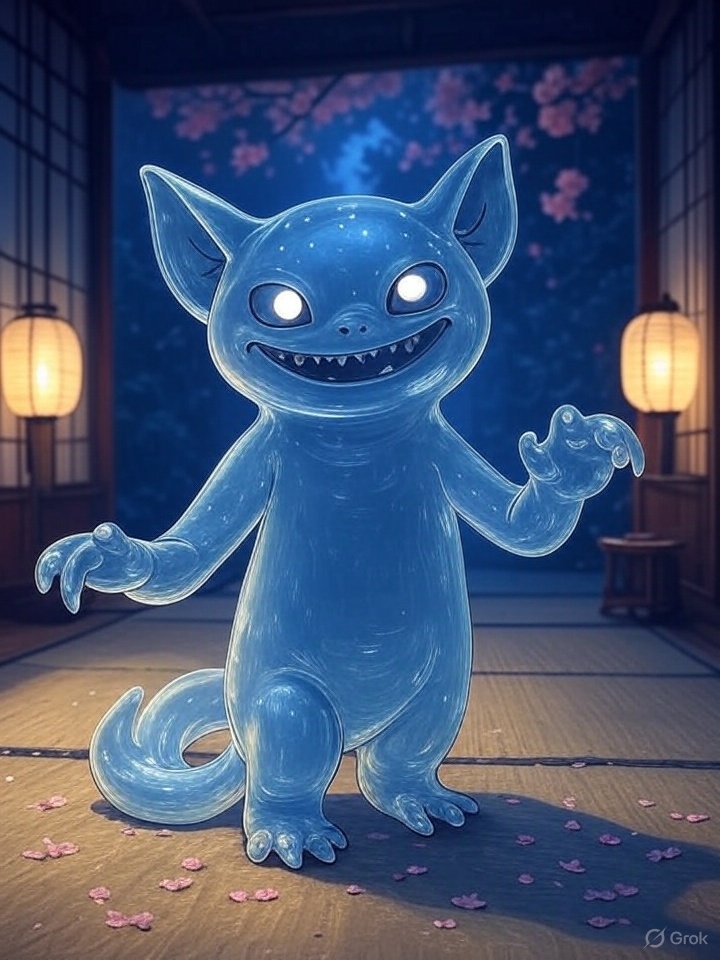
Illustrated folktale

In the sleepy village of Shirakawa, where misty mountains kissed the sky and bamboo forests swayed in the wind, there stood an old wooden house named Akane-no-ie. Its beams creaked with age, its shingles worn smooth by countless winters. Within those walls, a young girl named Emiko lived with her family.
At first, nothing seemed out of the ordinary. Emiko's mother would whisper to her about the strange noises that came at night – thumps and bangs, as if someone was walking through the rooms, or furniture shifting on its own. But when she went to investigate, there'd be no one in sight. Only the faint scent of incense lingering in the air.
Emiko's curiosity turned to fascination. She began to notice that these nocturnal sounds often occurred after her mother had spent long hours weeping by the old tatami mat. The family's fortunes had taken a turn for the worse, and Emiko's mother struggled with the weight of their troubles.
One evening, as Emiko lay in bed, she felt an unusual presence. A low hum, like the gentle buzzing of a cicada, vibrated through her body. She sat up to listen, and the sound grew louder – creaking floorboards, a low thud on the roof. Her heart pounded with excitement, yet trepidation.
She rose from bed and stepped out into the darkened hallway. Footsteps echoed through the empty corridors, growing softer as she followed their path. They led her to a room at the back of the house – a space that had been left untouched since Emiko's father passed away. Dust coated the shelves, cobwebs hung like tapestries.
The footsteps stopped before an old sake barrel in the corner. Its wooden lid creaked open by itself, releasing a whisper-thin trail of smoke into the air. A small, shadowy form danced within the faint light – no bigger than Emiko's hand, its presence both eerie and pitiful.
She watched, transfixed, as the yanari flitted about the barrel, its tiny face contorted in frustration. In that moment, Emiko understood: this was not a malevolent spirit, but a restless energy born from her family's pain. The creaks and thumps were the house's own laments – sorrowful echoes of memories it couldn't shake.
Emiko approached the barrel cautiously, offering a gentle word of comfort. The yanari paused in its dancing, then settled into the shadows. As she lit a stick of incense and placed it beside the barrel, the sounds ceased. A faint peace settled over Akane-no-ie – as if the house itself had found solace.
From that night on, Emiko visited the sake barrel often, listening to the yanari's soft whispers and sharing its sorrow. And though her mother still wept, their home began to heal – its wooden heart slowly closing the wounds of past suffering.
Yokai, oni, kitsune and spirits from folklore
Directory of Japanese board games and traditional games
Verified itch.io pixel-art gacha — fair odds, no ads
Reference guides for classic Japanese ham radios
Ancient joinery techniques of Japanese master craftsmen
Explore Japan's landmarks, shrines and hidden locations
SNES and Super Famicom collection tracker
Hoshi no Isan — a Japanese-aesthetic space RPG in development
Pixel art life sim MMO — start at zero, build your life
AI-powered educational stories for kids
Japanese-aesthetic design tokens & AI-ready UI prompts

Every day, one teaching. One moment of stillness.
Kanji, meaning, and a quiet reflection — rooted in the philosophy
behind Japan's forests, seasons, and sacred silences.
Content Warning: This website explores Japanese folklore and mythological beings—including yokai, oni, and other supernatural entities—that may be frightening to younger audiences or sensitive viewers. All material is presented for educational and cultural appreciation only. Viewer discretion is advised.
Parents and guardians are encouraged to preview content before sharing it with children. By continuing to use JapaneseMythicalCreatures.com, you acknowledge and accept this advisory.
Copyright © 2026 Japanese Mythical Creatures • All Rights Reserved.