

Yakubyō-gami (厄病神) translates to "god of plague" or "spirit of misfortune." These spirits are associated with bringing calamity.
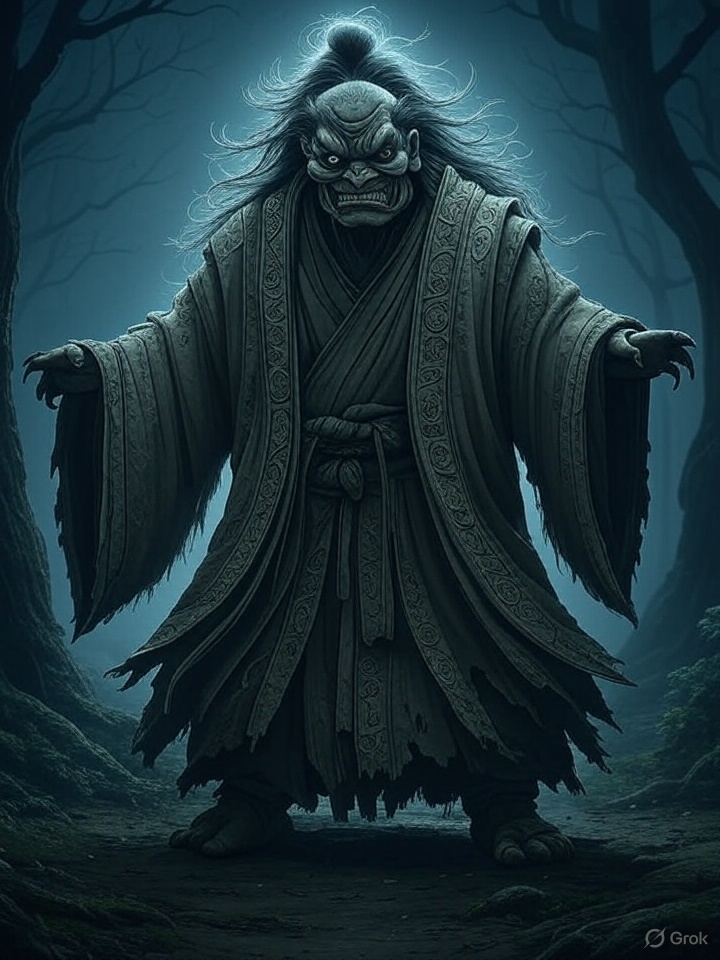
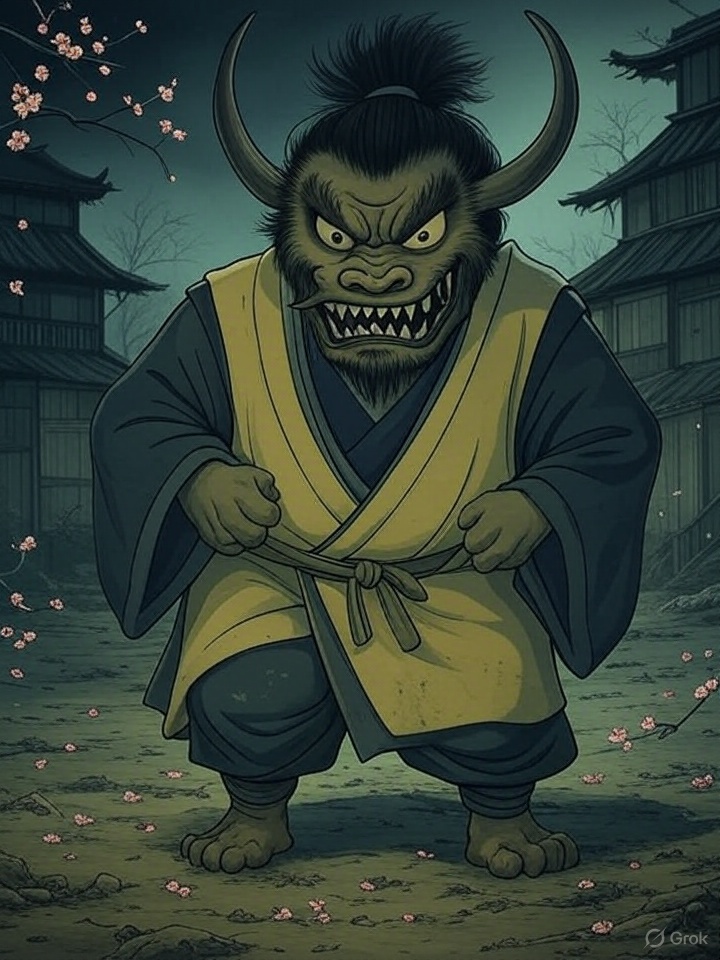
Illustrated folktale

In the sleepy village of Katsuragi, nestled between two great mountains, a terrible affliction had taken hold. Crops withered, livestock fell ill, and the once-clear streams ran murky with an eerie green hue. The villagers whispered among themselves that the Yakubyō-gami, the harbingers of calamity, had come to visit.
Old Man Hirota knew the truth. He had lived through many a season like this, but never one so dire. With every passing day, the shadows in his village seemed to grow longer and darker, as if night itself was creeping into the daylight. The Yakubyō-gami were said to be shadowy figures, invisible to the naked eye, yet their presence felt by all who lived within a mile's radius of their evil.
One fateful evening, Hirota ventured out into the rain-soaked streets, seeking wisdom from the village elder. Kaito-san, a wise and aged man, had spent his life studying the ancient ways and was said to possess knowledge of the dark arts. As Hirota approached the elder's home, he noticed a figure lurking in the alleyway across the street – an old woman with eyes that seemed to bore into the very soul.
"Kaito-san," Hirota called out softly, "the Yakubyō-gami have come, haven't they?"
The elder nodded gravely. "Yes, my friend. They are always drawn to suffering and chaos. But we can drive them off with a proper ritual."
Together, they prepared the offerings: salt, rice, and sake. As night fell, they took to the streets, carrying a large wooden doll adorned with sacred symbols. The villagers followed close behind, their faces aglow with candles made from the purest wax.
The old woman, Hirota later discovered, was no ordinary spirit. She had once been a human, a healer who had mastered the dark arts in her quest for power. But as she dabbled in forbidden knowledge, she became consumed by the very evil she sought to control. Now, she roamed the land, spreading disease and despair wherever she went.
As the ritual reached its climax, Hirota felt an icy presence wash over him. The air grew thick with malevolent energy, and he knew that the Yakubyō-gami was closing in. With a burst of sacred incense, the elder summoned the power to repel the creature. Slowly but surely, the darkness receded, and the shadowy figure vanished into the night.
From that day forward, Katsuragi began to heal. The crops regained their vibrancy, the streams ran clear once more, and the villagers' spirits lifted. Hirota knew that as long as they honored the ancient traditions and kept their hearts pure, the Yakubyō-gami would never return. But he also knew that in times of great suffering, the lines between good and evil blurred, and even the most well-intentioned among them could falter.
As he walked through the village, Hirota caught a glimpse of Kaito-san's wise eyes, filled with a deep understanding of the mysteries that lurked beyond the veil. The elder nodded in silent agreement: in a world beset by darkness, it was the responsibility of those who knew the ancient ways to keep the balance and protect their communities from the unseen forces that threatened them.
Yokai, oni, kitsune and spirits from folklore
Directory of Japanese board games and traditional games
Verified itch.io pixel-art gacha — fair odds, no ads
Reference guides for classic Japanese ham radios
Ancient joinery techniques of Japanese master craftsmen
Explore Japan's landmarks, shrines and hidden locations
SNES and Super Famicom collection tracker
Hoshi no Isan — a Japanese-aesthetic space RPG in development
Pixel art life sim MMO — start at zero, build your life
AI-powered educational stories for kids
Japanese-aesthetic design tokens & AI-ready UI prompts

Every day, one teaching. One moment of stillness.
Kanji, meaning, and a quiet reflection — rooted in the philosophy
behind Japan's forests, seasons, and sacred silences.
Content Warning: This website explores Japanese folklore and mythological beings—including yokai, oni, and other supernatural entities—that may be frightening to younger audiences or sensitive viewers. All material is presented for educational and cultural appreciation only. Viewer discretion is advised.
Parents and guardians are encouraged to preview content before sharing it with children. By continuing to use JapaneseMythicalCreatures.com, you acknowledge and accept this advisory.
Copyright © 2026 Japanese Mythical Creatures • All Rights Reserved.