

Yadōkai (夜道怪) roughly translates to "night path apparitions," often interpreted as corrupt or wayward monks turned yokai.
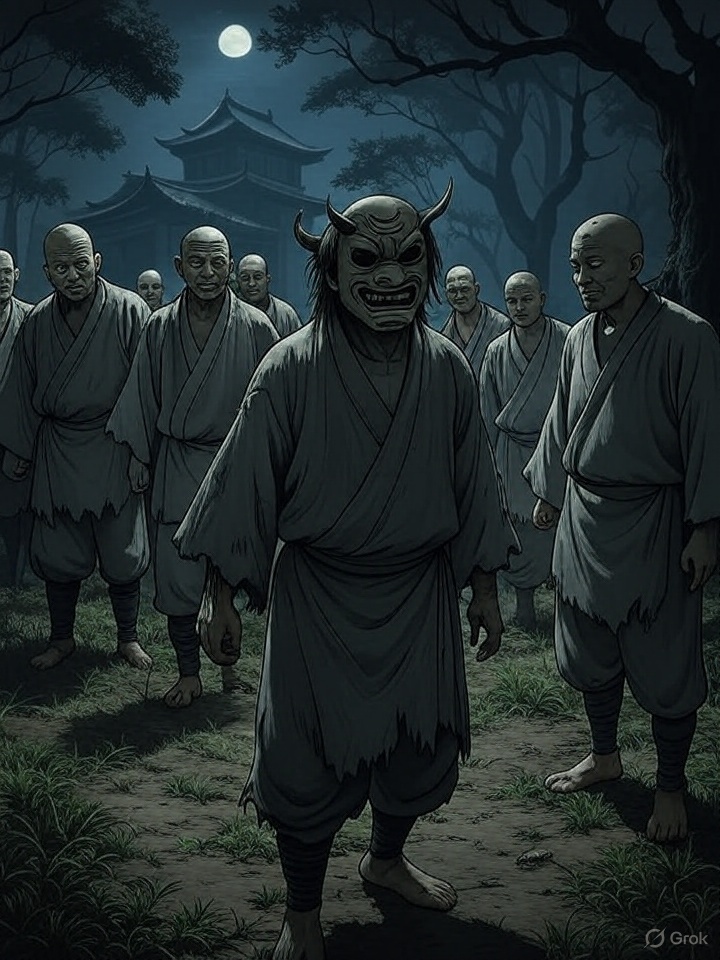
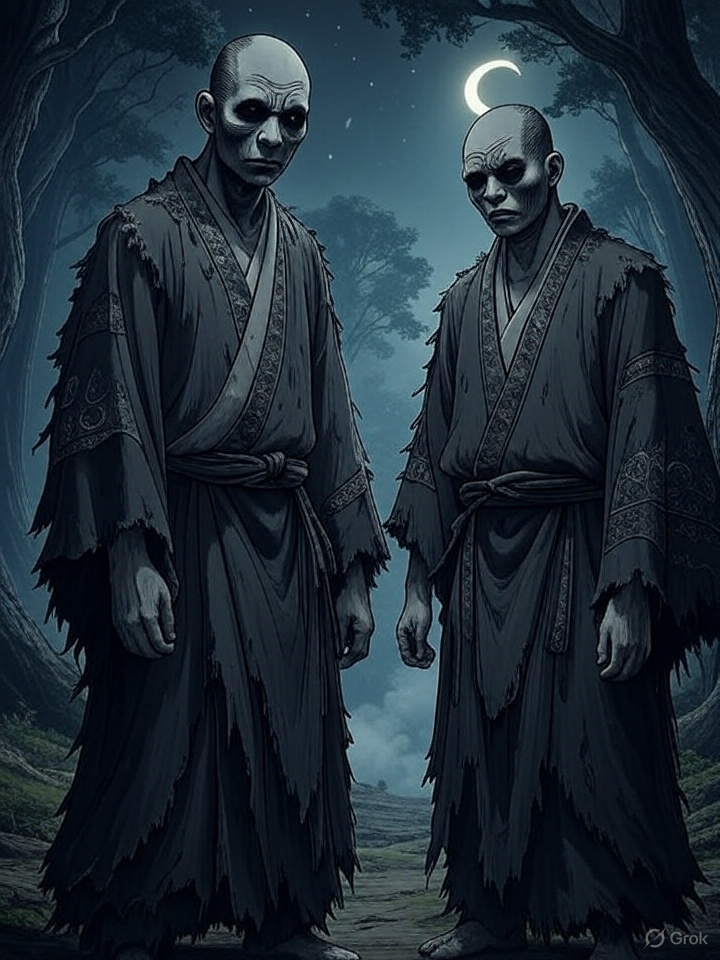
Illustrated folktale

In the moonlit hours when shadows danced upon the temple grounds, a lone pilgrim named Kaito sought refuge from the scorching summer air. His worn sandals carried him along the winding path, his eyes fixed on the distant spires of Kumano-jinja. As he walked, the rustling of leaves and snapping of twigs beneath his feet seemed to echo through the stillness.
Suddenly, a gust of wind buffeted Kaito, sending his prayer beads flying into the darkness. The pilgrim bent to retrieve them, but as he rose, he felt an unsettling presence lurking just out of sight. A chill crept up his spine, and his breath quickened.
A figure emerged from the shadows – a ragged monk with eyes aglow like lanterns in the night. His tattered robes billowed behind him, as if stirred by an unseen wind. Kaito's heart skipped a beat as he recognized the sign of Yadōkai: a harbinger of spiritual corruption and betrayal.
As the pilgrim watched in trepidation, the monk began to shift and writhe, his form blurring like a reflection on rippling water. The eyes gleamed brighter still, illuminating the darkness with an otherworldly light. Kaito felt himself drawn toward the Yadōkai, as if by some unseen force.
"Turn back, traveler," the monk's voice whispered on the wind. "You seek spiritual solace, but your heart remains impure." The words dripped with malevolent intent, and Kaito stumbled backward, his mind reeling.
As he regained his footing, the pilgrim noticed a subtle change in the environment. The trees seemed to lean in, their branches tangled above him like skeletal fingers. A faint hum of chanting drifted through the air, an eerie echo of the temple's evening prayers.
Kaito realized that the Yadōkai sought not only to mislead but also to feed on the pilgrim's very essence. He recalled the teachings of his sensei: "A heart consumed by ego and desire is vulnerable to the whispers of darkness." With newfound resolve, Kaito steeled himself against the Yadōkai's insidious charms.
He called upon the blessings of Amaterasu, goddess of the sun, and began to chant a mantra of purification. As his voice rose above the shadows' mutterings, the wind died down, and the trees straightened their twisted limbs. The Yadōkai let out a defeated shriek, its form dissipating like smoke on the breeze.
Breathless and shaken, Kaito quickened his pace along the temple path. He knew that the true test lay not in avoiding the Yadōkai but in resisting its influence, that he might remain steadfast on his spiritual journey. And so, with each step, he fortified his heart against the shadows' siren call, guided by the quiet wisdom of the ancient traditions.
Yokai, oni, kitsune and spirits from folklore
Directory of Japanese board games and traditional games
Verified itch.io pixel-art gacha — fair odds, no ads
Reference guides for classic Japanese ham radios
Ancient joinery techniques of Japanese master craftsmen
Explore Japan's landmarks, shrines and hidden locations
SNES and Super Famicom collection tracker
Hoshi no Isan — a Japanese-aesthetic space RPG in development
Pixel art life sim MMO — start at zero, build your life
AI-powered educational stories for kids
Japanese-aesthetic design tokens & AI-ready UI prompts

Every day, one teaching. One moment of stillness.
Kanji, meaning, and a quiet reflection — rooted in the philosophy
behind Japan's forests, seasons, and sacred silences.
Content Warning: This website explores Japanese folklore and mythological beings—including yokai, oni, and other supernatural entities—that may be frightening to younger audiences or sensitive viewers. All material is presented for educational and cultural appreciation only. Viewer discretion is advised.
Parents and guardians are encouraged to preview content before sharing it with children. By continuing to use JapaneseMythicalCreatures.com, you acknowledge and accept this advisory.
Copyright © 2026 Japanese Mythical Creatures • All Rights Reserved.