

Tankororin (たんころりん) is an onomatopoeic name referring to a rolling, thudding sound—mimicking the fall of an overripe persimmon.
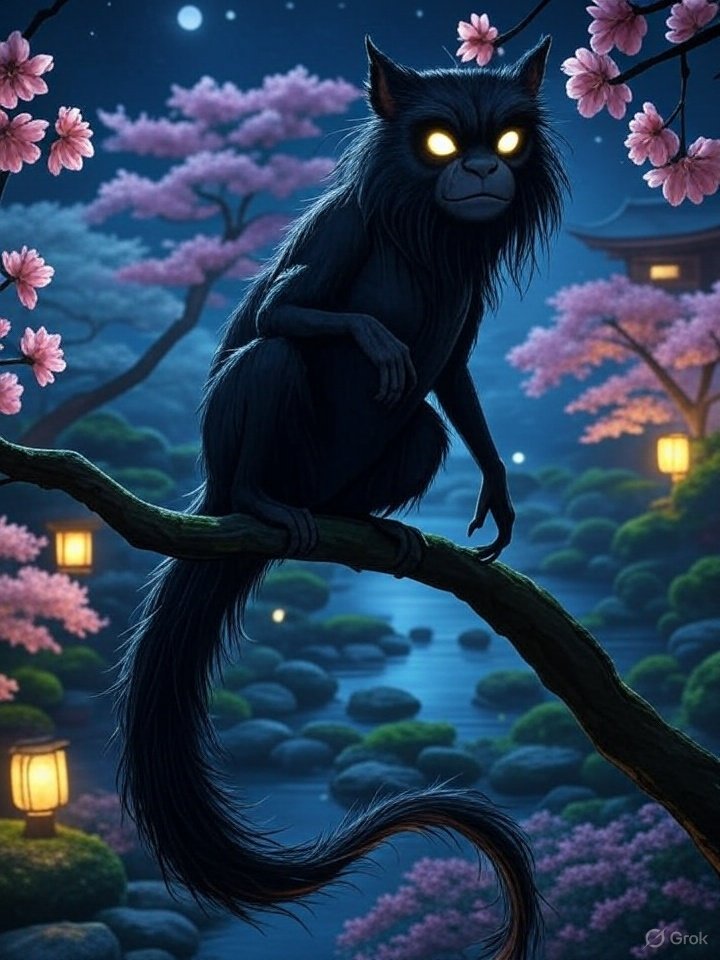
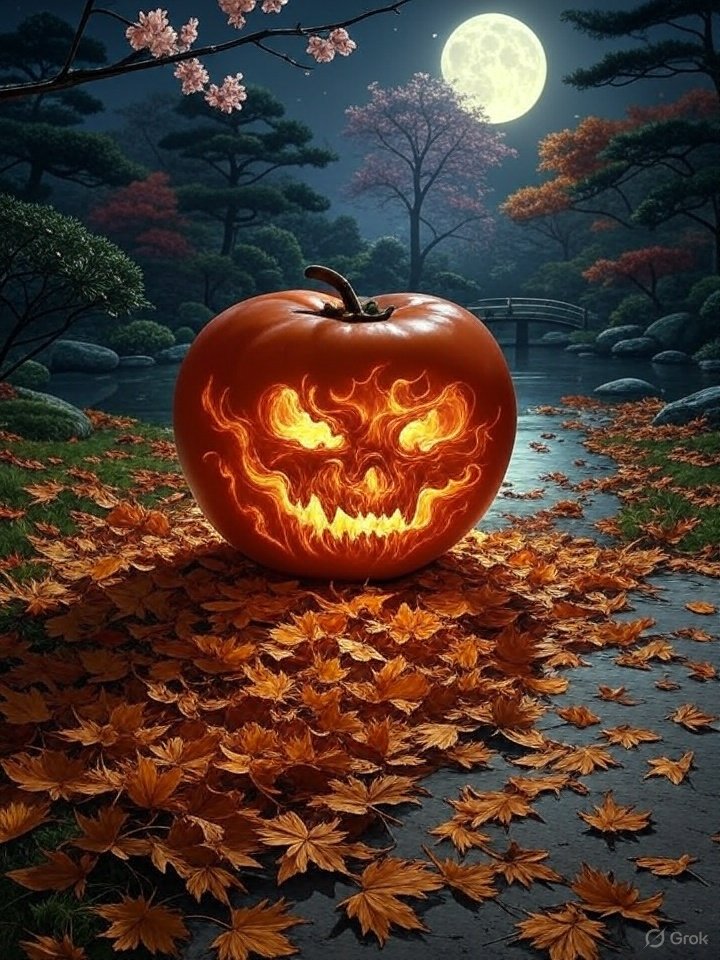
Illustrated folktale

In the village of Kōmori, where the sun dipped into the mountains and painted the sky with hues of crimson and gold, there lived an old farmer named Goro. He toiled in his orchard from dawn till dusk, tending to the trees that bore fruit for the villagers' tables. But as the seasons passed, Goro's attention waned, and his once-thriving garden began to wither.
The persimmon tree, a stalwart companion of Goro's youth, stood forgotten in the corner of his orchard. Its branches twisted, its leaves yellowed, and its fruit shriveled on the branch like tiny lanterns. The villagers whispered among themselves that the tree was cursed, for it seemed to mock their labors with its very existence.
One autumn evening, as the wind carried the whispers of the village away, a traveler chanced upon Goro's orchard. He had heard tales of the haunted fruit trees that dotted Japan's countryside and had come seeking solace in the quiet darkness. But instead, he stumbled upon an eerie glow emanating from the persimmon tree.
The light grew brighter, illuminating the faces of passing villagers like ghostly imprints on a lantern's surface. The traveler watched in awe as a glowing, rotting persimmon detached itself from the branch and began to roll across the dirt path. It glided effortlessly, leaving behind a trail of frosty sparks that faded like summer moths.
The villagers called this phenomenon Tankororin – a creature born from decay and forgotten fruit. Some said it was a tsukumogami, an object imbued with spirit after years of neglect. The traveler watched as the Tankororin paused before his feet, its light pulsating in a mournful rhythm.
Suddenly, the air around the Tankororin seemed to thicken, like a spider's web glistening in morning dew. A face-like imprint on the persimmon's skin appeared to regard the traveler with an ancient sorrow. He sensed that this creature was not malicious, but a reminder of the transience of life and the importance of tending to nature's gifts.
As he stood there, transfixed by the Tankororin's glow, the wind whispered secrets in his ear. Goro's orchard, once thriving, had been reduced to a testament of neglect. The villagers' wastefulness had brought about this eerie spectacle – a harbinger of decay and warning against squandering nature's bounty.
The traveler bowed respectfully before the Tankororin, acknowledging its somber presence. As he departed into the night, the persimmon's light receded, leaving behind an unsettling stillness that seemed to emanate from the very earth itself. From that day on, Goro tended to his orchard with renewed fervor, and the villagers whispered in hushed tones about the Tankororin, a reminder of their connection to the land and its whispers.
Yokai, oni, kitsune and spirits from folklore
Directory of Japanese board games and traditional games
Verified itch.io pixel-art gacha — fair odds, no ads
Reference guides for classic Japanese ham radios
Ancient joinery techniques of Japanese master craftsmen
Explore Japan's landmarks, shrines and hidden locations
SNES and Super Famicom collection tracker
Hoshi no Isan — a Japanese-aesthetic space RPG in development
Pixel art life sim MMO — start at zero, build your life
AI-powered educational stories for kids
Japanese-aesthetic design tokens & AI-ready UI prompts

Every day, one teaching. One moment of stillness.
Kanji, meaning, and a quiet reflection — rooted in the philosophy
behind Japan's forests, seasons, and sacred silences.
Content Warning: This website explores Japanese folklore and mythological beings—including yokai, oni, and other supernatural entities—that may be frightening to younger audiences or sensitive viewers. All material is presented for educational and cultural appreciation only. Viewer discretion is advised.
Parents and guardians are encouraged to preview content before sharing it with children. By continuing to use JapaneseMythicalCreatures.com, you acknowledge and accept this advisory.
Copyright © 2026 Japanese Mythical Creatures • All Rights Reserved.