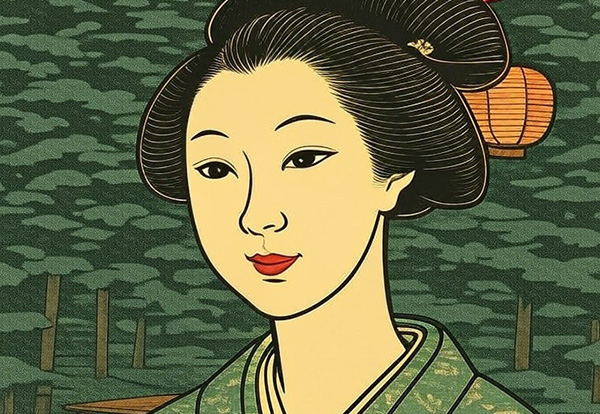

Rokurokubi (ろくろ首) are yokai known for their necks which stretch to great lengths during the night, while appearing normal during the day.
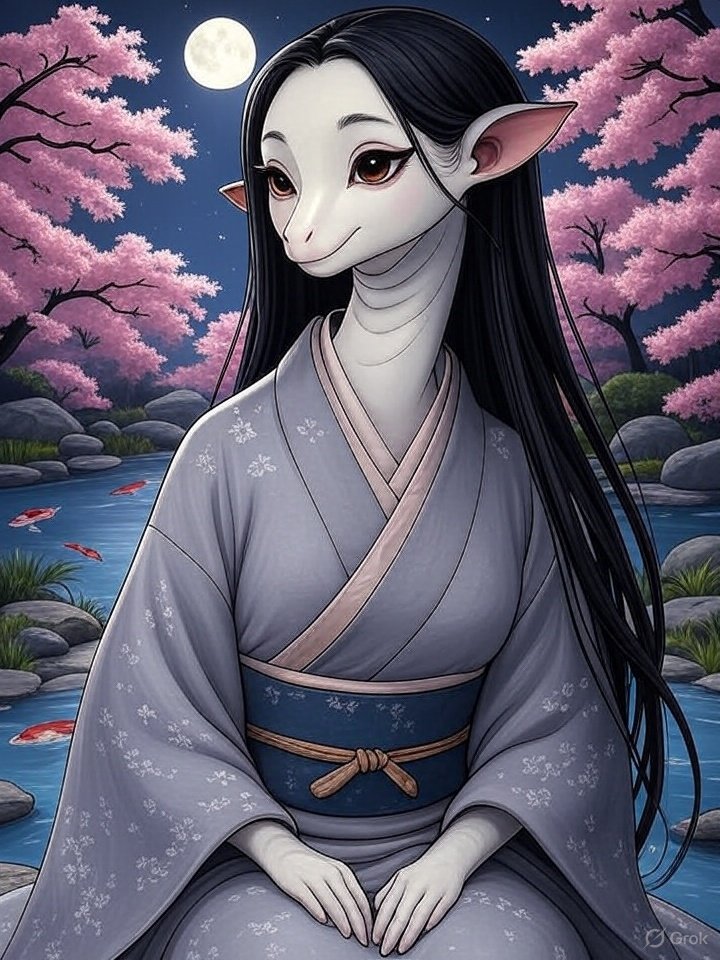
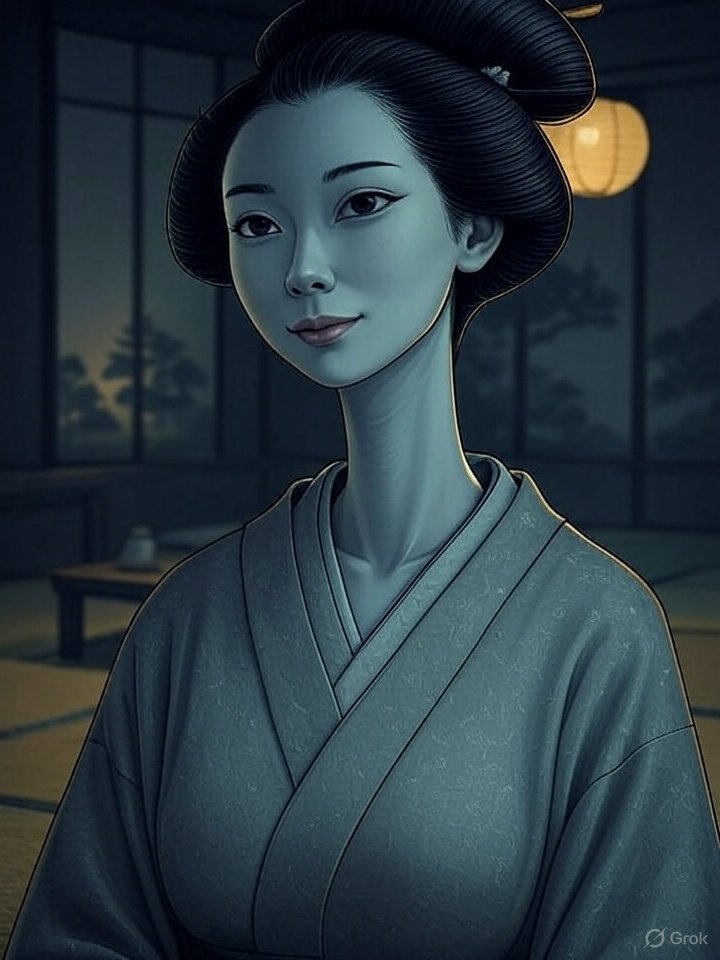
Illustrated folktale

In the misty hills of Akakawa village, where the cherry blossoms bloomed in silence, there lived a young woman named Emiko. By day, she was as lovely as a spring morning, with skin like polished silk and hair as black as the night sky. Her laughter was music to the ears, and her smile could charm even the grumpiest of villagers.
But when the sun dipped below the horizon, casting long shadows across the thatched roofs, Emiko's form began to change. At first, it was just a twitch, a subtle stretch in her neck like a cat extending its claws. Then, as the moon rose high, her neck would lengthen and twist, allowing her head to move freely, surveying the world with an unblinking gaze.
No one suspected Emiko of being anything other than what she appeared – a kind-hearted young woman, devoted to her family's sake brewery. Yet, as the villagers' slumber deepened, Emiko's neck would stretch further still, like a willow branch swaying in the breeze. She'd slip out into the night, a silent stalker with eyes that shone like lanterns in the dark.
One evening, a weary traveler named Hiro stumbled upon Akakawa village, seeking refuge from a fierce storm. As he huddled by the fire at the local inn, Emiko's head would appear above him, her gaze piercing the shadows. At first, she meant no harm; she was merely drawn to Hiro's stories of far-off lands and exotic adventures.
But as the nights passed, Emiko's fascination turned to obsession. She'd follow Hiro, her neck bending like a snake slithering through grass, her eyes drinking in every detail. The traveler, sensing he was being watched, began to feel an creeping sense of dread. Though Emiko's intentions were not cruel, her behavior was as bewildering as a dream – she seemed trapped between two worlds, unable to control the strange power that coursed through her veins.
One morning, Hiro vanished without warning, leaving behind only his worn boots and a cryptic message scrawled on a torn piece of paper: "The night's secrets are not to be kept." Emiko awoke to find herself back in her own form, her neck whole once more. She gazed about the village, feeling lost and uncertain.
From that day forward, Emiko's behavior changed subtly – as if she'd caught a glimpse of her own reflection, distorted by the moonlight. Though her neck still stretched with the night's descent, she began to notice the world around her: the way the wind rustled through the reeds, the sound of Hiro's departure echoing through the hills.
As the seasons passed, Emiko learned to balance her dual nature – the gentle village girl and the nocturnal creature that lurked within. She came to understand that her secrets were not hers alone, but a shared burden between herself and the night itself. And so, as the villagers would whisper in awe of the moon's silvery glow, they'd nod knowingly towards Emiko, now aware of the hidden self lurking beneath the surface – a Rokurokubi, bound to the rhythms of the night.
Take our eight-question quiz and see if Rokurokubi is your true yokai match — or discover another spirit from Japanese folklore.
Take the quizYokai, oni, kitsune and spirits from folklore
Directory of Japanese board games and traditional games
Verified itch.io pixel-art gacha — fair odds, no ads
Reference guides for classic Japanese ham radios
Ancient joinery techniques of Japanese master craftsmen
Explore Japan's landmarks, shrines and hidden locations
SNES and Super Famicom collection tracker
Hoshi no Isan — a Japanese-aesthetic space RPG in development
Pixel art life sim MMO — start at zero, build your life
AI-powered educational stories for kids
Japanese-aesthetic design tokens & AI-ready UI prompts

Every day, one teaching. One moment of stillness.
Kanji, meaning, and a quiet reflection — rooted in the philosophy
behind Japan's forests, seasons, and sacred silences.
Content Warning: This website explores Japanese folklore and mythological beings—including yokai, oni, and other supernatural entities—that may be frightening to younger audiences or sensitive viewers. All material is presented for educational and cultural appreciation only. Viewer discretion is advised.
Parents and guardians are encouraged to preview content before sharing it with children. By continuing to use JapaneseMythicalCreatures.com, you acknowledge and accept this advisory.
Copyright © 2026 Japanese Mythical Creatures • All Rights Reserved.