

Onryō (怨霊)

Name Meaning

Overview

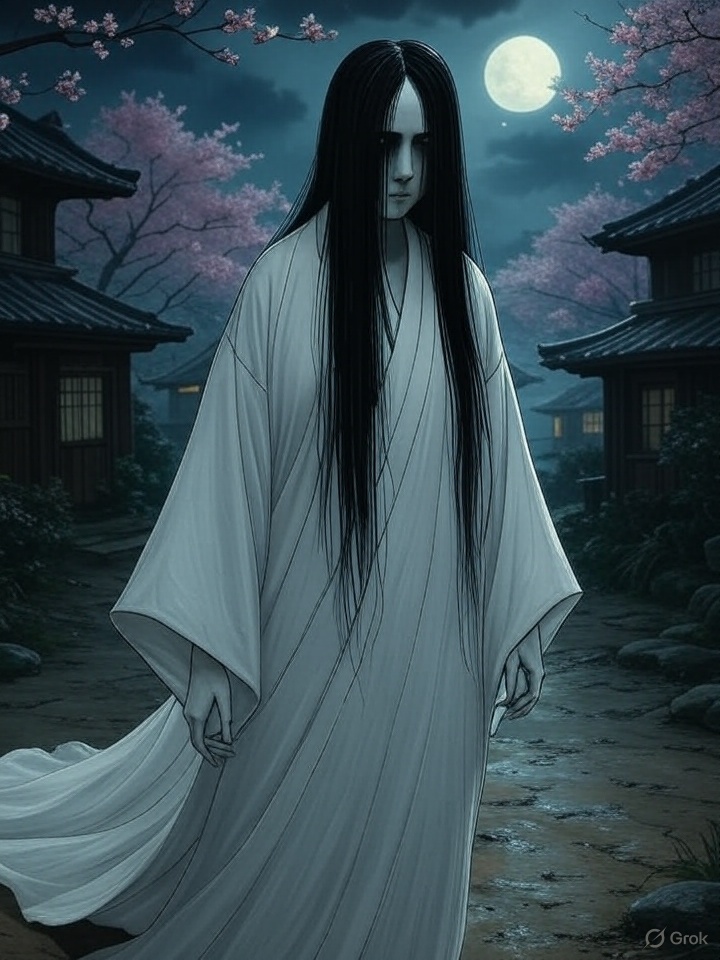
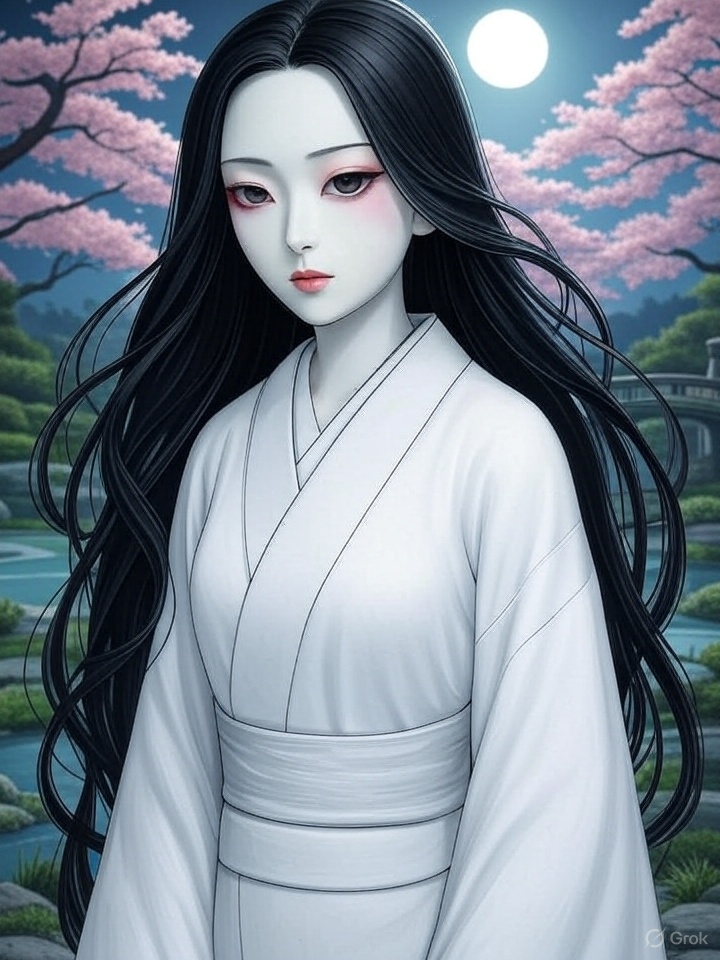
Onryō (怨霊) means “vengeful spirit” in Japanese. These ghosts return from the afterlife to exact revenge on those who wronged them in life.
  • On (怨) = grudge or resentment
  • Ryō (霊) = spirit or ghost

Origin

  • Appears in Heian period ghost stories and Buddhist teachings.
  • Prominent in kabuki theater and traditional Japanese horror tales.
  • May emerge from betrayal, murder, or intense emotional suffering.

Appearance

  • Often shown with long black hair, white kimono, and expressionless faces.
  • May appear transparent or with floating movements.
  • Sometimes with disfigured features or hollow eyes.

Behavior & Myths

  • Haunts those responsible for their suffering.
  • Causes illness, misfortune, or death as retribution.
  • Can be appeased with rituals, offerings, or proper burials.

Symbolism

  • Embodies unresolved emotion and karmic justice.
  • Represents the consequences of betrayal and unhealed trauma.
  • Used to warn against cruelty and injustice in traditional stories.
Onryo ghost woman
Vengeful yokai Onryo

Illustrated folktale

The tale of Onryō

Illustrated folktale banner for Onryō

In the mist-shrouded village of Akakawa, where cherry blossoms bloomed in the dead of winter, there lived a young weaver named Emiko. She was known for her exquisite silk fabrics, woven with threads of moonlight and infused with the gentle hum of the wind.

Emiko's talent had attracted the attention of the wealthy merchant, Taro Yamada. He offered to marry her, not out of love or affection, but to exploit her skills in his textile business. Emiko, blinded by the promise of a secure future, accepted his proposal without hesitation.

As time passed, however, Emiko realized that she was nothing more than a commodity to Taro. He treated her like a mere tool, using her talents to fuel his own ambition while lavishing attention on his concubines. The once-vibrant weaver's heart grew heavy with resentment and sorrow, weighed down by the realization that she had been deceived.

One fateful evening, as Emiko sat at her loom, weaving a tapestry of tears and shadows, she felt an icy presence creeping into her workshop. It started with a faint whisper in her ear: "Why do you weave for him?" The voice was soft and sorrowful, but it sent shivers down Emiko's spine.

As the night deepened, the presence grew stronger, until a figure coalesced before her. It was Onryō, the vengeful spirit of a woman who had suffered betrayal and mistreatment at the hands of her own husband. Her long black hair cascaded like a waterfall of night, and her white kimono seemed to shimmer with an otherworldly glow.

Taro Yamada, Emiko's would-be husband, was found dead in his mansion the next morning, his body twisted in a grimace of terror. The villagers whispered that Onryō had claimed him as her own, exacting retribution for the suffering he had caused.

Emiko fled Akakawa, driven by guilt and fear. She wandered the countryside, seeking solace in the mountains and forests, but no matter how far she walked, the memory of Taro's cruelty haunted her. Her once-luminous fabrics now seemed tainted by the darkness that had taken up residence within her.

Years later, as Emiko approached old age, she finally understood the lesson Onryō had imparted to her: that the consequences of our actions are inextricably linked with the suffering we inflict upon others. With a heart heavy with regret and compassion, she began to weave a new tapestry – one of forgiveness, woven from the threads of remembrance and the moonlight of forgotten pain.

As the sun set on Emiko's final winter, her loom stood quiet, its silken threads waiting for the next generation of storytellers to carry on the tale. The villagers whispered that, even in death, Onryō watched over the weaver who had learned the value of compassion and justice, her presence a gentle reminder of the power of karmic retribution and the transformative force of forgiveness.

Browse all illustrated folktales

Japanese Culture Network

Japanese Mythical Creatures

Yokai, oni, kitsune and spirits from folklore

ShrinePuzzle

Directory of Japanese board games and traditional games

Pixel Gacha

Verified itch.io pixel-art gacha — fair odds, no ads

Japan Radio Guide

Reference guides for classic Japanese ham radios

Japanese Wood Joints

Ancient joinery techniques of Japanese master craftsmen

E2Japan

Explore Japan's landmarks, shrines and hidden locations

The 725 Club

SNES and Super Famicom collection tracker

Spaceship Adventures

Hoshi no Isan — a Japanese-aesthetic space RPG in development

Uptown Zero

Pixel art life sim MMO — start at zero, build your life

Book Fairy Tales

AI-powered educational stories for kids

CSSKitsune

Japanese-aesthetic design tokens & AI-ready UI prompts

Shinto Wisdom app icon
Free App · No Ads · Offline

Shinto Wisdom Daily Practice

by 10k Game Studio

Every day, one teaching. One moment of stillness.
Kanji, meaning, and a quiet reflection — rooted in the philosophy behind Japan's forests, seasons, and sacred silences.

結び Musubi 清め Harae 自然 Shizen 間 Ma 誠 Makoto + 45 more
Get it on Google Play