
Nyūbachibō (乳鉢坊) is the spirit of a traditional grinding bowl (mortar), particularly one used in food preparation or apothecary settings.
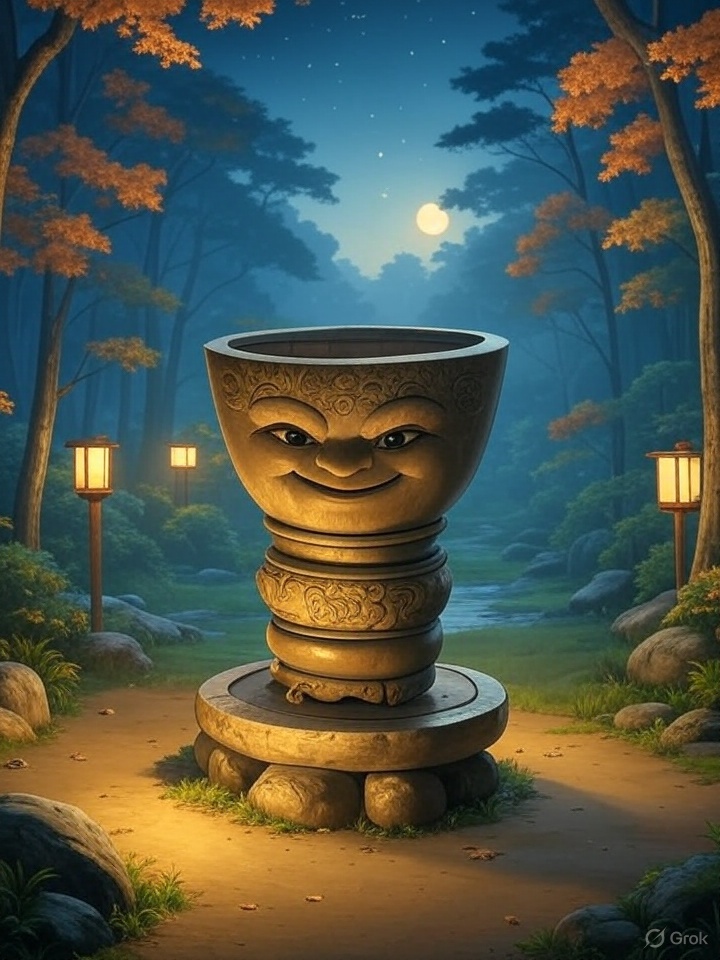

Illustrated folktale

In a small village nestled between two great mountains, there lived an elderly Buddhist apothecary named Kaito-san. He was renowned for his exceptional blends of medicinal herbs and spices, which he carefully crafted to ease the suffering of the villagers. Among his most trusted tools was an ancient mortar, worn smooth by generations of hands that had lovingly ground ingredients within its depths.
The villagers affectionately referred to this mortar as Nyūbachibō, a name that resonated with the tool's supposed hundred-year history of faithful service. Kaito-san would often speak kindly to the mortar, expressing gratitude for its diligence and humility. He believed that even inanimate objects held sacred energies, which could be harnessed through reverence and respect.
One autumn evening, as the harvest moon cast an eerie glow over the village, Kaito-san's granddaughter, Emiko, began helping her grandfather with the day's preparations. Weary from a long day of work, she carelessly discarded the mortar on the floor, leaving it to gather dust beneath the wooden counter. Nyūbachibō, feeling neglected and disrespected, stirred within its worn stone body.
As the night wore on, Emiko fell fast asleep amidst the aromas of spices and herbs. However, Kaito-san noticed that the mortar had come to life. Its once-still form now emitted a low, grinding sound – not unlike the gentle hum of a temple bell – as it protested its abandonment. The apothecary's eyes widened in concern; he knew that Nyūbachibō was only roused when its owner had lost sight of their responsibilities.
In an effort to placate the tool spirit, Kaito-san gently cleaned and polished the mortar, reciting a soft mantra as he worked: "May your form be restored, may your energy be rejuvenated." The grinding sounds grew softer, then ceased altogether. A gentle warmth emanated from the mortar's surface, like the first rays of sunlight on a winter's morning.
Emiko, feeling a strange tingling sensation in her fingers, awoke to find herself holding the polished mortar. Her eyes widened as she realized that Nyūbachibō now wore the semblance of a human form – its wooden handle transformed into arms, adorned with threads from an old monk's robe. The tool spirit regarded Emiko with a calm, knowing gaze.
As autumn gave way to winter, the villagers took note of an unusual trend: mishaps in the kitchen had ceased, and the apothecary's concoctions were more potent than ever before. It was as if Nyūbachibō, now tended to with care and respect, had become a guardian of the home and culinary traditions.
From that day on, Emiko ensured that she treated all tools – no matter how mundane they seemed – with reverence and gratitude. As she ground ingredients within the mortar's depths, she would whisper a silent prayer: "May your form be honored, may our bond grow stronger." The villagers whispered among themselves that Nyūbachibō had become a living embodiment of their community's values, reminding them to cherish every object that helped weave the tapestry of life.
Yokai, oni, kitsune and spirits from folklore
Directory of Japanese board games and traditional games
Verified itch.io pixel-art gacha — fair odds, no ads
Reference guides for classic Japanese ham radios
Ancient joinery techniques of Japanese master craftsmen
Explore Japan's landmarks, shrines and hidden locations
SNES and Super Famicom collection tracker
Hoshi no Isan — a Japanese-aesthetic space RPG in development
Pixel art life sim MMO — start at zero, build your life
AI-powered educational stories for kids
Japanese-aesthetic design tokens & AI-ready UI prompts

Every day, one teaching. One moment of stillness.
Kanji, meaning, and a quiet reflection — rooted in the philosophy
behind Japan's forests, seasons, and sacred silences.
Content Warning: This website explores Japanese folklore and mythological beings—including yokai, oni, and other supernatural entities—that may be frightening to younger audiences or sensitive viewers. All material is presented for educational and cultural appreciation only. Viewer discretion is advised.
Parents and guardians are encouraged to preview content before sharing it with children. By continuing to use JapaneseMythicalCreatures.com, you acknowledge and accept this advisory.
Copyright © 2026 Japanese Mythical Creatures • All Rights Reserved.