

Nurarihyon (ぬらりひょん) has no clear kanji representation, and its name implies something that is slippery, elusive, and difficult to grasp.
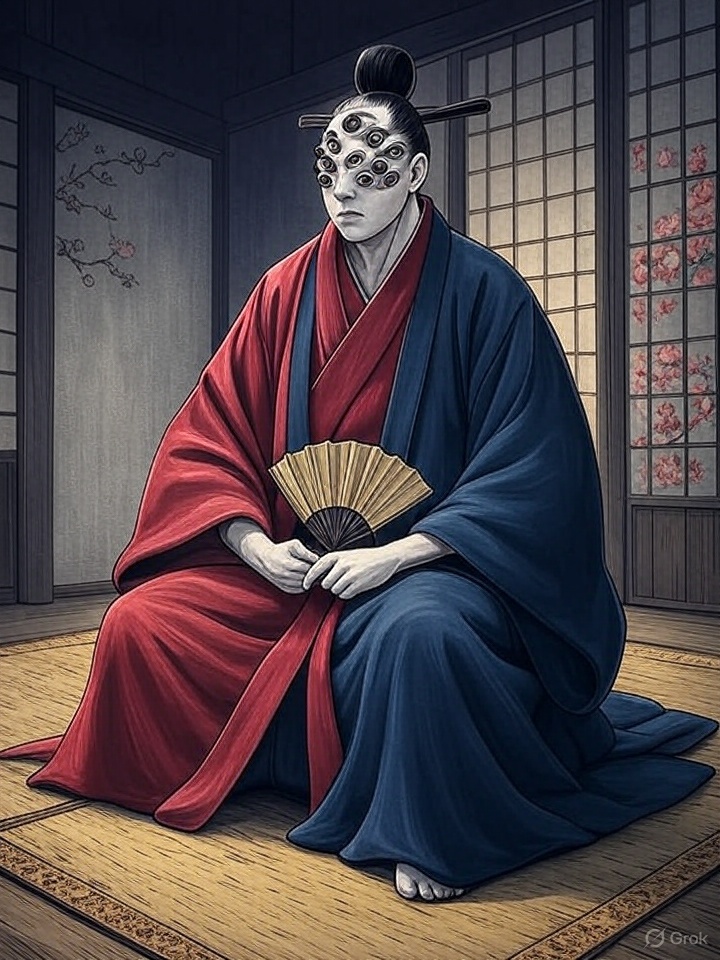
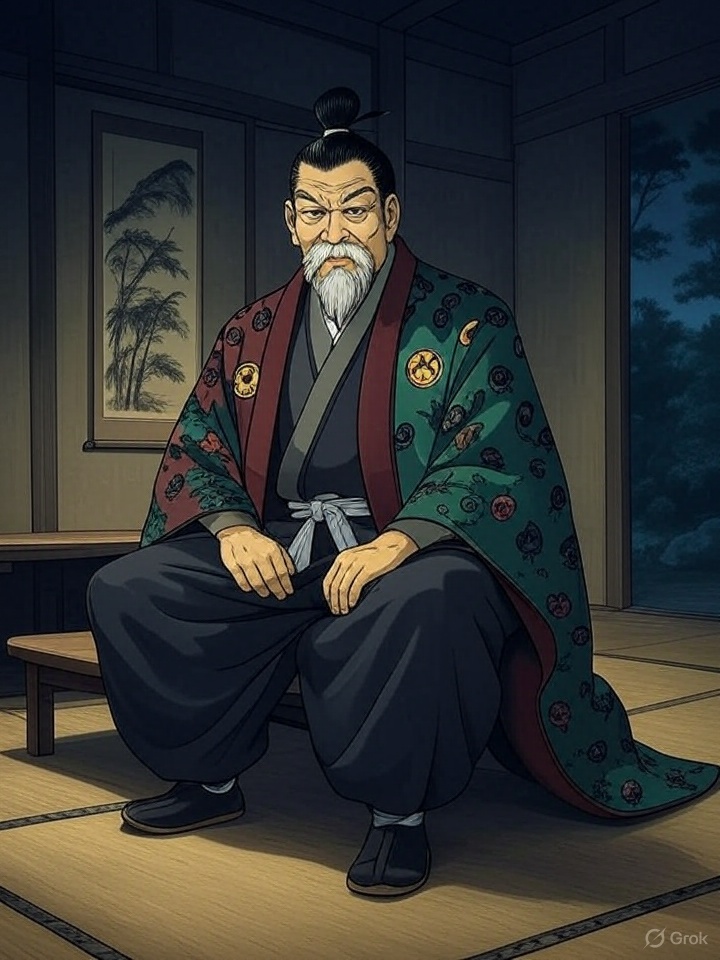
Illustrated folktale

In the mist-shrouded hills of Okayama, where the air was alive with the whispers of ancestral spirits, there lived a family bound by tradition and duty. The Ichiwas were known for their dedication to the ancient ways, their daily lives governed by the rhythms of the seasons and the lunar cycles.
One autumn evening, as the moon cast its silvery glow upon the village, a gentle breeze rustled through the thatched roofs of the Ichiwa's humble home. It was then that Nurarihyon, the enigmatic wanderer, made his presence known. His gourd-shaped head bobbed softly as he entered the family's inner sanctum, his eyes aglow with an otherworldly wisdom.
Mrs. Ichiwa, tending to the evening meal in the kitchen, felt a shiver run down her spine as she sensed the unexpected visitor. Her husband, seated at the family altar, was oblivious to the arrival, lost in prayer and contemplation. The children, playing by the window, chattered excitedly about their day's adventures.
Nurarihyon made his way to the living area, his robes rustling softly against the tatami mats. He settled into a position of dignity, as if claiming a seat at the family table. Without so much as a nod or a word, he reached for the steaming teapot on the low table and poured himself a cup.
The Ichiwas exchanged bewildered glances. Who was this mysterious figure, and how dared he assume such familiarity? Yet, as they watched Nurarihyon sip his tea with an air of quiet satisfaction, they felt an inexplicable sense of calm settle over them.
In the hours that followed, Nurarihyon lounged about the household, taking on a presence both dignified and unsettling. He rearranged the arrangement of the family's scrolls on the tokonoma shelf, citing his own knowledge of ancient calligraphy. He sampled the evening meal, nodding in approval at Mrs. Ichiwa's cooking.
The family members themselves grew accustomed to Nurarihyon's unexpected presence. They whispered among themselves about his enigmatic nature, but also felt a strange gratitude for the uninvited guest. In his company, their daily routines seemed imbued with a quiet significance, as if they were being reminded of the intricate web of relationships binding them together.
As night deepened and the moon rode high in the sky, Nurarihyon rose from his slumber-like repose. He bowed softly to the Ichiwa family, acknowledging their hospitality. Without fanfare or apology, he vanished into the night, leaving behind an atmosphere charged with a subtle energy.
The next morning, when questioned about the mysterious visitor, the family members exchanged knowing glances. They spoke of Nurarihyon in hushed tones, as if sharing a shared secret. For in his wake, they felt the boundaries between their household and the wider world had shifted ever so slightly – and yet, not for the worse.
Yokai, oni, kitsune and spirits from folklore
Directory of Japanese board games and traditional games
Verified itch.io pixel-art gacha — fair odds, no ads
Reference guides for classic Japanese ham radios
Ancient joinery techniques of Japanese master craftsmen
Explore Japan's landmarks, shrines and hidden locations
SNES and Super Famicom collection tracker
Hoshi no Isan — a Japanese-aesthetic space RPG in development
Pixel art life sim MMO — start at zero, build your life
AI-powered educational stories for kids
Japanese-aesthetic design tokens & AI-ready UI prompts

Every day, one teaching. One moment of stillness.
Kanji, meaning, and a quiet reflection — rooted in the philosophy
behind Japan's forests, seasons, and sacred silences.
Content Warning: This website explores Japanese folklore and mythological beings—including yokai, oni, and other supernatural entities—that may be frightening to younger audiences or sensitive viewers. All material is presented for educational and cultural appreciation only. Viewer discretion is advised.
Parents and guardians are encouraged to preview content before sharing it with children. By continuing to use JapaneseMythicalCreatures.com, you acknowledge and accept this advisory.
Copyright © 2026 Japanese Mythical Creatures • All Rights Reserved.