

Morinji-no-kama (茂林寺の釜) translates to “The Kettle of Morinji Temple.” It refers to a folktale from Gunma Prefecture about a teakettle that is actually a magical tanuki.
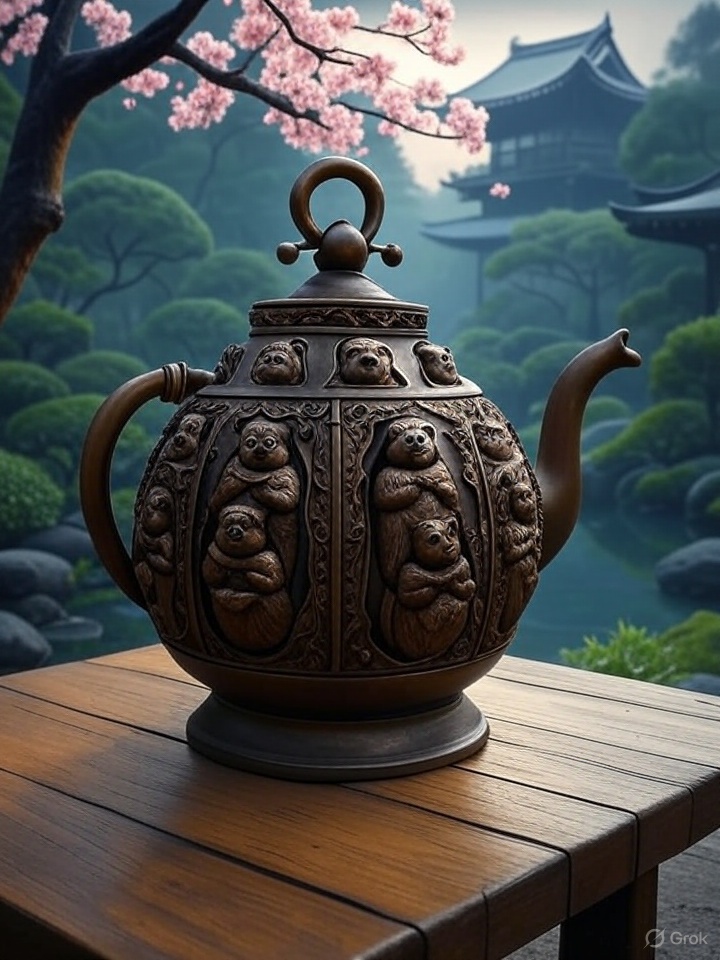

Illustrated folktale

In the whispering hills of Tatebayashi, where cherry blossoms danced in spring and autumn leaves rustled with gentle whispers, there lived an iron kettle named Kame. For generations, it hung from the rafters of Morinji Temple, watching over the priests as they tended to the sacred fires.
Kame was no ordinary kettle; within its depths lay a secret: the heart of a tanuki, guardian of the forest's whims and charms. By day, it simmered with tea leaves, its lid closed tight, but when darkness fell, Kame would release its spirit, transforming into a merry creature with half-animal, half-kettle form.
One evening, as snowflakes swirled outside, a young priest named Akira discovered Kame's hidden nature. While strolling the temple grounds, he chanced upon the kettle's midnight dance. Entranced by the swirling patterns of fire and shadow, Akira remained frozen in wonder.
Kame, sensing the priest's kindness, approached him with steps as light as autumn leaves. Its playful form wove a tale of ancient forests, where tanuki roamed free beneath crescent moons. As Kame danced, its metal hide glistened with an ethereal sheen, reflecting the starlight filtering through the temple's windows.
Enchanted by the kettle-tanuki's performance, Akira joined in, moving to the rhythm of crickets and chirping frogs. The night air filled with laughter as they twirled beneath the lanterns' golden glow. In this fleeting moment, a bond was forged between the priest and the enchanted iron.
Days passed, and word of Kame's talent spread through Tatebayashi. Travelers from nearby villages would gather at Morinji Temple to witness the magical performances of "Kame-san." Akira, now more than just a temple dweller, became an apprentice to the tanuki-kettle's guidance.
Under Kame's tutelage, he learned the language of forest whispers and the magic within the hearts of all living beings. As gratitude deepened between them, Kame gradually revealed its secrets: the art of transformation, where limitations become wings, and what was once ordinary becomes extraordinary.
When Akira left the temple to wander, Kame accompanied him on his travels, their bond strengthened by shared adventures. But eventually, the time came for the tanuki-kettle to return to Morinji. As its metal form reappeared in the rafters, it told Akira of a peaceful life waiting within the temple's serene atmosphere.
In gratitude for the kindness shown, Kame bestowed upon the priest an enchanted gift: a wooden pendant that would reveal hidden truths and inspire compassion. Within Morinji Temple, the kettle-tanuki now rests, its essence woven into the fabric of the sacred fires it once tended.
When travelers visit the temple today, some claim to see Kame's playful form in fleeting glances, a reminder of the magic within the whispers of Tatebayashi's forest heart. Others speak of Akira, who, upon returning from his journey, was said to have become one with the very essence of Morinji Temple – its guardian, just as Kame had once been, watching over those seeking wisdom beneath the cherry blossoms' gentle sway.
Yokai, oni, kitsune and spirits from folklore
Directory of Japanese board games and traditional games
Verified itch.io pixel-art gacha — fair odds, no ads
Reference guides for classic Japanese ham radios
Ancient joinery techniques of Japanese master craftsmen
Explore Japan's landmarks, shrines and hidden locations
SNES and Super Famicom collection tracker
Hoshi no Isan — a Japanese-aesthetic space RPG in development
Pixel art life sim MMO — start at zero, build your life
AI-powered educational stories for kids
Japanese-aesthetic design tokens & AI-ready UI prompts

Every day, one teaching. One moment of stillness.
Kanji, meaning, and a quiet reflection — rooted in the philosophy
behind Japan's forests, seasons, and sacred silences.
Content Warning: This website explores Japanese folklore and mythological beings—including yokai, oni, and other supernatural entities—that may be frightening to younger audiences or sensitive viewers. All material is presented for educational and cultural appreciation only. Viewer discretion is advised.
Parents and guardians are encouraged to preview content before sharing it with children. By continuing to use JapaneseMythicalCreatures.com, you acknowledge and accept this advisory.
Copyright © 2026 Japanese Mythical Creatures • All Rights Reserved.