

Mikoshi-nyūdō (見越し入道) means “anticipating monk” or “overlooking priest.” It's closely related to Miage-nyūdō, with an even more sinister reputation.
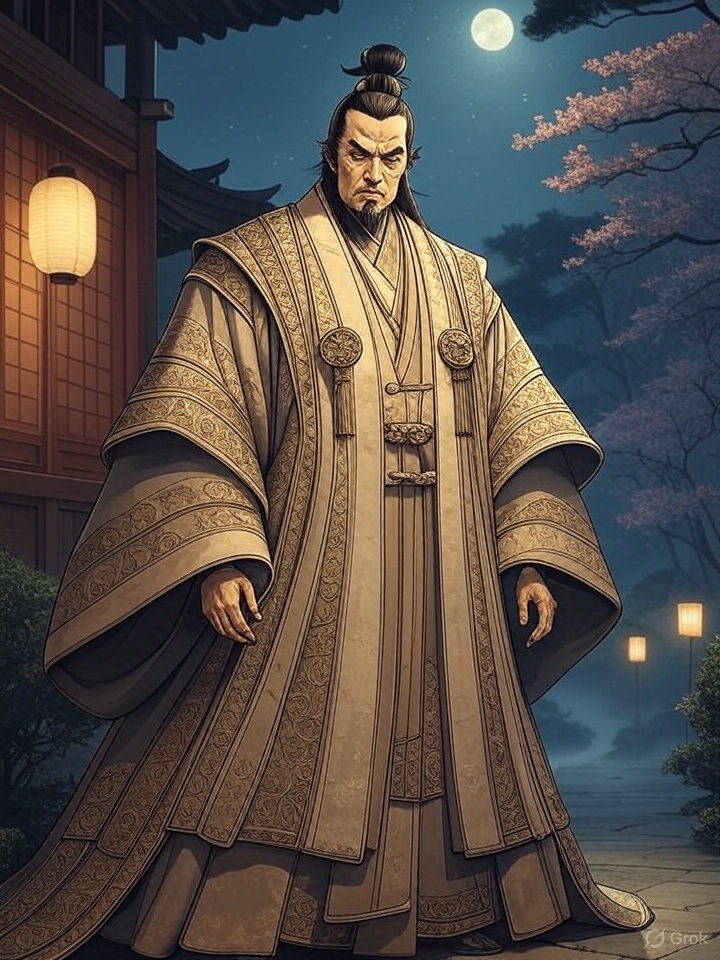
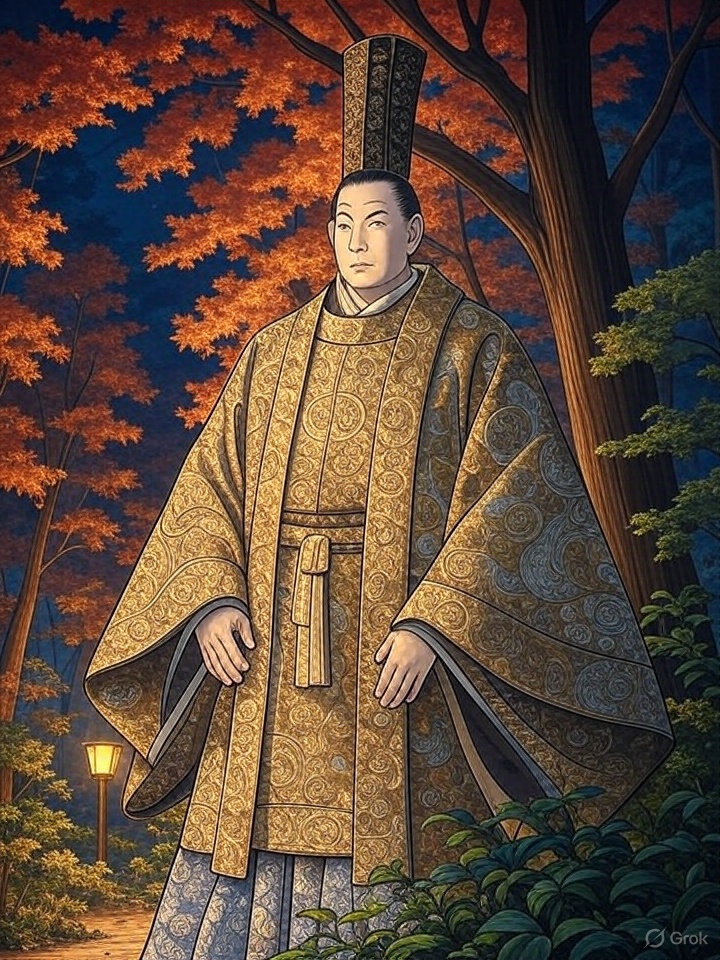
Illustrated folktale

Deep in the mountains, where the trees grew twisted and gnarled, there lived a young traveler named Hiro. He had set out from his village to visit the sacred shrine at the foot of the mountain range, seeking blessings for his family's struggling farm. As night began to fall, casting long shadows across the forest floor, Hiro quickened his pace.
The path wound on, a serpent through the darkness, and Hiro pressed onward with determination. Suddenly, he felt eyes upon him – not just any eyes, but ones that shone like lanterns in the blackness. He looked up, and at first saw nothing but the bare branches of the trees. But as he gazed higher, a shape began to take form.
Its face was long and drawn, with skin as smooth as alabaster. A bald head, seemingly featureless except for two burning orbs that glowed like hot coals. Hiro's heart trembled within his chest as the creature's body stretched out before him – impossibly long, it seemed to stretch on forever.
As he watched, transfixed in horror, the Mikoshi-nyūdō raised a staff, its tip glowing with an eerie light. The air around Hiro grew colder, and the shadows deepened. He tried to flee, but his feet felt rooted to the spot. The creature began to chant in a low, hypnotic voice, weaving a spell of fear that wrapped itself around Hiro's heart.
Just as all seemed lost, Hiro remembered a phrase whispered by his village elder: "I've seen past you!" he cried out, the words bursting from his lips like a shout of defiance. The Mikoshi-nyūdō paused, its staff hovering mid-air, and for an instant their gazes locked in a flash of understanding.
The creature's face seemed to ripple, as if the very fabric of reality was being stretched taut. Its body shortened, shrinking back into the darkness like a retreating mist. The air returned to normal, and Hiro found himself free to move once more. With a deep breath, he turned and fled down the mountain path, not stopping until he reached the safety of his village.
From that day on, Hiro would glance nervously over his shoulder whenever night fell, knowing that in those dark woods, the Mikoshi-nyūdō still roamed, waiting for its next victim. Yet he knew too that with a steadfast heart and the right words, even the most fearsome terrors could be kept at bay – or perhaps even seen past.
Yokai, oni, kitsune and spirits from folklore
Directory of Japanese board games and traditional games
Verified itch.io pixel-art gacha — fair odds, no ads
Reference guides for classic Japanese ham radios
Ancient joinery techniques of Japanese master craftsmen
Explore Japan's landmarks, shrines and hidden locations
SNES and Super Famicom collection tracker
Hoshi no Isan — a Japanese-aesthetic space RPG in development
Pixel art life sim MMO — start at zero, build your life
AI-powered educational stories for kids
Japanese-aesthetic design tokens & AI-ready UI prompts

Every day, one teaching. One moment of stillness.
Kanji, meaning, and a quiet reflection — rooted in the philosophy
behind Japan's forests, seasons, and sacred silences.
Content Warning: This website explores Japanese folklore and mythological beings—including yokai, oni, and other supernatural entities—that may be frightening to younger audiences or sensitive viewers. All material is presented for educational and cultural appreciation only. Viewer discretion is advised.
Parents and guardians are encouraged to preview content before sharing it with children. By continuing to use JapaneseMythicalCreatures.com, you acknowledge and accept this advisory.
Copyright © 2026 Japanese Mythical Creatures • All Rights Reserved.