
Kurabokko (蔵ぼっこ) comes from “kura” meaning storehouse or warehouse, and “bokko,” a diminutive or spirit-related suffix, often used for protective entities.
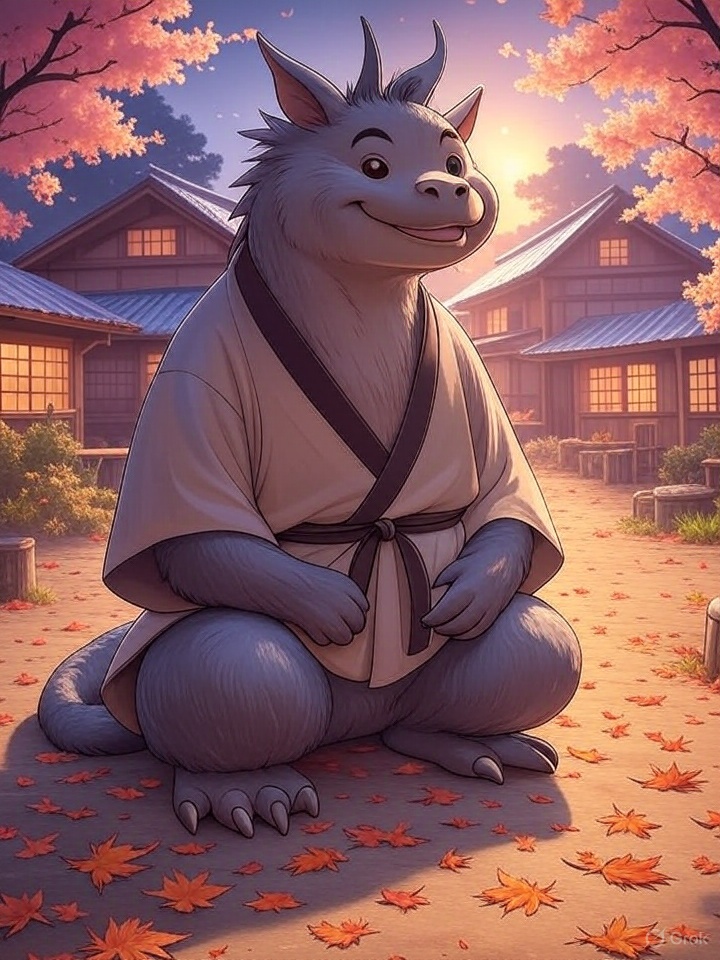
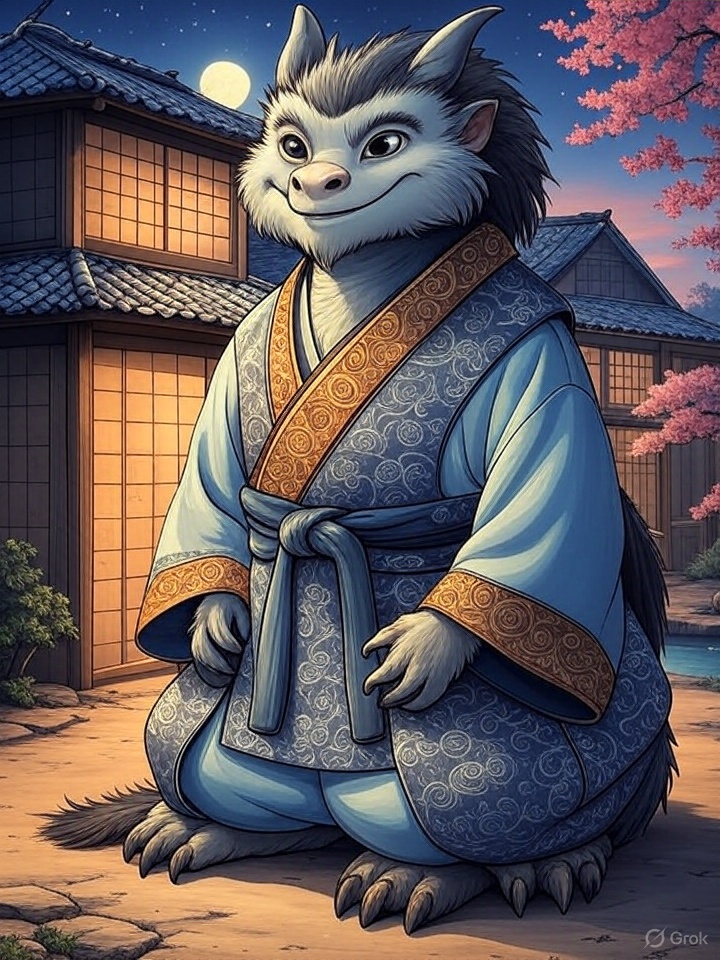
Illustrated folktale

In the misty dawn of spring, when cherry blossoms still clung to their branches, Taro's family prepared for the new harvest season. His father, a seasoned farmer, tended to the rice fields with reverence, while his mother oversaw the household chores with precision. Young Taro was tasked with helping in the kura, where the winter stores of grains and vegetables were kept.
As he entered the dimly lit storage room, Taro felt an odd tickle on the back of his neck. The air inside seemed to thicken, as if invisible threads had been drawn across the space. His mother had warned him about Kurabokko, the mischievous guardian spirit who watched over the kura's treasures. She said that if treated kindly, it would ensure a bountiful harvest and protect their livelihood.
Taro went about his work, dusting off old containers and arranging new bundles of rice with care. Suddenly, he sensed a faint presence behind him. He spun around, but saw nothing. The air seemed to ripple, like the surface of a still pond on a summer day. Taro felt a shiver run down his spine as he realized Kurabokko was trying to communicate.
"Mother?" he called out softly, hoping she might sense the presence too. She appeared beside him, a gentle smile on her face. "Don't be afraid, Taro-kun," she whispered. "Kurabokko is just showing its approval."
As the sun climbed higher, the kura's shadows lengthened and deepened. Taro noticed that some of his chores had been neatly completed – a stack of rice sacks was arranged in perfect rows, and the old wooden containers shone with an unusual sheen. He felt a pang of pride knowing Kurabokko had helped.
However, as he began to tidy up the room once more, Taro's haste caught Kurabokko's attention. A faint growl, like a distant rumble of thunder on a summer storm day, echoed through the kura. The air grew heavy with an unsettling energy.
Taro froze, his heart pounding in his chest. His mother swiftly intervened, speaking softly to the spirit and offering it a delicate wooden charm she had made herself. "We mean no disrespect," she said gently. "May our gratitude bring balance and harmony to this sacred space."
As they worked together, Taro sensed Kurabokko's annoyance dissipating like morning fog on a warm breeze. The presence receded into the shadows, but not before leaving a small token – a perfectly formed rice grain balanced on the edge of a wooden container.
The family celebrated that night with a simple feast, their bellies full and their spirits at ease. Taro knew that he had learned a valuable lesson: to respect both the tangible world and the unseen forces that governed it. As he drifted off to sleep, surrounded by the quiet rhythms of his home, he felt grateful for the watchful presence of Kurabokko – guardian of the kura, and keeper of the harvest's bounty.
Yokai, oni, kitsune and spirits from folklore
Directory of Japanese board games and traditional games
Verified itch.io pixel-art gacha — fair odds, no ads
Reference guides for classic Japanese ham radios
Ancient joinery techniques of Japanese master craftsmen
Explore Japan's landmarks, shrines and hidden locations
SNES and Super Famicom collection tracker
Hoshi no Isan — a Japanese-aesthetic space RPG in development
Pixel art life sim MMO — start at zero, build your life
AI-powered educational stories for kids
Japanese-aesthetic design tokens & AI-ready UI prompts

Every day, one teaching. One moment of stillness.
Kanji, meaning, and a quiet reflection — rooted in the philosophy
behind Japan's forests, seasons, and sacred silences.
Content Warning: This website explores Japanese folklore and mythological beings—including yokai, oni, and other supernatural entities—that may be frightening to younger audiences or sensitive viewers. All material is presented for educational and cultural appreciation only. Viewer discretion is advised.
Parents and guardians are encouraged to preview content before sharing it with children. By continuing to use JapaneseMythicalCreatures.com, you acknowledge and accept this advisory.
Copyright © 2026 Japanese Mythical Creatures • All Rights Reserved.