
Kosode-no-te (小袖の手) means “hands of the kosode,” referring to a short-sleeved kimono inhabited or animated by spectral hands.
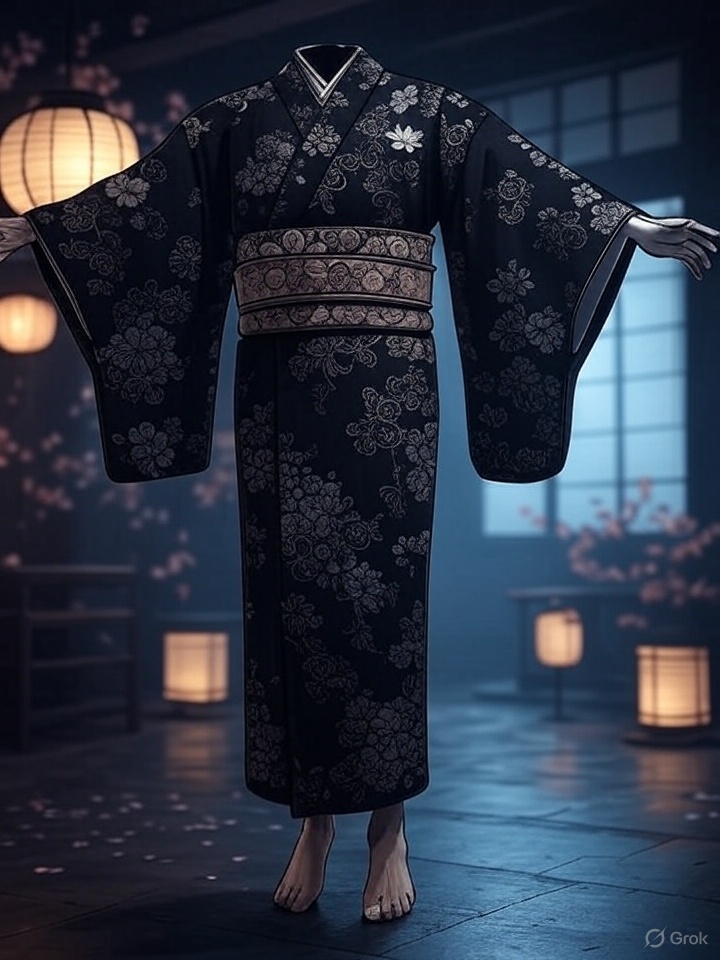
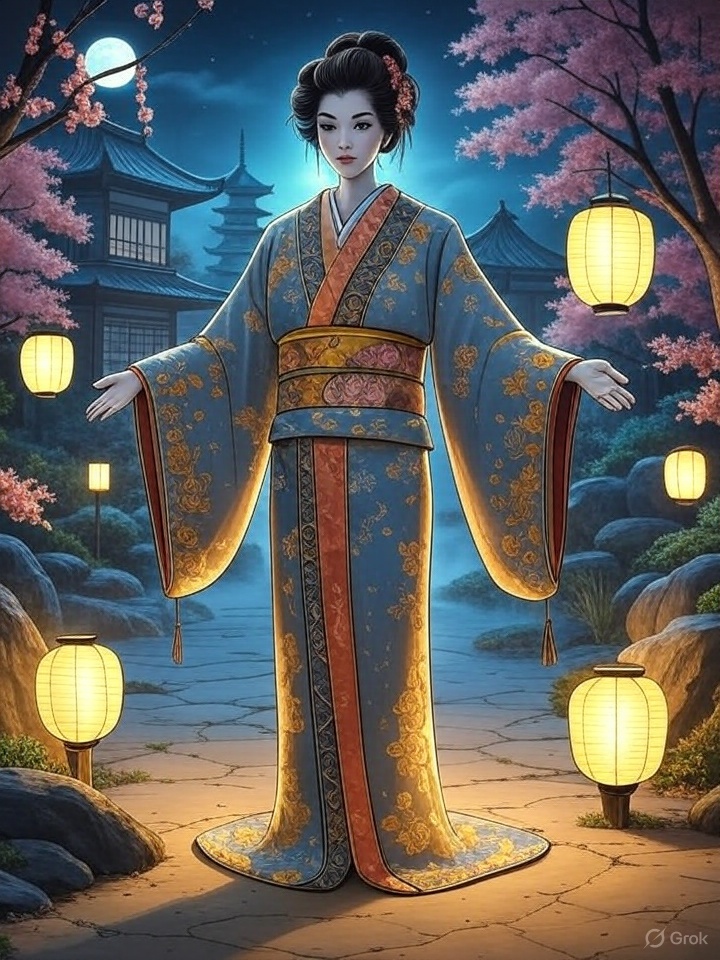
Illustrated folktale

In the sleepy village of Yagumo, where cherry blossoms bloomed on the edge of town and the mountains whispered secrets to the wind, there lived an elderly woman named O-Kame. Her house stood at the end of a narrow lane, its wooden walls weathered to a silvery gray that seemed to blend with the mist that crept in from the hills.
O-Kame was known throughout Yagumo for her exquisite kimonos, woven with threads of silk and moonlight. She had learned the art of kimono-making from her mother, who had passed down the technique through generations of their family. Yet, despite her skill, O-Kame's heart remained heavy, weighed down by a sorrow that would not lift.
Years ago, her only child, a daughter named Emiko, had fallen ill and perished in this very house. The pain of losing her had seeped into the fabric of every kimono O-Kame wove, infusing each thread with tears and longing. Some said that when the wind rustled through the village, it carried the whispers of those who had lost loved ones, seeking solace and connection.
One evening, as dusk settled over Yagumo, a traveler named Kaito stumbled upon O-Kame's house while seeking shelter from the rain. The elderly woman welcomed him with steaming tea and a warm smile, but her eyes seemed to hold a deep sadness. As night fell, O-Kame offered Kaito a place to rest by the hearth. He soon drifted off to sleep, lulled by the crackling fire.
However, when the first light of dawn crept into the room, O-Kame's kimonos began to stir. A kosode-no-te emerged from one of the garments, its ghostly hands writhing like snakes as it floated above Kaito's sleeping form. The fabric shimmered, casting an otherworldly glow over the room.
O-Kame, sensing the presence of her daughter's wrathful spirit, whispered a gentle apology and reached for a sacred branch of sakaki wood from the altar in the corner. She lit incense sticks and began to chant, calling upon the benevolent spirits of the mountains to calm Emiko's restless soul.
As O-Kame's words wove together with the scent of incense, the kosode-no-te grew still. Its ghostly hands released their hold on Kaito, who stirred from his slumber, confused but unharmed. The village elder, a wise woman named Yumi, had once told O-Kame that such spirits could be calmed by offering them back to their graves, freeing their attachments to the world of the living.
With reverence and sorrow, O-Kame guided Kaito to a small shrine near her house, where Emiko's grave lay. There, beneath the branches of an ancient pine, she wove a new kimono, imbuing its threads with love and acceptance. The kosode-no-te, now freed from its burden, dissipated into mist as the sun rose over Yagumo.
From that day forward, O-Kame's kimonos shone with a light of peace, their threads infused with the understanding that attachments to the past can be both a weight and a blessing. Those who visited her house whispered stories of the kosode-no-te, a reminder to respect the belongings of the dead and honor the memories they hold within them.
Yokai, oni, kitsune and spirits from folklore
Directory of Japanese board games and traditional games
Verified itch.io pixel-art gacha — fair odds, no ads
Reference guides for classic Japanese ham radios
Ancient joinery techniques of Japanese master craftsmen
Explore Japan's landmarks, shrines and hidden locations
SNES and Super Famicom collection tracker
Hoshi no Isan — a Japanese-aesthetic space RPG in development
Pixel art life sim MMO — start at zero, build your life
AI-powered educational stories for kids
Japanese-aesthetic design tokens & AI-ready UI prompts

Every day, one teaching. One moment of stillness.
Kanji, meaning, and a quiet reflection — rooted in the philosophy
behind Japan's forests, seasons, and sacred silences.
Content Warning: This website explores Japanese folklore and mythological beings—including yokai, oni, and other supernatural entities—that may be frightening to younger audiences or sensitive viewers. All material is presented for educational and cultural appreciation only. Viewer discretion is advised.
Parents and guardians are encouraged to preview content before sharing it with children. By continuing to use JapaneseMythicalCreatures.com, you acknowledge and accept this advisory.
Copyright © 2026 Japanese Mythical Creatures • All Rights Reserved.