

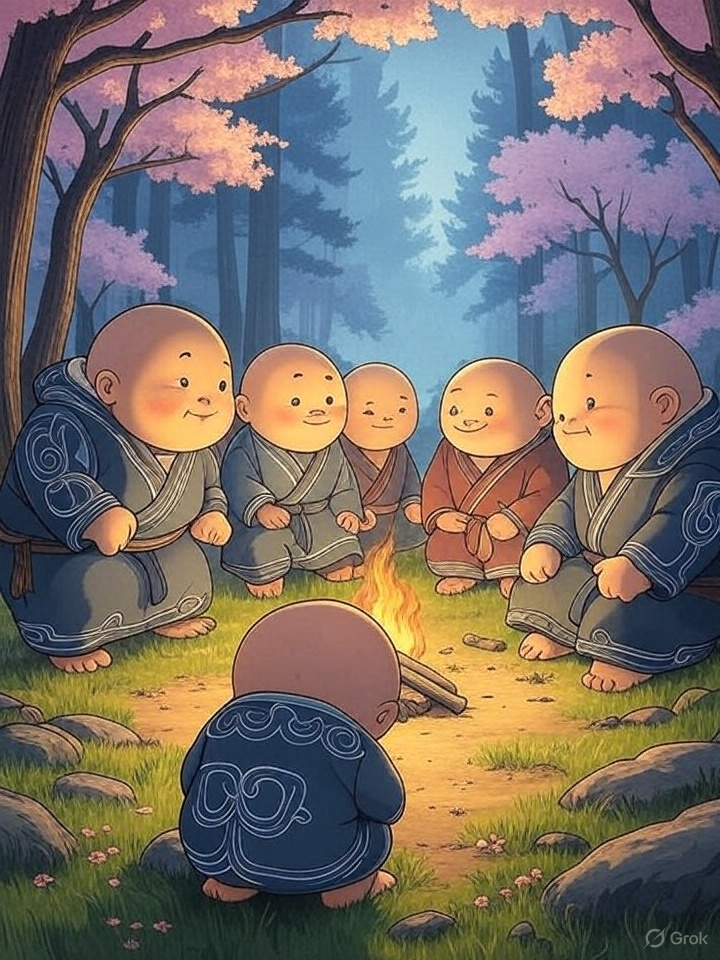
Koropokkuru (コロポックル) means “people under the butterbur leaves” in the Ainu language, referring to small mythical beings.
Illustrated folktale

In the depths of the forest, where the sunlight filtering through the canopy above created dappled shadows on the forest floor, there lived a small village of Koropokkuru. They dwelled in harmony with nature, their tiny homes woven from the bark of ancient trees and thatched with leaves that rustled softly in the breeze.
The villagers lived simple lives, gathering berries and mushrooms for sustenance, and watching over the forest's creatures as they grew and thrived. The Koropokkuru were known to be kind and gentle beings, always mindful of their place within the natural world. They would often leave gifts of fish or other delicacies on the doorsteps of the villagers' homes, through small windows that allowed them to offer their kindness without being seen.
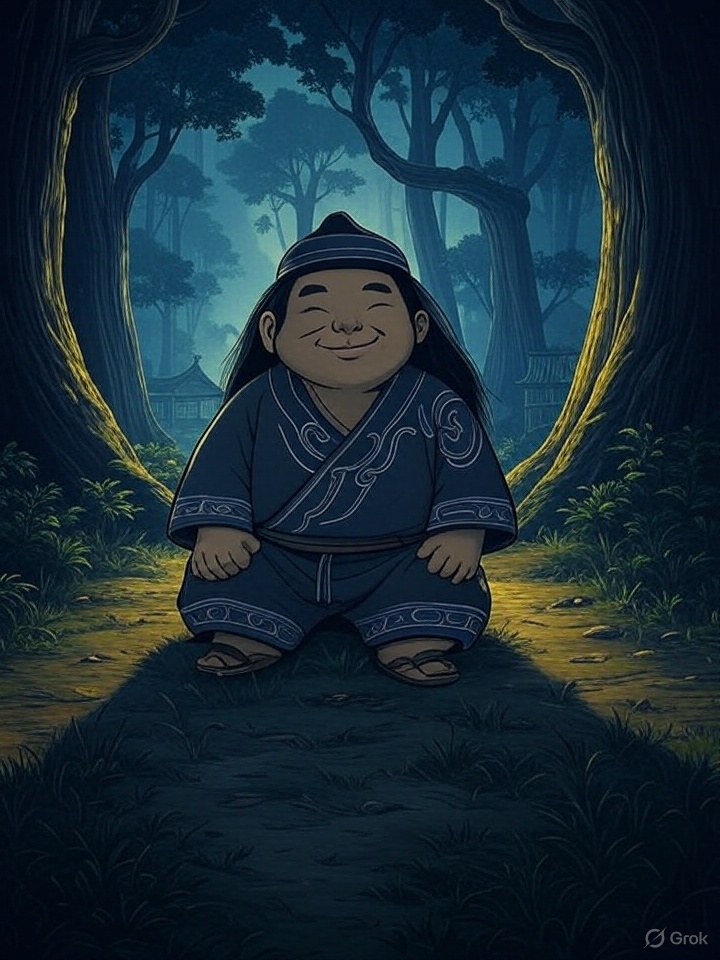
One day, a young traveler named Kaito wandered into the forest, seeking refuge from the world beyond its borders. He had heard tales of the Koropokkuru and was drawn to their enigmatic presence. As he walked deeper into the woods, he began to notice the small offerings left for him – a fish on his doorstep, a handful of sweet berries on the windowsill.
Kaito's curiosity got the better of him, and he decided to sneak out at night and watch the Koropokkuru as they went about their daily lives. He hid behind a tree, holding his breath as he waited for one of the tiny beings to emerge from its home.
At first, nothing stirred. The forest was quiet, except for the occasional hoot of an owl or rustle of leaves. But then, a Koropokkuru emerged from its dwelling, its wide face peering out into the darkness. Kaito held his breath as the little being began to move about its daily tasks – gathering firewood, tending to the plants in its garden.
But just as Kaito was about to reveal himself, he stumbled and made a noise. The Koropokkuru froze, its eyes scanning the surrounding area until they landed on the young traveler. For a moment, the two locked gazes, and Kaito felt a pang of shame for his intrusion into their private lives.
The next morning, the village was deserted. The small windows that had once held gifts were empty, and the Koropokkuru's homes stood vacant. A faint whisper on the wind carried the message: "We will no longer offer our kindness to those who would watch us with curiosity rather than respect."
Kaito wandered through the forest, searching for some sign of the Koropokkuru. But they were gone, vanished into the trees as if they had never been there at all. He realized too late that he had broken a trust, one that had taken centuries to build.
As he made his way back to the world beyond the forest, Kaito felt a sense of loss – not just for the Koropokkuru's gifts, but for the connection they represented between humans and nature. He understood now that some secrets were meant to remain hidden, and that respect was essential when walking alongside others in the natural world.
From that day forward, the village told stories of Kaito's transgression – a cautionary tale about the dangers of curiosity and the importance of respecting the unknown. And though the Koropokkuru never returned, their legacy lived on, reminding all who listened to honor the harmony between humans and nature.
Yokai, oni, kitsune and spirits from folklore
Directory of Japanese board games and traditional games
Verified itch.io pixel-art gacha — fair odds, no ads
Reference guides for classic Japanese ham radios
Ancient joinery techniques of Japanese master craftsmen
Explore Japan's landmarks, shrines and hidden locations
SNES and Super Famicom collection tracker
Hoshi no Isan — a Japanese-aesthetic space RPG in development
Pixel art life sim MMO — start at zero, build your life
AI-powered educational stories for kids
Japanese-aesthetic design tokens & AI-ready UI prompts

Every day, one teaching. One moment of stillness.
Kanji, meaning, and a quiet reflection — rooted in the philosophy
behind Japan's forests, seasons, and sacred silences.
Content Warning: This website explores Japanese folklore and mythological beings—including yokai, oni, and other supernatural entities—that may be frightening to younger audiences or sensitive viewers. All material is presented for educational and cultural appreciation only. Viewer discretion is advised.
Parents and guardians are encouraged to preview content before sharing it with children. By continuing to use JapaneseMythicalCreatures.com, you acknowledge and accept this advisory.
Copyright © 2026 Japanese Mythical Creatures • All Rights Reserved.