

Kasha (火車) means “fire cart” or “fiery vehicle,” though the creature is more often described as a demonic cat that steals corpses during funerals or from graves.
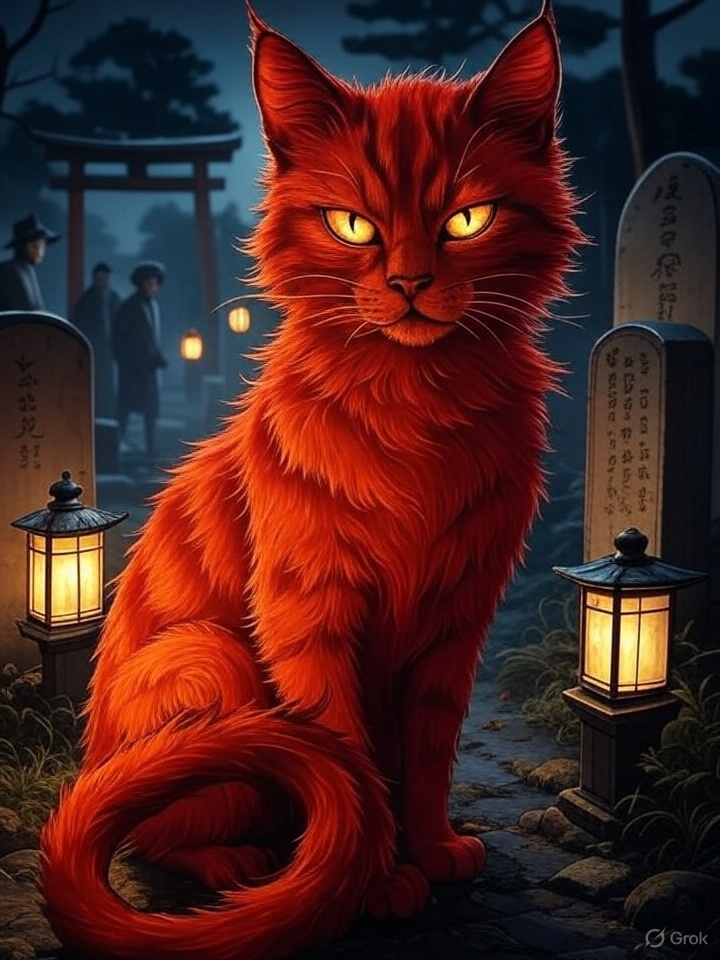
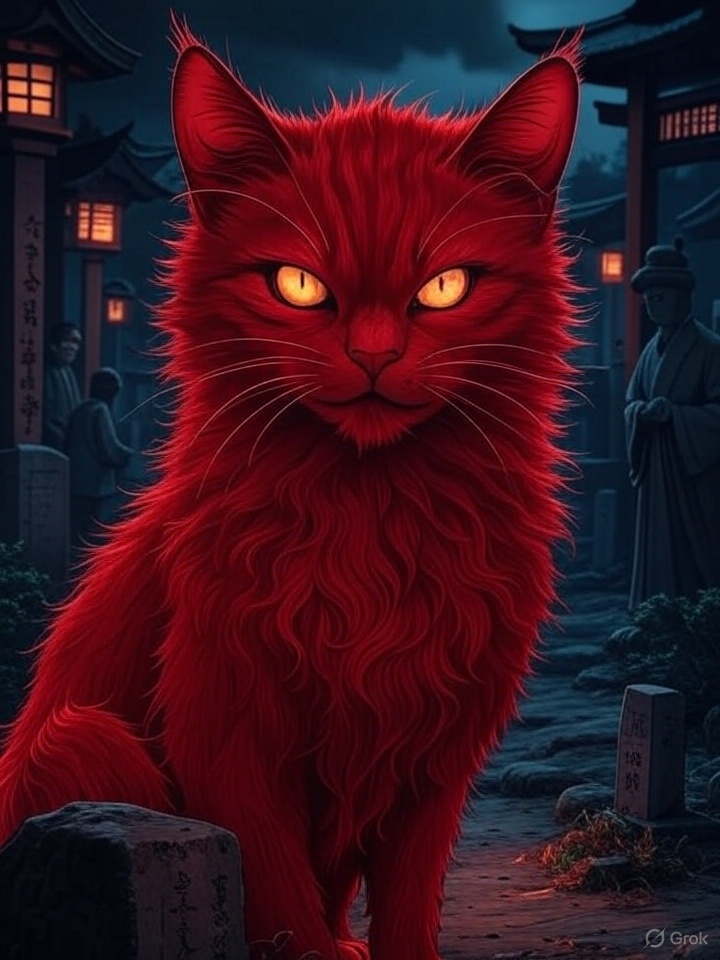
Illustrated folktale

In the autumn of the year when leaves rustled with an otherworldly voice, a young monk named Kaito tended to the cremation grounds on Mount Fuji's slope. It was his duty to guide souls to their final rest, but a sense of unease settled over him as the sun dipped low in the sky.
Rumors had been spreading like dry leaves about the kasha, a creature said to ride the wind and claim the bodies of those who died with evil intentions. The villagers whispered tales of its fiery form, eyes aglow like hot coals, and how it would steal the corpses, taking them away to face their just punishment.
As night descended, Kaito lit the funeral pyre, watching as flames danced upon the wood. A shiver ran down his spine when he heard a distant rumbling, growing louder with each passing moment. The wind picked up, whipping leaves into a frenzy, and from the darkness above, a blazing cart emerged, drawn by a monstrous cat with eyes that blazed like stars.
The kasha descended upon the cremation grounds, its fiery mane crackling as it alighted beside the pyre. It surveyed Kaito with a calculating gaze, then reached out with a clawed hand and seized the nearest body – that of a man who had lived a life marked by cruelty and greed. The creature yowled in triumph as it bore the corpse away into the night.
Kaito stood frozen, torn between fear and duty. He knew that the kasha was no malevolent entity, but rather an instrument of the law, tasked with punishing those who defied the teachings of the Buddha. Yet, the young monk's heart ached for the man taken by the creature, whose fate was now sealed.
As the pyre burned on, Kaito approached the flames, his footsteps quiet on the cold stone. He offered a prayer to the departed soul, hoping that the kasha would show mercy and grant him peace in the afterlife. The wind died down, and an unsettling silence fell upon the cremation grounds as if awaiting judgment.
The blazing cart returned, empty save for the kasha's fiery mane. Its eyes locked onto Kaito once more, then turned to the pyre, where flames had grown low. With a swift motion, the creature snatched up the last body – that of an old woman who had lived with compassion and kindness. As she ascended into the night sky on the kasha's cart, her spirit merged with the stars.
Kaito watched in awe as the kasha vanished into the darkness, leaving behind a stillness broken only by the crackling flames. He felt a sense of balance restored to the universe, where justice had been served and the natural order maintained. As he extinguished the pyre, the young monk knew that his duty was not merely to guide souls to rest but also to understand the workings of the kasha's merciless yet merciful hand.
As the first light of dawn crept over Mount Fuji, Kaito descended into the village, his heart filled with a newfound reverence for the creatures that lurked beyond the veil of reality.
Yokai, oni, kitsune and spirits from folklore
Directory of Japanese board games and traditional games
Verified itch.io pixel-art gacha — fair odds, no ads
Reference guides for classic Japanese ham radios
Ancient joinery techniques of Japanese master craftsmen
Explore Japan's landmarks, shrines and hidden locations
SNES and Super Famicom collection tracker
Hoshi no Isan — a Japanese-aesthetic space RPG in development
Pixel art life sim MMO — start at zero, build your life
AI-powered educational stories for kids
Japanese-aesthetic design tokens & AI-ready UI prompts

Every day, one teaching. One moment of stillness.
Kanji, meaning, and a quiet reflection — rooted in the philosophy
behind Japan's forests, seasons, and sacred silences.
Content Warning: This website explores Japanese folklore and mythological beings—including yokai, oni, and other supernatural entities—that may be frightening to younger audiences or sensitive viewers. All material is presented for educational and cultural appreciation only. Viewer discretion is advised.
Parents and guardians are encouraged to preview content before sharing it with children. By continuing to use JapaneseMythicalCreatures.com, you acknowledge and accept this advisory.
Copyright © 2026 Japanese Mythical Creatures • All Rights Reserved.