

Kamikiri (髪切り) translates directly to "hair cutter," aptly naming this yokai after its unusual behavior.
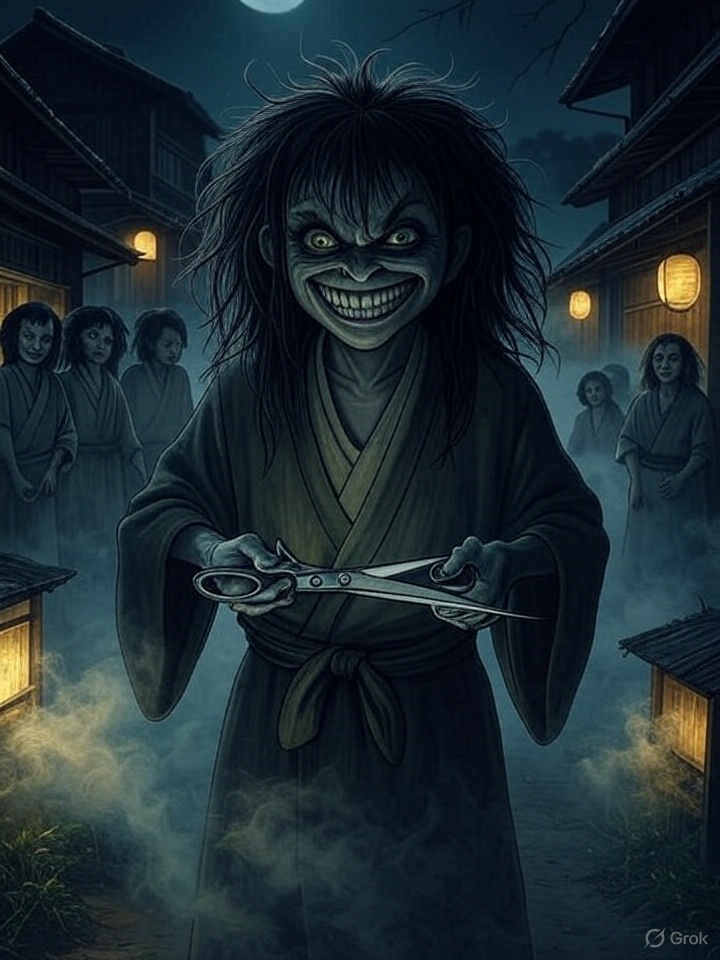
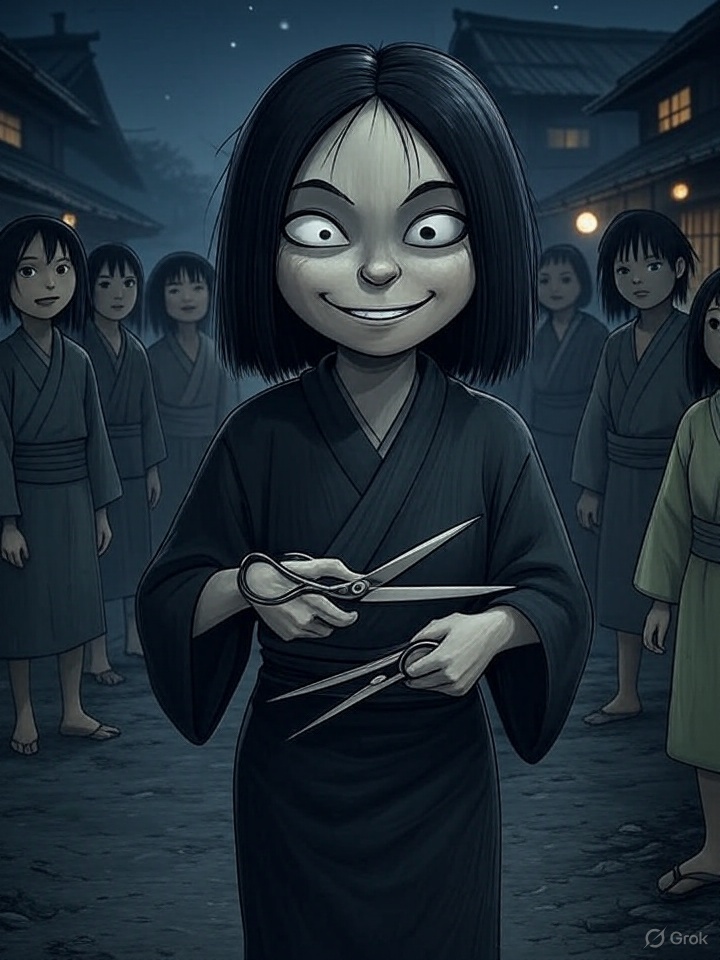
Illustrated folktale

In the lantern-lit streets of Edo's pleasure quarter, where geishas with kimonos as red as cherry blossoms strolled under the gaze of admirers, there lived a young bride named O-Sumi. Her hair was as black as the night sky and flowed down her back like a waterfall. The people whispered about her beauty, saying she had been blessed by the gods themselves.
One evening, while O-Sumi's husband was out playing go with friends at a nearby teahouse, the Kamikiri stirred from its slumber. It emerged from the shadows like a tiny shadow within a shadow, its pincers whispering softly as it scuttled across the veranda of O-Sumi's home.
The Kamikiri watched as O-Sumi sat on her pillow, combing out her long hair in front of a mirror. The moonlight streaming through the windows highlighted the delicate folds of her sleeves and the cherry blossom pattern embroidered on her kimono. Her husband had brought back this very fabric from his travels to Ueno's famous flower markets.
The Kamikiri's scissors seemed to tingle with excitement as it observed O-Sumi's vanity. It was said that this yokai delighted in cutting the hair of those who prized appearance above all else, leaving them shorn and ashamed. Yet, on this particular night, its pincers felt a pang of sorrow.
As the Kamikiri crept closer, O-Sumi paused mid-comb, lost in thought. She spoke to herself, though her voice was barely audible, about the weight of being a beautiful wife. The Kamikiri's ears, like delicate flower petals, caught the words and understood the true nature of this young bride.
Moved by compassion, or perhaps mischievousness, the Kamikiri decided not to cut O-Sumi's hair. Instead, it nipped off a single strand, leaving it on her pillow as if in warning. The next morning, when O-Sumi discovered the strand, she wept for all the days she had wasted worrying about her appearance.
From that night forward, O-Sumi's beauty remained untouched by scissors or pincers, but it lost its hold on her heart. She began to see the world through new eyes, finding joy in simple things: a spring breeze rustling cherry blossoms, the soft glow of lanterns, and the quiet companionship of her husband.
The Kamikiri watched over O-Sumi from the shadows, its scissors whispering softly as it disappeared into the night, leaving behind only a hint of the supernatural's mysterious presence. In the silence, O-Sumi smiled, knowing that true beauty lay not in outward appearance, but within one's own heart.
Yokai, oni, kitsune and spirits from folklore
Directory of Japanese board games and traditional games
Verified itch.io pixel-art gacha — fair odds, no ads
Reference guides for classic Japanese ham radios
Ancient joinery techniques of Japanese master craftsmen
Explore Japan's landmarks, shrines and hidden locations
SNES and Super Famicom collection tracker
Hoshi no Isan — a Japanese-aesthetic space RPG in development
Pixel art life sim MMO — start at zero, build your life
AI-powered educational stories for kids
Japanese-aesthetic design tokens & AI-ready UI prompts

Every day, one teaching. One moment of stillness.
Kanji, meaning, and a quiet reflection — rooted in the philosophy
behind Japan's forests, seasons, and sacred silences.
Content Warning: This website explores Japanese folklore and mythological beings—including yokai, oni, and other supernatural entities—that may be frightening to younger audiences or sensitive viewers. All material is presented for educational and cultural appreciation only. Viewer discretion is advised.
Parents and guardians are encouraged to preview content before sharing it with children. By continuing to use JapaneseMythicalCreatures.com, you acknowledge and accept this advisory.
Copyright © 2026 Japanese Mythical Creatures • All Rights Reserved.