

Kameosa (瓶長) literally means “long bottle,” a tsukumogami (tool spirit) formed from an aged sake jar or container.
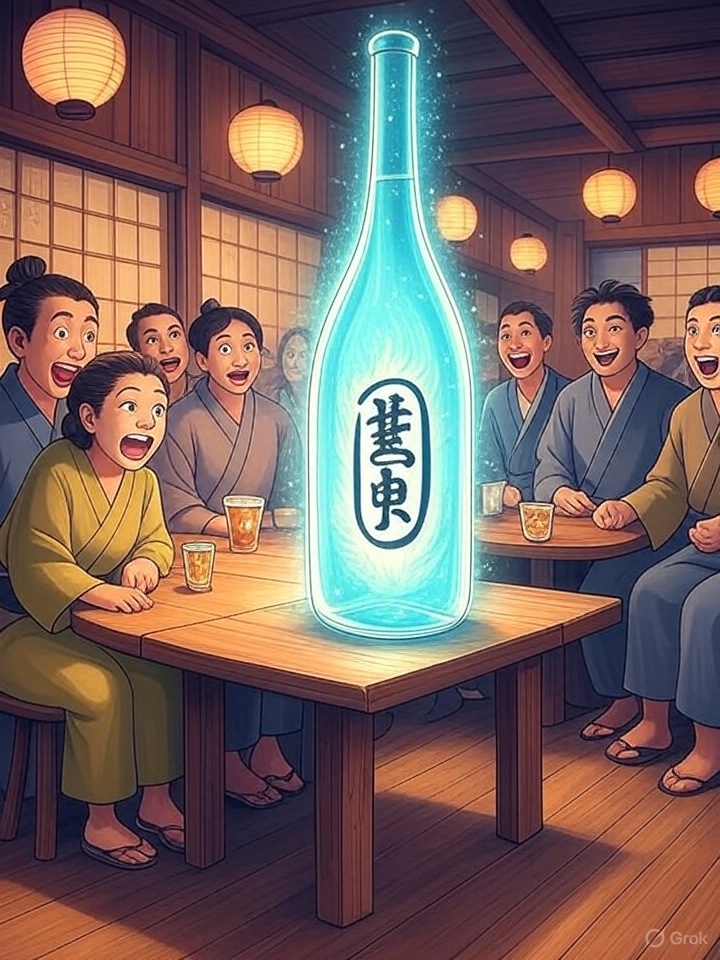
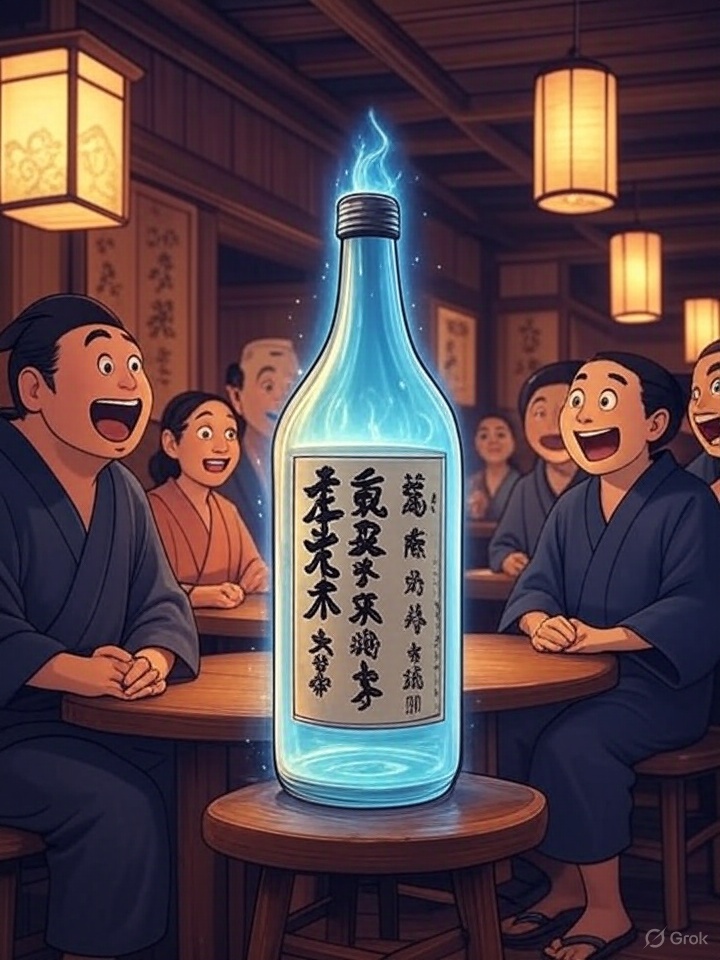
Illustrated folktale

In the village of Ashikaga, where the cherry blossoms bloomed like pink and white silk, there lived an elderly potter named Kaito. He was renowned for his exquisite earthenware sake jars, which were said to bring good fortune to those who possessed them. One such jar, crafted by Kaito's own hands many years ago, had been stored away in a dusty corner of the village temple.
As fate would have it, the temple's caretaker, a kind-hearted old man named Tanaka, stumbled upon the forgotten jar while tidying up the storage room. Intrigued by its intricate designs and worn patina, he decided to take it home as a curiosity. Little did he know that this humble earthenware vessel held secrets beyond his wildest imagination.
Upon returning to his small cottage on the outskirts of Ashikaga, Tanaka discovered that the jar began to stir. At first, it was just a faint tremble beneath his fingers, but soon the entire container quivered and shook like a living thing. As he watched in wonder, a pair of delicate legs emerged from the ceramic body, followed by two gentle arms adorned with cherry blossom motifs.
The Kameosa had awoken.
Tanaka, both thrilled and terrified, hesitated for a moment before offering his new companion a bowl of sake. To his amazement, the jar began to overflow with a rich, golden liquid that rivaled the finest brews from Kyoto's temples. The air was filled with an intoxicating aroma, as if the very essence of spring had been distilled into this enchanted sake.
Word of Tanaka's good fortune spread quickly through Ashikaga. Wealthy merchants and villagers alike would visit his cottage to taste the legendary Kameosa's creation. Yet, amidst the commotion, Tanaka realized that his newfound prosperity came with a price: he was expected to treat the jar with reverence and respect.
One fateful evening, as the sun dipped below the rolling hills, Tanaka's nephew, an impetuous young man named Taro, stumbled into the cottage, laughing and jestering. He seized the Kameosa without a second thought, intent on showing off its magical abilities to his friends. The jar, however, sensed the disrespect in the air.
With a low rumble that shook the foundations of Tanaka's home, the Kameosa suddenly grew lopsided and began to hop away with an unsteady gait. It vanished into the night, leaving behind only a faint echo of its former majesty and a puddle of sake where it had stood.
Tanaka chased after his mischievous companion, but it led him on a wild goose chase through Ashikaga's streets, until finally disappearing into the darkness. When dawn broke, Tanaka returned to his cottage, his heart heavy with sorrow.
As he gazed upon the empty space where the Kameosa had once stood, he grasped the true lesson of its departure: respect and gratitude were not mere words, but the very fabric of existence. From that day forward, Tanaka honored the ancient traditions and valued every household tool as a guardian of good fortune.
The villagers whispered among themselves that, though the Kameosa had vanished, its spirit still lingered in Ashikaga, watching over those who revered the simple joys of life and the beauty of well-crafted vessels. And whenever a sake jar was lovingly crafted or an old household item was restored to its former glory, it was said that the Kameosa smiled, for in their midst lay a glimpse of true prosperity and longevity.
Yokai, oni, kitsune and spirits from folklore
Directory of Japanese board games and traditional games
Verified itch.io pixel-art gacha — fair odds, no ads
Reference guides for classic Japanese ham radios
Ancient joinery techniques of Japanese master craftsmen
Explore Japan's landmarks, shrines and hidden locations
SNES and Super Famicom collection tracker
Hoshi no Isan — a Japanese-aesthetic space RPG in development
Pixel art life sim MMO — start at zero, build your life
AI-powered educational stories for kids
Japanese-aesthetic design tokens & AI-ready UI prompts

Every day, one teaching. One moment of stillness.
Kanji, meaning, and a quiet reflection — rooted in the philosophy
behind Japan's forests, seasons, and sacred silences.
Content Warning: This website explores Japanese folklore and mythological beings—including yokai, oni, and other supernatural entities—that may be frightening to younger audiences or sensitive viewers. All material is presented for educational and cultural appreciation only. Viewer discretion is advised.
Parents and guardians are encouraged to preview content before sharing it with children. By continuing to use JapaneseMythicalCreatures.com, you acknowledge and accept this advisory.
Copyright © 2026 Japanese Mythical Creatures • All Rights Reserved.