

Jatai (蛇帯) literally means “snake sash.” It refers to an obi (a traditional kimono belt) that has gained a spirit, often due to strong emotions or neglect.
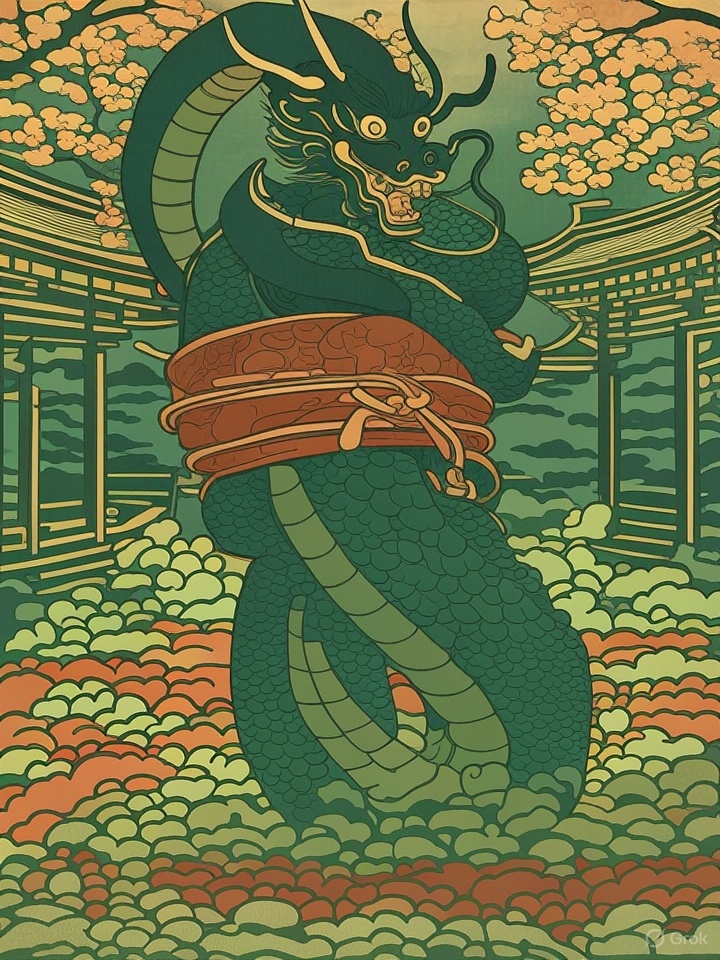
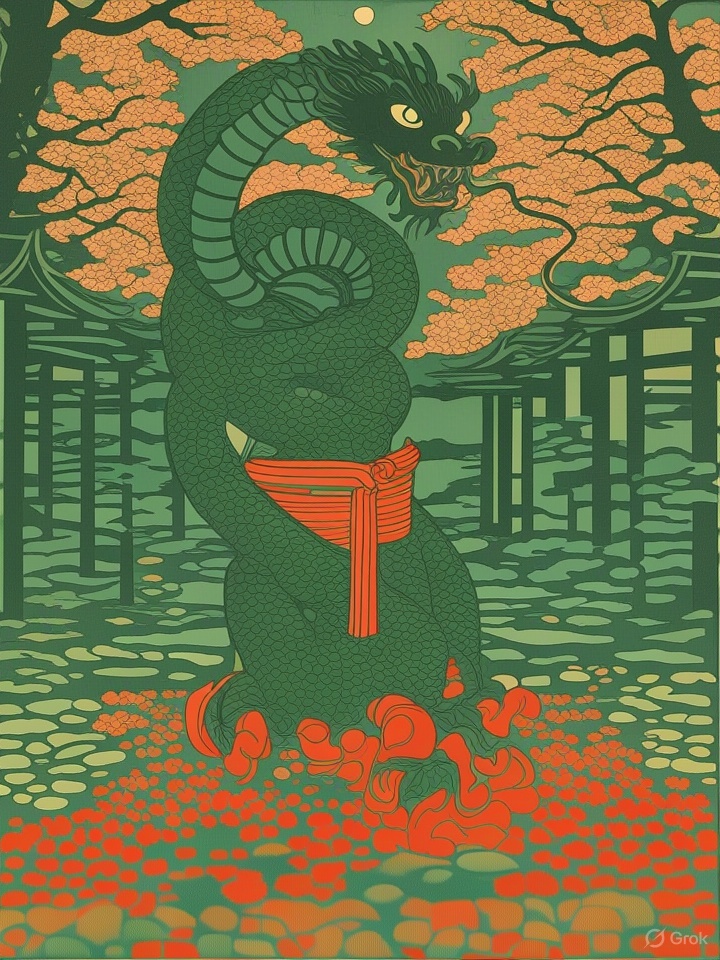
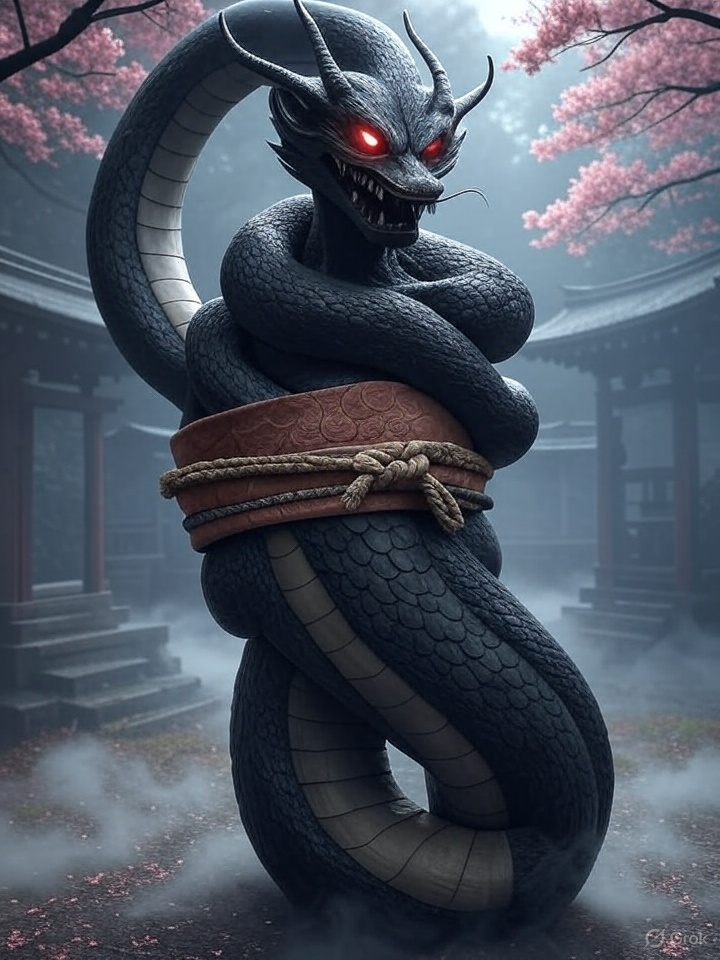
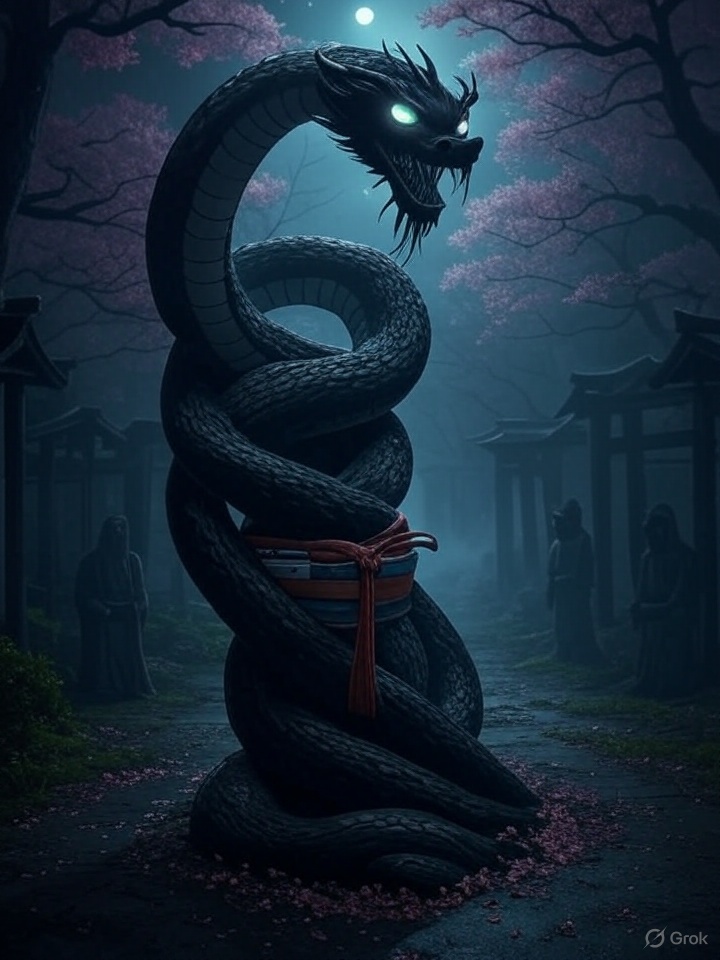
Illustrated folktale

In the twilight hours, when the fireflies danced around the lanterns of the humble inn, a traveler named Kaito settled into his futon, weary from days on the road. The innkeeper's wife, Yumi, had kindly offered him a warm meal and a place to rest for the night. As he lay down, he noticed an old silk sash draped across the back of the room, its intricate patterns catching the flickering candlelight.
As he watched, mesmerized by the soft rustle of the fabric, the sash began to stir. It started as a gentle sway, like a summer breeze on a still pond. But soon it slithered and twisted, like a living serpent coiled in the darkness. Kaito's eyes widened as the Jatai took shape before him.
The sash wrapped itself around the wooden pillar, constricting its grip as it seemed to grow thicker, more substantial. A low hiss filled the room, like the soft whisper of silk being pulled taut. Yumi's wife had warned Kaito about the cursed garments that dwelled in these halls – abandoned and forgotten, yet imbued with a lingering spirit.
"What have you done to her?" Kaito whispered, though he knew not whom he addressed.
The Jatai did not respond, but its movements quickened, as if it sensed his inquiry. It slithered across the floor, tracing the path that Yumi's wife had taken on countless nights, pouring tea and tending to the weary travelers who sought refuge within these walls.
In a burst of realization, Kaito recalled the stories he'd heard about the innkeeper's family – of a daughter who had died young, her love for fine silks and ornate designs left unfulfilled. He remembered too the tales of those who, consumed by grief, let their emotions infect the very objects they treasured.
As the darkness deepened, Kaito sensed the Jatai draw closer, its presence a cold breeze that sent shivers down his spine. "Forgive me," he murmured, thinking not of his own transgressions but of the sorrow and heartache that had long since consumed these halls.
The sash relaxed its grip on the pillar, uncoiling itself as it flowed across the floor like liquid silk. It halted before Kaito's futon, where it began to ripple and undulate, a hypnotic pattern that seemed to weave a spell of sorrow. In this moment, he felt an overwhelming sense of longing – for the daughter who had never known joy, for the love she had shared with her family.
As dawn broke outside, the Jatai vanished into thin air, leaving Kaito shaken but transformed. He realized that respect for personal items and emotional energy was not a mere cautionary tale, but a living truth that resonated within the very heart of these ancient walls.
Yokai, oni, kitsune and spirits from folklore
Directory of Japanese board games and traditional games
Verified itch.io pixel-art gacha — fair odds, no ads
Reference guides for classic Japanese ham radios
Ancient joinery techniques of Japanese master craftsmen
Explore Japan's landmarks, shrines and hidden locations
SNES and Super Famicom collection tracker
Hoshi no Isan — a Japanese-aesthetic space RPG in development
Pixel art life sim MMO — start at zero, build your life
AI-powered educational stories for kids
Japanese-aesthetic design tokens & AI-ready UI prompts

Every day, one teaching. One moment of stillness.
Kanji, meaning, and a quiet reflection — rooted in the philosophy
behind Japan's forests, seasons, and sacred silences.
Content Warning: This website explores Japanese folklore and mythological beings—including yokai, oni, and other supernatural entities—that may be frightening to younger audiences or sensitive viewers. All material is presented for educational and cultural appreciation only. Viewer discretion is advised.
Parents and guardians are encouraged to preview content before sharing it with children. By continuing to use JapaneseMythicalCreatures.com, you acknowledge and accept this advisory.
Copyright © 2026 Japanese Mythical Creatures • All Rights Reserved.