
Iwana-bōzu (岩魚坊主) translates to “Char Monk,” referencing a fish (iwana, or char) and a Buddhist monk (bōzu).
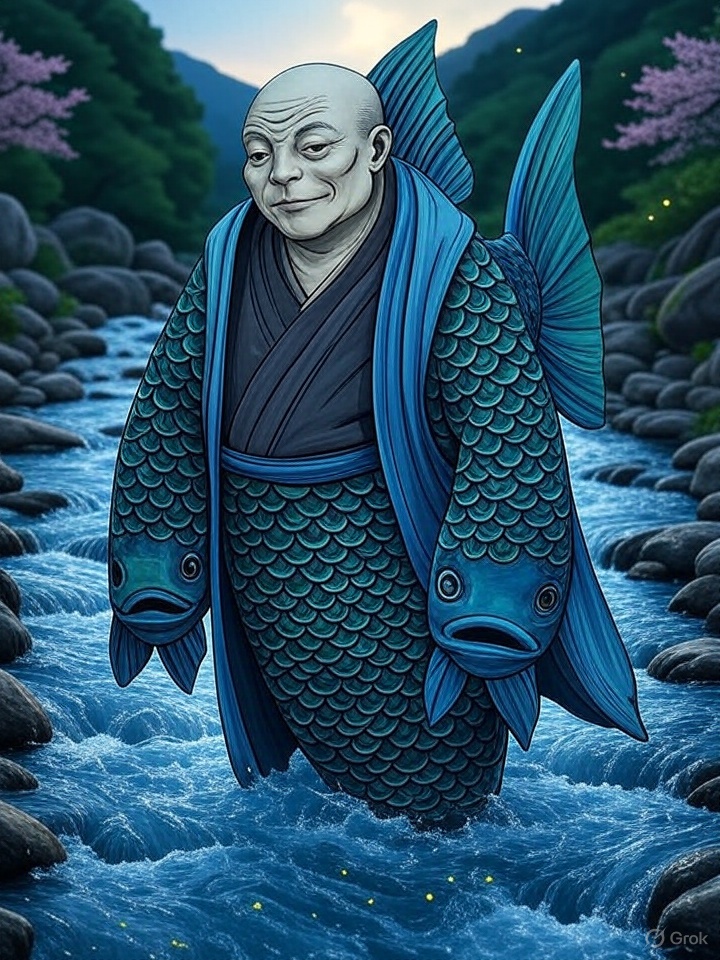
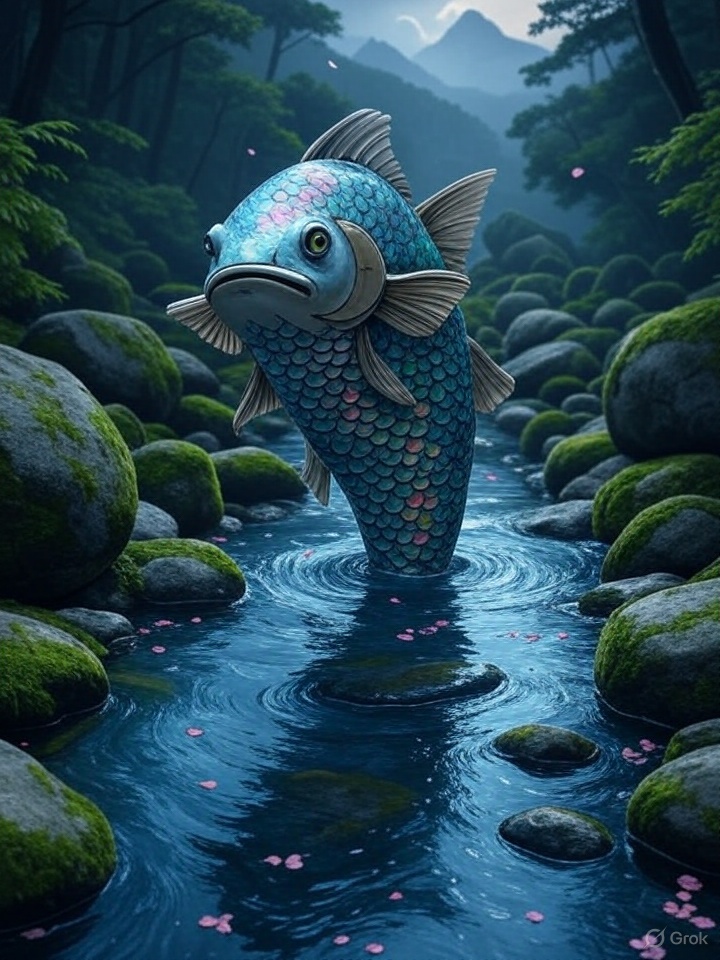
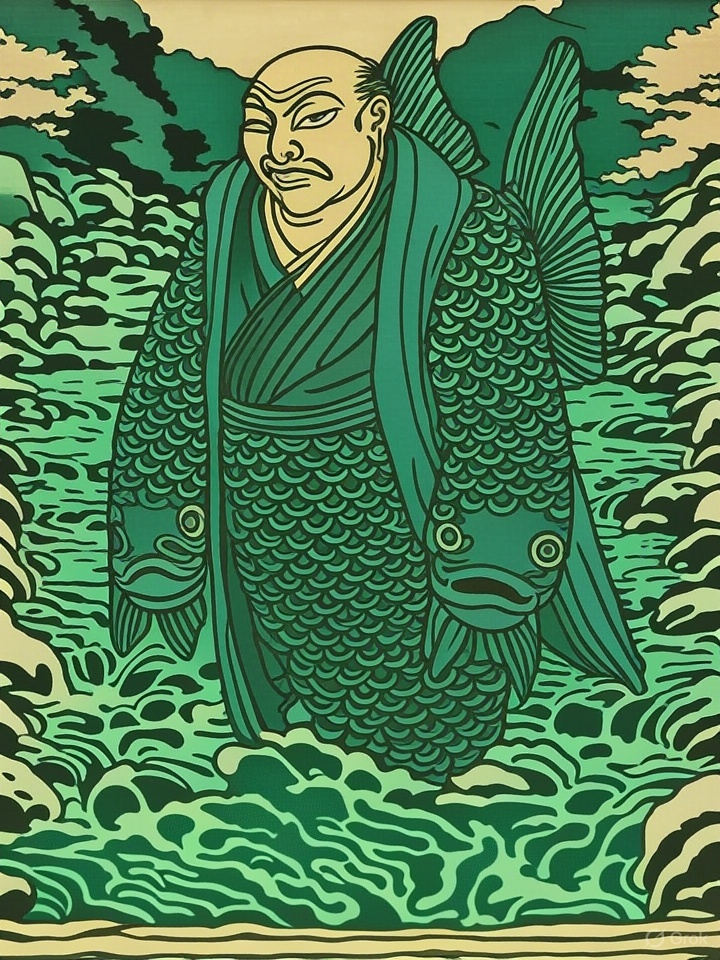
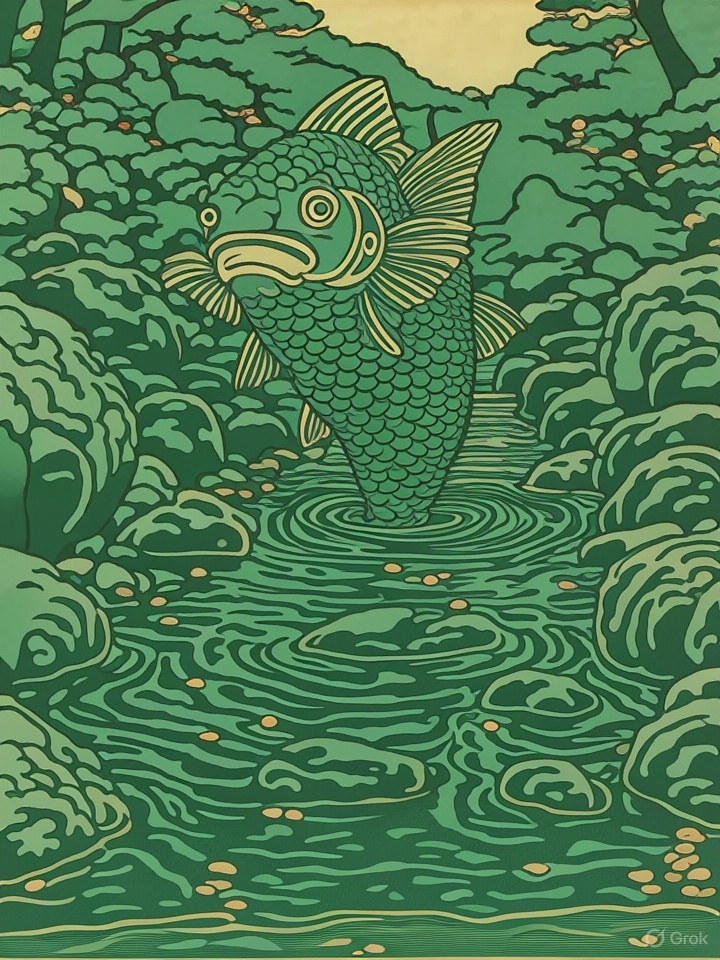
Illustrated folktale

In the depths of Akakawa village, where the mist-shrouded mountains cradled the river's gentle waters, there lived an old monk named Kaito. He was renowned for his wisdom and kind heart, often sharing tales of the spirit realm with travelers who passed through the village. But what few knew was that Kaito harbored a secret: he was not quite of this world.
One autumn evening, as the sun dipped behind the peaks, a lone fisherman named Hiroki wandered into Akakawa seeking refuge from the rain. He had heard whispers of Kaito's otherworldly nature and hoped to find solace in the monk's counsel. As Hiroki approached the riverbank, he spotted a figure standing beneath the willow trees.
The figure was shrouded in mist, its features indistinct at first. But as Hiroki drew closer, he saw that it was Kaito – or rather, not quite Kaito. The old monk's skin glistened with an unsettling sheen, like polished river stones. His bald head seemed to absorb the fading light, making him appear almost translucent.
Hiroki felt a shiver run down his spine as Kaito spoke in a low, soothing voice, "Ah, traveler, I see you're lost in thought. Come, let me share a tale of the spirit realm." The words hung in the air like wisps of cloud, and Hiroki found himself entranced by the monk's ethereal presence.
As they conversed, the rain intensified, drumming against the willow leaves. Kaito's eyes gleamed with an otherworldly light, his voice weaving a hypnotic spell around Hiroki. The fisherman's thoughts grew hazy, as if he were being pulled into the river itself.
And then, without warning, Kaito vanished – dissolved into the mist like a stone submerged in the water. Hiroki stood there, bewildered and disoriented, as the rain pounded against his face. He stumbled backwards, nearly falling onto the damp grass.
As he regained his footing, Hiroki noticed something peculiar: on the riverbank where Kaito had stood, a small inscription etched into the stone now shone with an eerie glow. The characters seemed to dance in the fading light, reading: " Kokoro ni tsuku – Heart bound to the river."
Hiroki felt a strange sense of connection to the river, as if his very heart was resonating with its gentle waters. He realized that Kaito's true form – the Iwana-bōzu – was not a warning or an illusion, but a guardian spirit that embodied reverence for the sacred waters and solitude.
As Hiroki gazed into the river, he saw ripples spreading from where Kaito had vanished, like the gentle touch of a fish fin. The old monk's presence still lingered, reminding him to respect the thin boundary between the natural world and the spiritual realm. From that day forward, Hiroki returned often to sit by the river, listening for the whispers of Kaito's spirit and honoring the quiet wisdom of the Iwana-bōzu.
Yokai, oni, kitsune and spirits from folklore
Directory of Japanese board games and traditional games
Verified itch.io pixel-art gacha — fair odds, no ads
Reference guides for classic Japanese ham radios
Ancient joinery techniques of Japanese master craftsmen
Explore Japan's landmarks, shrines and hidden locations
SNES and Super Famicom collection tracker
Hoshi no Isan — a Japanese-aesthetic space RPG in development
Pixel art life sim MMO — start at zero, build your life
AI-powered educational stories for kids
Japanese-aesthetic design tokens & AI-ready UI prompts

Every day, one teaching. One moment of stillness.
Kanji, meaning, and a quiet reflection — rooted in the philosophy
behind Japan's forests, seasons, and sacred silences.
Content Warning: This website explores Japanese folklore and mythological beings—including yokai, oni, and other supernatural entities—that may be frightening to younger audiences or sensitive viewers. All material is presented for educational and cultural appreciation only. Viewer discretion is advised.
Parents and guardians are encouraged to preview content before sharing it with children. By continuing to use JapaneseMythicalCreatures.com, you acknowledge and accept this advisory.
Copyright © 2026 Japanese Mythical Creatures • All Rights Reserved.