

Ittan-momen (一反木綿) translates to “one tan of cotton,” a traditional length of cloth (around 10 meters) used in textile production.
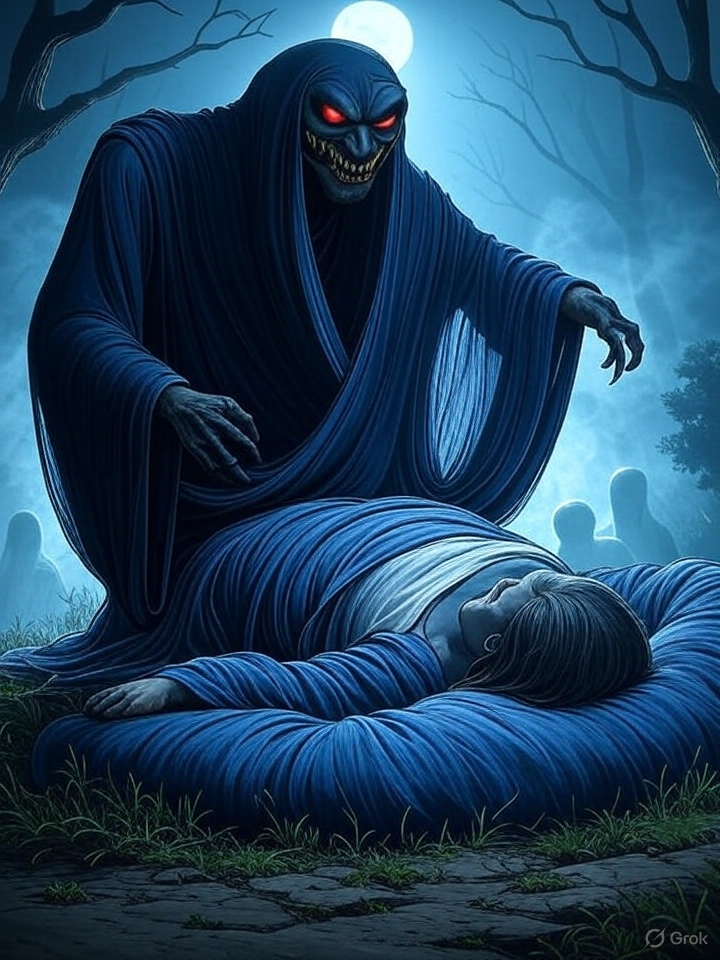
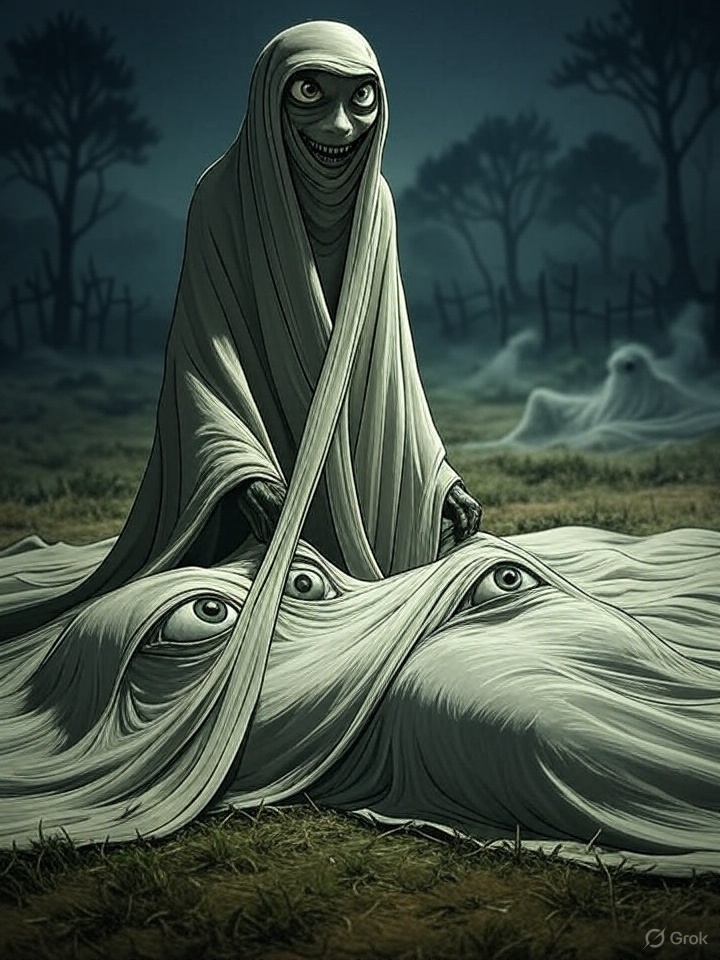
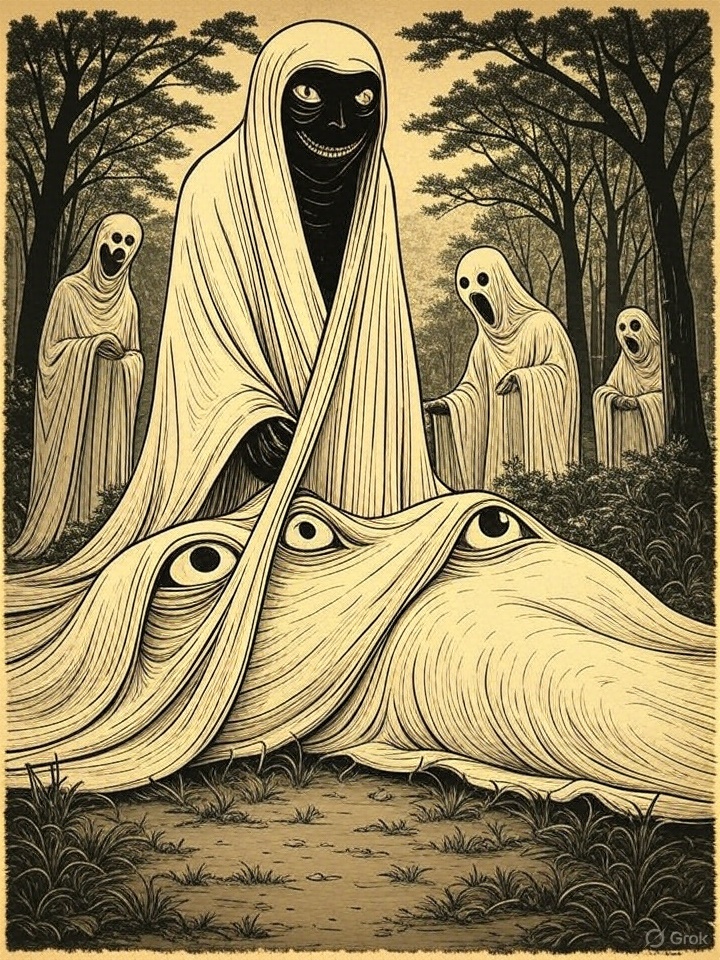
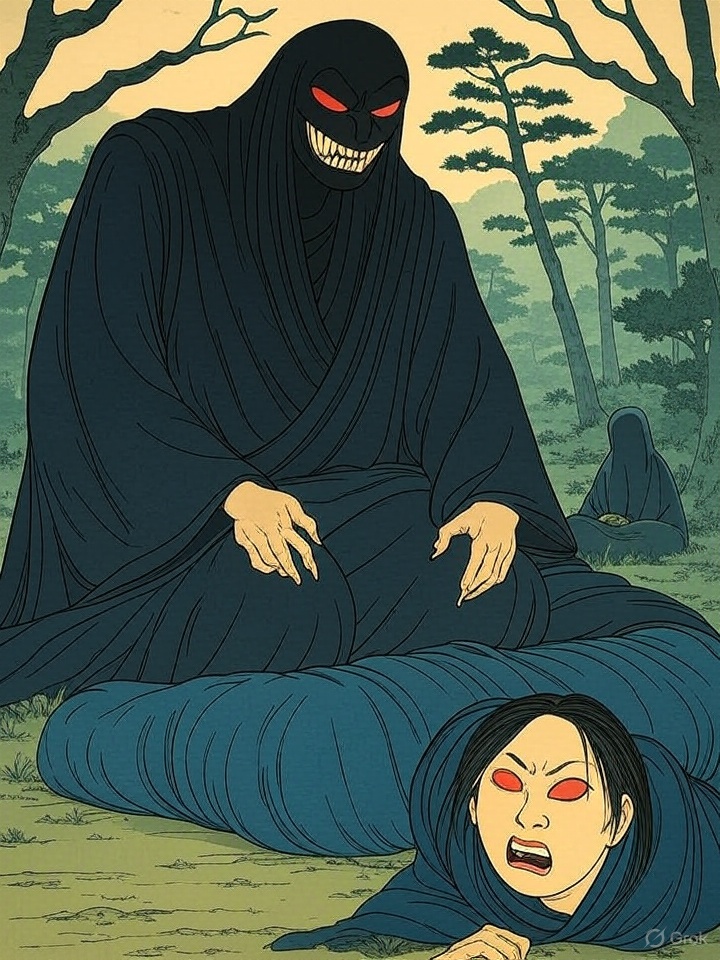
Illustrated folktale

In those long-ago days when the cherry blossoms first bloomed on the hills of Kagoshima's southern shores, the people lived in harmony with nature. But there was a whispered tale among them about a creature born from the very fabric of their daily lives.
It is said that in the stillness of night, when the fires of the villages had died down and the only sound was the distant hum of cicadas, a long white strip of cloth would rise into the air. Some claimed to have seen it flit like a bird on windswept days, while others swore it slithered through the darkness like a snake. Its form shifted and flowed as if made of living mist.
Those who ventured out alone under its gaze often reported being enveloped by an unseen force that wrapped around their face with an unyielding grip. Some were saved by chance travelers or fortunate timing, while others never returned to tell their tale. The people called it the Ittan-momen, a name that made the skin crawl in hushed tones.
One winter's eve, Kaito, a young hunter from the mountains, decided to brave the night to check his traps. As he walked through the dark forest, the trees creaking beneath the frosty weight of snow, he noticed an eerie glow on the horizon. At first, he thought it was just the moonlight filtering through the canopy above, but as he drew closer, the light grew brighter and began to pulse like a heartbeat.
Suddenly, a silken thread stretched out from the center of the light, its length unwinding with a slow, deliberate pace. Kaito felt an icy dread creeping up his spine as he watched the Ittan-momen swoop towards him. He tried to flee, but his legs were heavy as stones.
As if sensing his fear, the creature quickened its approach. The thread enveloped his face like a cold shroud, squeezing tight enough to dim his vision. Kaito's breath came in ragged gasps, and he stumbled forward, desperate to escape the suffocating grip. A fierce gust of wind swept through the forest, extinguishing the eerie glow, and for an instant, the Ittan-momen seemed to hesitate.
Seizing the chance, Kaito tore free from its grasp and sprinted into the darkness. As he ran, the wind carried him away from the spot where the creature vanished into the night. The trees blurred past him in a maddening whirlwind of branches and snowflakes.
When the hunter finally stumbled back to his village, shivering with fear and exhaustion, no one dared ask what horrors he had faced that fateful night. The tale of Kaito's encounter was whispered in hushed tones, a reminder to stay within the warmth of their homes after sundown. For in those dark hours, even the most familiar objects could become instruments of terror, like the Ittan-momen, an embodiment of the unseen dangers lurking just beyond the edge of town.
Yokai, oni, kitsune and spirits from folklore
Directory of Japanese board games and traditional games
Verified itch.io pixel-art gacha — fair odds, no ads
Reference guides for classic Japanese ham radios
Ancient joinery techniques of Japanese master craftsmen
Explore Japan's landmarks, shrines and hidden locations
SNES and Super Famicom collection tracker
Hoshi no Isan — a Japanese-aesthetic space RPG in development
Pixel art life sim MMO — start at zero, build your life
AI-powered educational stories for kids
Japanese-aesthetic design tokens & AI-ready UI prompts

Every day, one teaching. One moment of stillness.
Kanji, meaning, and a quiet reflection — rooted in the philosophy
behind Japan's forests, seasons, and sacred silences.
Content Warning: This website explores Japanese folklore and mythological beings—including yokai, oni, and other supernatural entities—that may be frightening to younger audiences or sensitive viewers. All material is presented for educational and cultural appreciation only. Viewer discretion is advised.
Parents and guardians are encouraged to preview content before sharing it with children. By continuing to use JapaneseMythicalCreatures.com, you acknowledge and accept this advisory.
Copyright © 2026 Japanese Mythical Creatures • All Rights Reserved.