

Itsumaden (いつまでん) roughly translates to "how long?" or "until when?", referencing its eerie cries echoing that phrase as it flew over Kyoto at night.
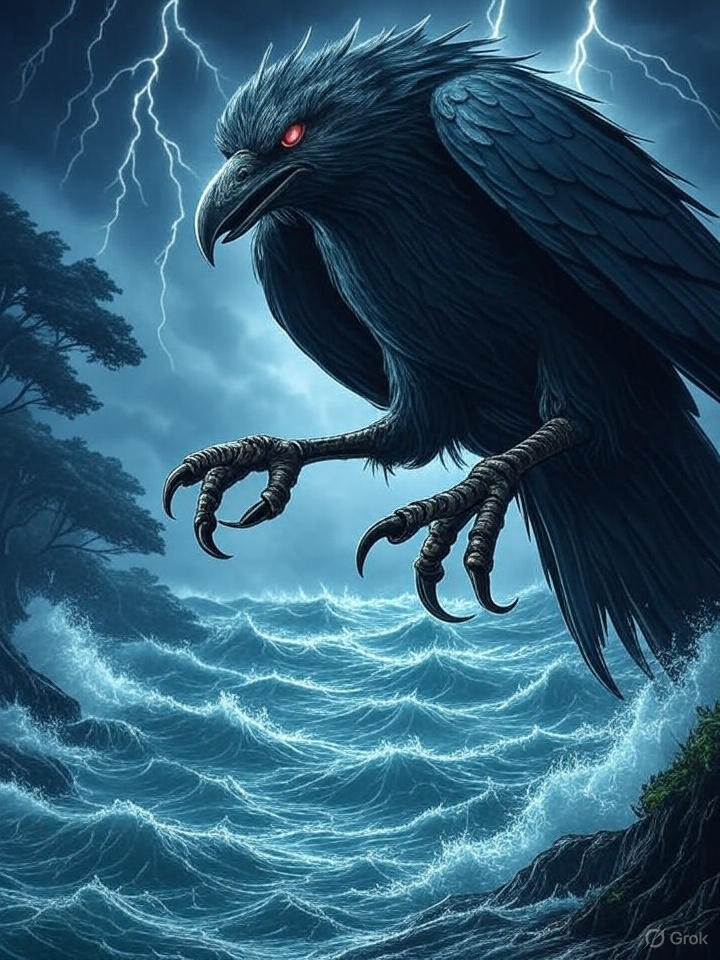
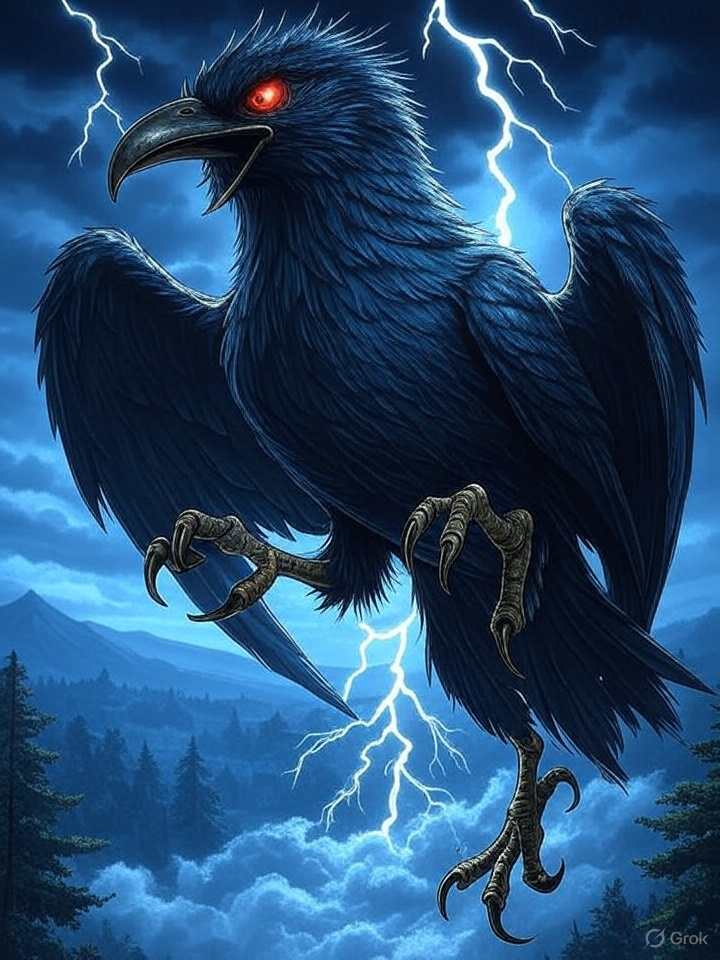
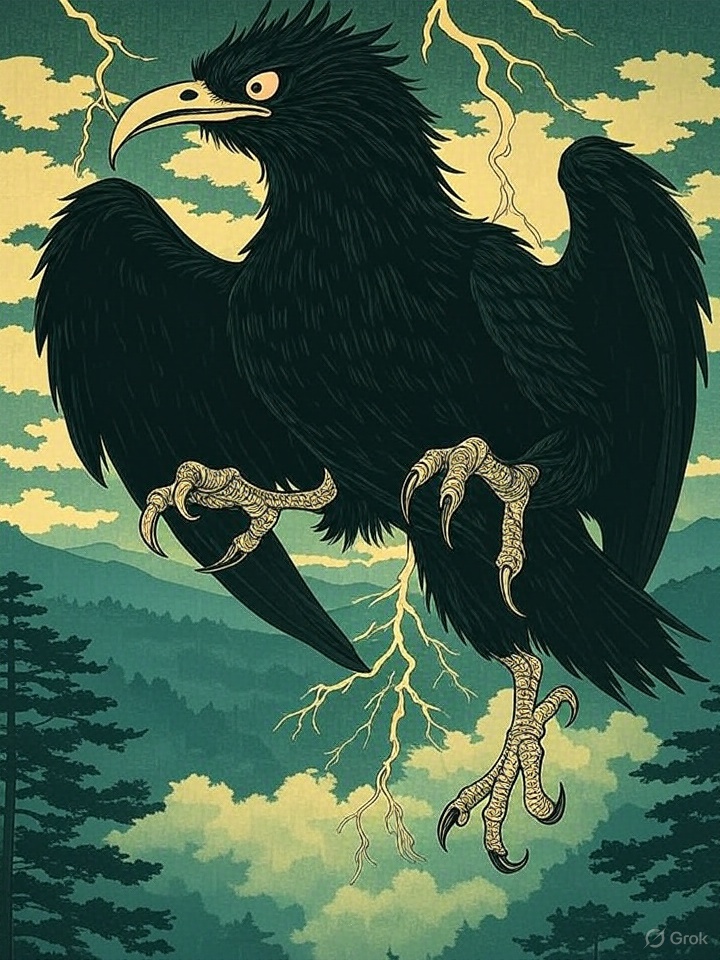
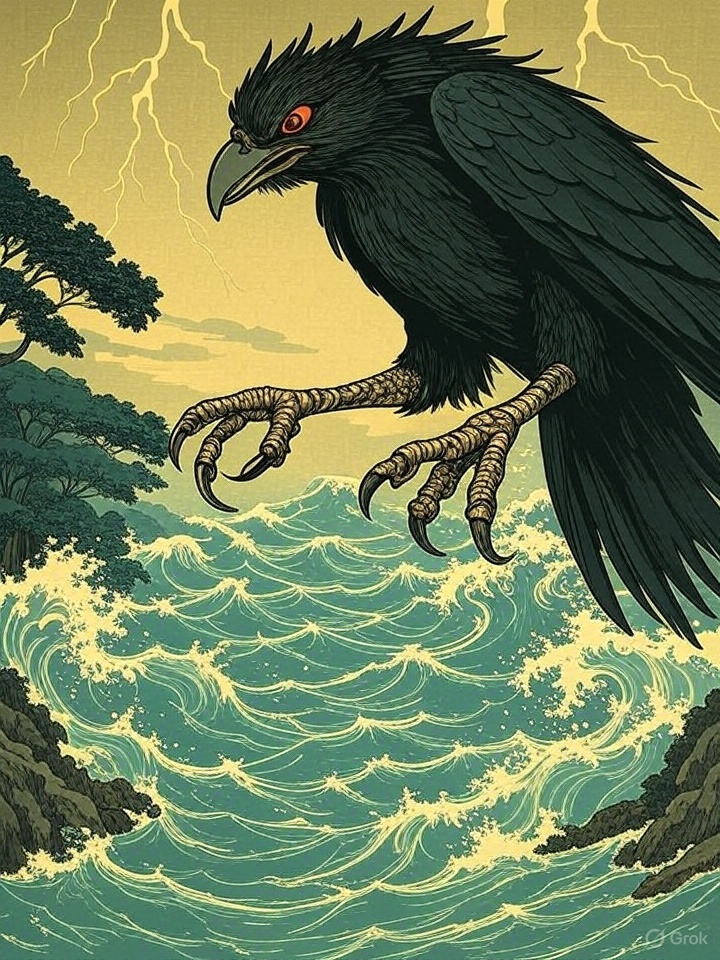
Illustrated folktale

In the shadow of Mount Fuji, where the mist curled like a lonely mourner, the city trembled beneath its feet. The once-verdant gardens withered, their leaves shriveling like parched lips. Drought and famine clutched at the throats of its people, draining life's blood from their veins.
It was during this bleak winter that the Itsumaden appeared. Its wings beat against the grey skies, stirring up dust devils that danced upon the rooftops. A snake-like body flexed beneath its human visage, as if a single limb strained to uncoil its inner turmoil.
With eyes blazing like incandescent lanterns in a tempest, the Itsumaden swooped above the city's cramped alleys, shrieking its eternal question: "Itsumade?" The despairing cry shattered windows and chipped walls. Cowering citizens cringed before its wrath.
Its face bore an uncanny resemblance to that of Kaito, a young rice merchant whose corpse had been found in a canal just the previous autumn. Rumors claimed he'd been unjustly accused by the authorities and executed without trial. His spirit, like a restless moth, refused to rest, flitting between realms with each whispered rumor.
One day, while fleeing from the Itsumaden's merciless shriek, Kaito's brother, Taro, stumbled upon an ancient scroll hidden within his family's temple. The worn text described the Itsumaden as a messenger of the unquiet dead, born from the sorrows of those left forsaken by society. Intricate illustrations depicted its form as a fusion of human sorrow and reptilian resilience.
Transfixed by this discovery, Taro sought out the wise abbot Hoshu at a distant temple. Together, they composed prayers to soothe the tormented spirit, calling upon Kaito's restless soul to find peace. Beneath a full moon, under an umbrella of fluttering paper lanterns, the monks chanted the litany, seeking to release the Itsumaden from its mission.
As their voices harmonized with the night breeze, a gentle light kindled within the Itsumaden's face. Its eyes dimmed, like spent candles, as Kaito's presence began to recede. For an instant, the city was still; then, like a crackling fire that had finally found fuel, the bird took flight once more.
This time, however, its cry held a new resonance – not despair, but sorrowful resignation. The Itsumaden soared above Mount Fuji's slope, where the moon cast a silver glow upon its body. As it vanished into the darkness, the wind bore away the faint whisper: "Itsumade..." No longer an accusatory wail, but an elegy for the forgotten and forsaken.
From that winter on, the people of the city tended their memories with greater care, honoring those left behind by war and famine. Though the Itsumaden's presence was never again seen in the skies above Mount Fuji, its legacy as a reminder of the dead's unappeased wrath continued to echo through generations.
Yokai, oni, kitsune and spirits from folklore
Directory of Japanese board games and traditional games
Verified itch.io pixel-art gacha — fair odds, no ads
Reference guides for classic Japanese ham radios
Ancient joinery techniques of Japanese master craftsmen
Explore Japan's landmarks, shrines and hidden locations
SNES and Super Famicom collection tracker
Hoshi no Isan — a Japanese-aesthetic space RPG in development
Pixel art life sim MMO — start at zero, build your life
AI-powered educational stories for kids
Japanese-aesthetic design tokens & AI-ready UI prompts

Every day, one teaching. One moment of stillness.
Kanji, meaning, and a quiet reflection — rooted in the philosophy
behind Japan's forests, seasons, and sacred silences.
Content Warning: This website explores Japanese folklore and mythological beings—including yokai, oni, and other supernatural entities—that may be frightening to younger audiences or sensitive viewers. All material is presented for educational and cultural appreciation only. Viewer discretion is advised.
Parents and guardians are encouraged to preview content before sharing it with children. By continuing to use JapaneseMythicalCreatures.com, you acknowledge and accept this advisory.
Copyright © 2026 Japanese Mythical Creatures • All Rights Reserved.