

Ikiryō (生霊) literally means “living spirit” or “living ghost.” It refers to a person’s soul leaving their body due to overwhelming emotions.

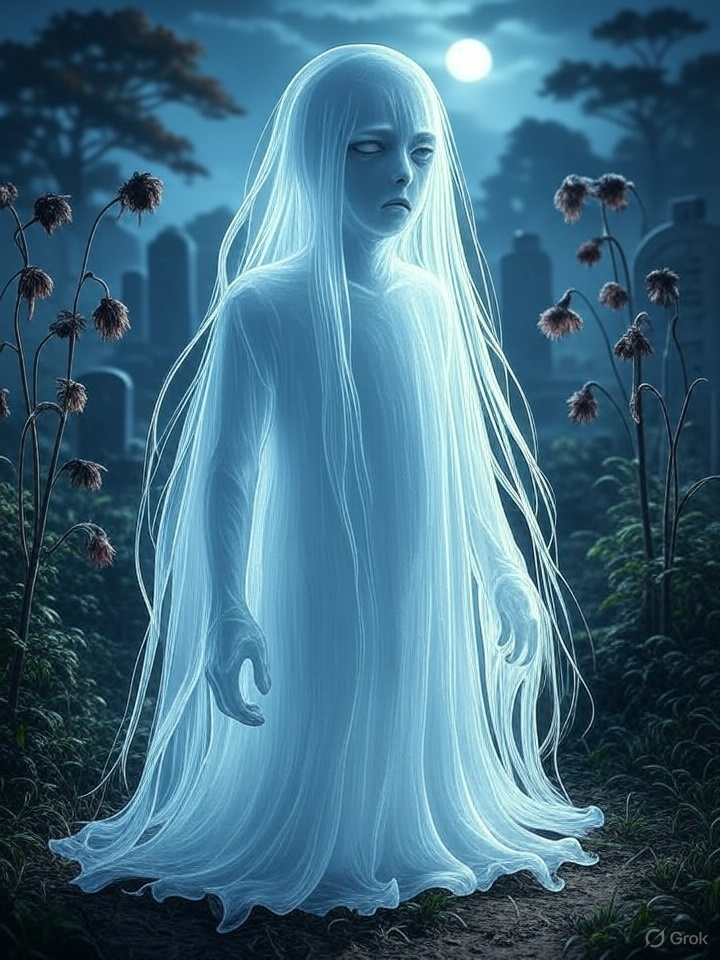
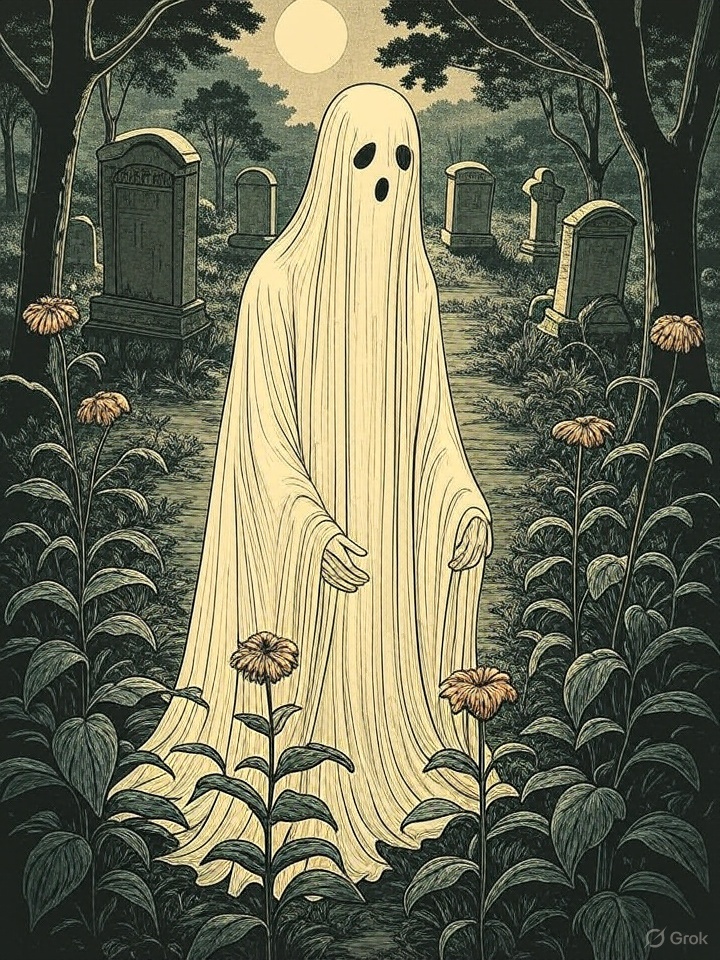
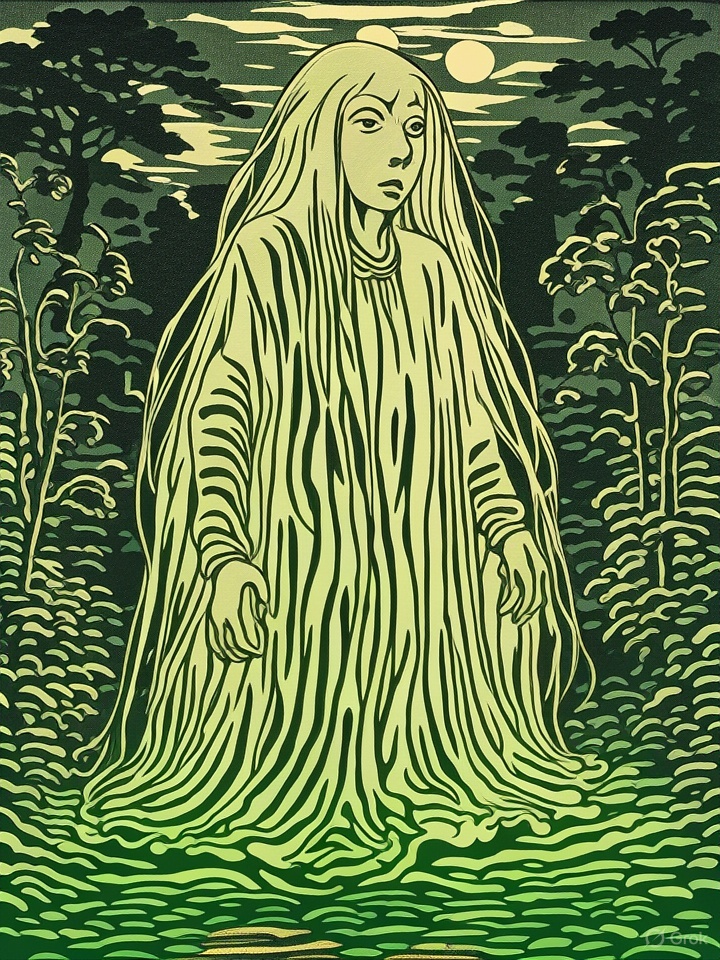
Illustrated folktale

In the moonlit streets of our village, where cherry blossoms bloomed in every corner, a young woman named Emiko dwelled. Her smile could light up the darkest of rooms, and her laughter was music to the ears of all who heard it. But what few knew was that Emiko's heart harbored a secret sorrow.
As a child, she had been deeply devoted to her mother, who had passed away when Emiko was but a tender shoot. Her grief had been like a slow-burning flame, fueling an all-consuming obsession with the memory of her mother. People would often remark on the uncanny resemblance between Emiko and her mother – some said it was as if Emiko's spirit still lingered, searching for its lost anchor.
One fateful evening, while out walking beneath the mist-shrouded trees, Emiko stumbled upon an old woman tending to a withered flowerbed. The crone revealed herself to be a wisewoman, one who understood the intricacies of the human heart and the whispers of the spirit world. She sensed that Emiko's Ikiryō – her wandering soul – was stirring, fueled by long-dormant emotions.
The wisewoman shared with Emiko an ancient tale: how in times past, a jealous lover had conjured his own Ikiryō to torment his rival, and it had gone on to wreak havoc on the village for generations. But as she spoke, her words were laced with a warning – that such manifestations often arose from unbalanced emotions, like the ripples of a pond disturbed by a thrown stone.
Emiko realized that her own Ikiryō had begun to take shape, manifesting itself in the form of an ethereal doppelganger. It seemed to move unseen alongside her, its presence felt but not seen – until it started to cause trouble. The villagers would whisper about Emiko's increasingly erratic behavior and the strange occurrences surrounding her: a favorite kimono torn asunder without explanation; the faint scent of incense lingering on the wind.
As the days passed, Emiko's friends began to shy away from her, sensing that something was amiss within. Her relationships crumbled like autumn leaves before the wind. In desperation, she sought out the wisewoman once more, begging for guidance to calm the tempests of her own heart.
The wise one listened, then spoke words both gentle and firm: "Only when you confront your sorrow can your Ikiryō find peace. Let go of what cannot be, and tend to the garden of your own spirit."
With these wisdom-filled words still echoing in her mind, Emiko made a vow to herself – to tend to the heartache that had long plagued her, and to invite balance into her life. As she did so, her Ikiryō, sensing its master's resolve, began to dissipate like mist at dawn. The village breathed a collective sigh of relief as Emiko's smile returned, radiant once more in the moonlight. And though whispers persisted about the eerie occurrences that had haunted their streets, they spoke not of malice but of caution – a reminder of the delicate dance between heart and soul, and the importance of tending to one's own inner garden.
Yokai, oni, kitsune and spirits from folklore
Directory of Japanese board games and traditional games
Verified itch.io pixel-art gacha — fair odds, no ads
Reference guides for classic Japanese ham radios
Ancient joinery techniques of Japanese master craftsmen
Explore Japan's landmarks, shrines and hidden locations
SNES and Super Famicom collection tracker
Hoshi no Isan — a Japanese-aesthetic space RPG in development
Pixel art life sim MMO — start at zero, build your life
AI-powered educational stories for kids
Japanese-aesthetic design tokens & AI-ready UI prompts

Every day, one teaching. One moment of stillness.
Kanji, meaning, and a quiet reflection — rooted in the philosophy
behind Japan's forests, seasons, and sacred silences.
Content Warning: This website explores Japanese folklore and mythological beings—including yokai, oni, and other supernatural entities—that may be frightening to younger audiences or sensitive viewers. All material is presented for educational and cultural appreciation only. Viewer discretion is advised.
Parents and guardians are encouraged to preview content before sharing it with children. By continuing to use JapaneseMythicalCreatures.com, you acknowledge and accept this advisory.
Copyright © 2026 Japanese Mythical Creatures • All Rights Reserved.