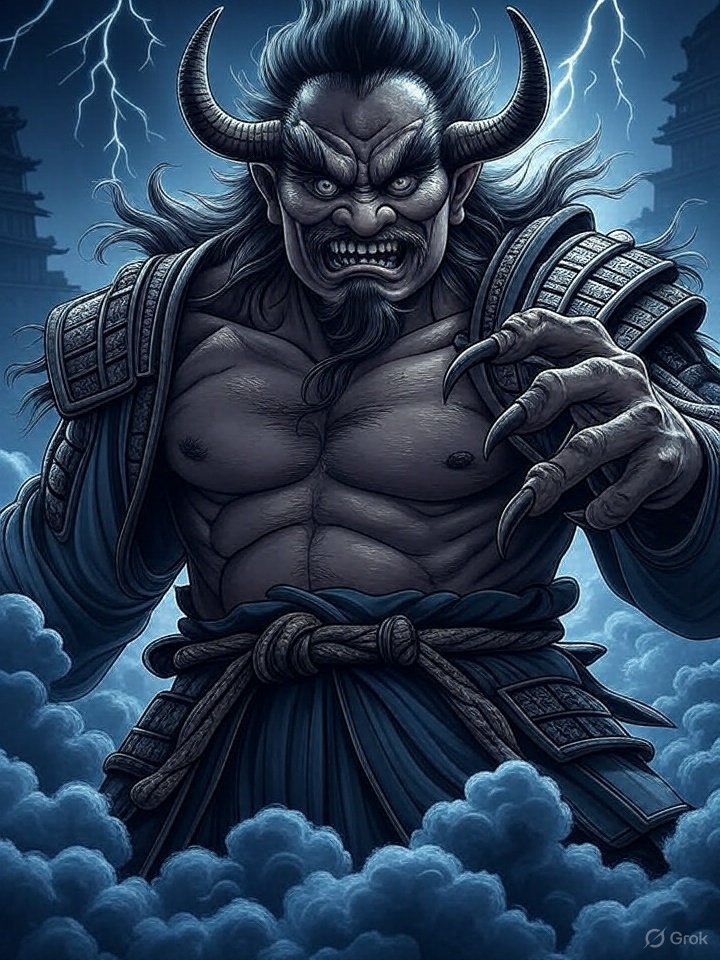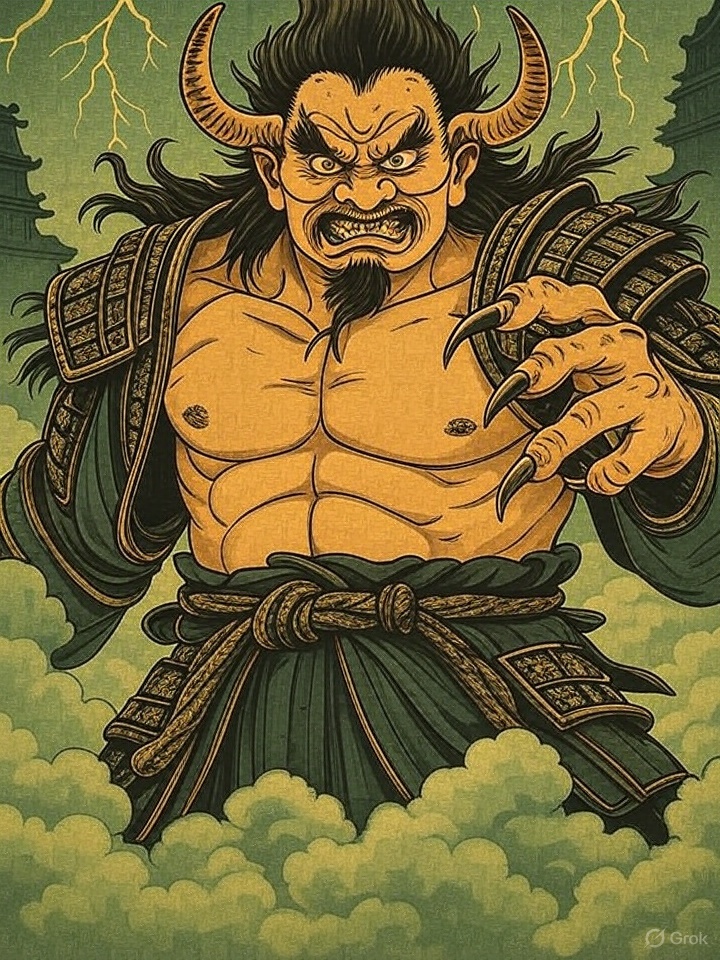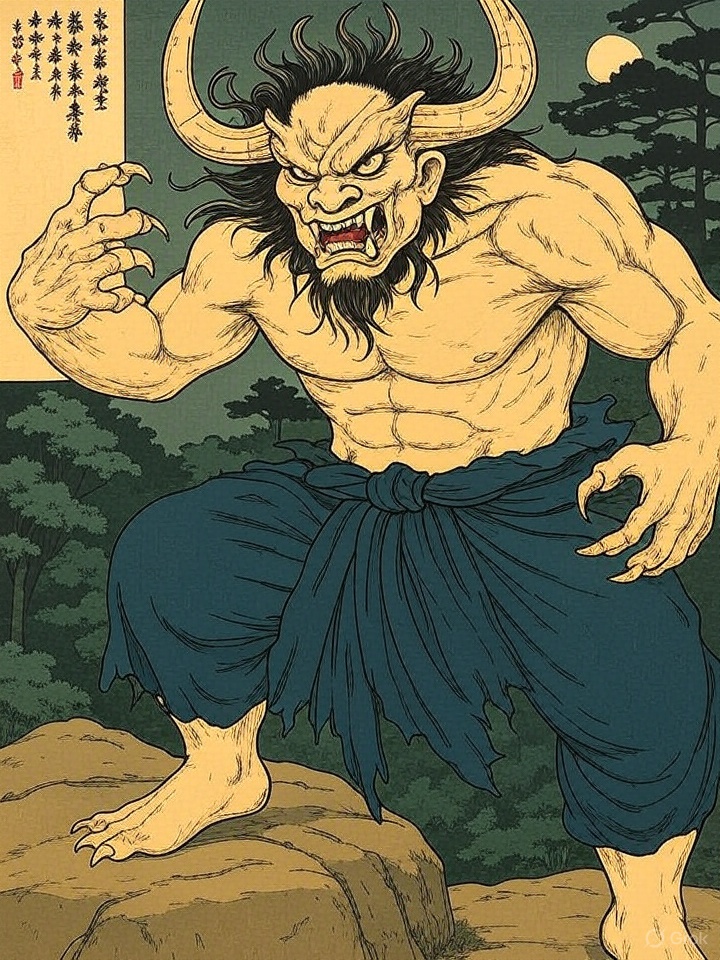

Ibaraki-dōji (茨木童子) is a fearsome oni whose name references the Ibaraki region and the term "dōji," meaning a child or youthful figure.
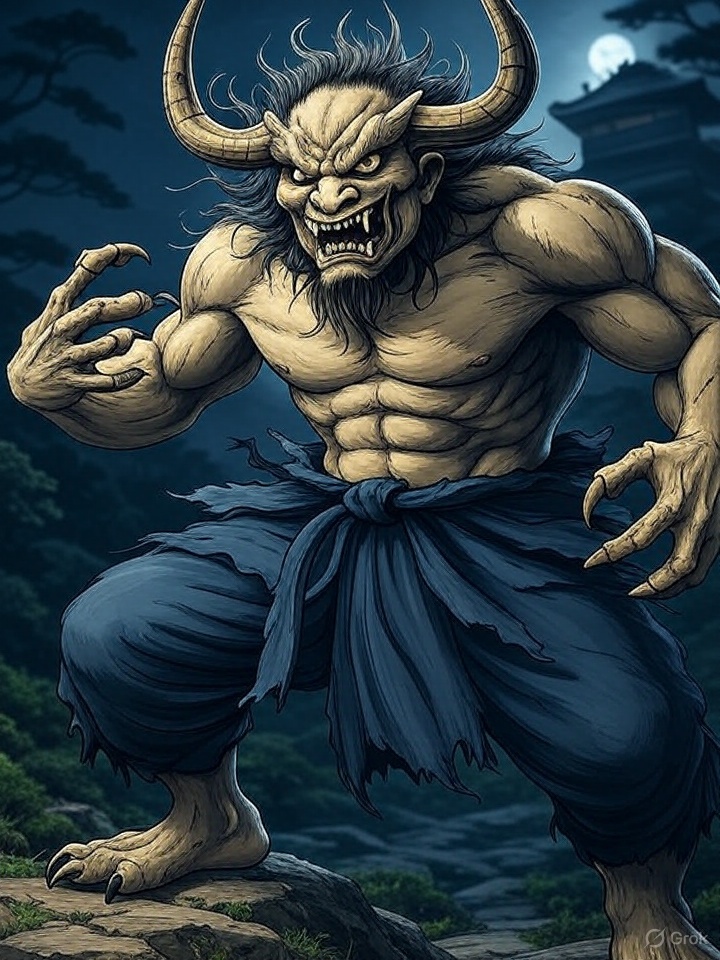
Illustrated folktale
In the depths of autumn, when the mist-shrouded mountains of Arashiyama seemed to whisper secrets to the wind, I chanced upon an eerie tale of old Kyoto.
It was said that the Ibaraki-dōji, a demon of unholy power and unwavering loyalty, once watched over the Rashomon gate with eyes as red as cherry blossoms in autumn's twilight. His gaze was like a winter storm – harsh, unforgiving, and capable of stripping the very soul from one's breast.
The city trembled beneath his iron club, a behemoth of twisted steel that seemed to writhe and twist like a living serpent. Many claimed to have seen him stroll through the market stalls, his wild hair aflame with an otherworldly energy, as he purchased offerings for his master, Shuten-dōji.
One stormy evening, a young warrior named Kaito sought refuge beneath Rashomon's crumbling eaves. His armor, dented and worn from battles against the northern invaders, seemed a meager shield against the tempest raging outside. The Ibaraki-dōji, sensing the presence of this mortal, emerged from the shadows like a ghostly apparition.
Kaito, though no fool, had heard tales of the demon's unyielding ferocity and his master's malevolent influence over Kyoto's streets. He steeled himself, gripping his katana tightly as the Ibaraki-dōji loomed before him. The air seemed to vibrate with the demon's growl, a rumble that awakened memories long buried in Kaito's family.
"You have walked under Rashomon's watchful eyes," the Ibaraki-dōji said, his voice like thunder crashing against the city walls. "Your blood will be payment for your intrusion."
Kaito stood firm, though his heart pounded with fear. He spoke words of defiance, invoking the names of his ancestors and the honor they had fought to defend. The demon snarled, baring teeth as red as raw meat, but Kaito's bravery caught him off guard.
Their battle raged on, sparks flying from their clashing steel like fireflies dancing in autumn rain. Ibaraki-dōji wielded his iron club with monstrous strength, but the young warrior dodged and parried each blow. For an instant, it seemed as though the demon's hold on Kyoto was faltering.
In that moment of weakness, Kaito landed a lucky strike, biting deep into the demon's arm with his katana. The Ibaraki-dōji howled in rage, but he knew defeat – his strength waning, his dominance shattered.
As the tempest raged on outside, the Ibaraki-dōji retreated, leaving behind a part of himself sealed within a wooden box. Kaito vowed to safeguard this relic, knowing that its presence would keep the demon's malevolent influence at bay.
Years passed, and Kyoto slowly returned to peace. However, whispers persisted of the Ibaraki-dōji's lingering grudge, his spirit forever bound to the Rashomon gate. Those who claimed to have seen him still spoke in hushed tones of his haunting gaze, a reminder that some wounds run deeper than steel can pierce.
And when autumn storms brought mist-shrouded memories to the city's streets, I would sense the Ibaraki-dōji watching from the shadows, waiting for the storm to clear, and his master's whispered commands to bring him back into the fold. The iron club still remained, its twisted form now a symbol of the demon's boundless strength and Kyoto's haunted soul.
Yokai, oni, kitsune and spirits from folklore
Directory of Japanese board games and traditional games
Verified itch.io pixel-art gacha — fair odds, no ads
Reference guides for classic Japanese ham radios
Ancient joinery techniques of Japanese master craftsmen
Explore Japan's landmarks, shrines and hidden locations
SNES and Super Famicom collection tracker
Hoshi no Isan — a Japanese-aesthetic space RPG in development
Pixel art life sim MMO — start at zero, build your life
AI-powered educational stories for kids
Japanese-aesthetic design tokens & AI-ready UI prompts
Every day, one teaching. One moment of stillness.
Kanji, meaning, and a quiet reflection — rooted in the philosophy
behind Japan's forests, seasons, and sacred silences.