

Heikegani (平家蟹) translates to “Heike crab,” named after the defeated Heike (Taira) clan. These crabs are said to carry the angry spirits of samurai lost in battle.
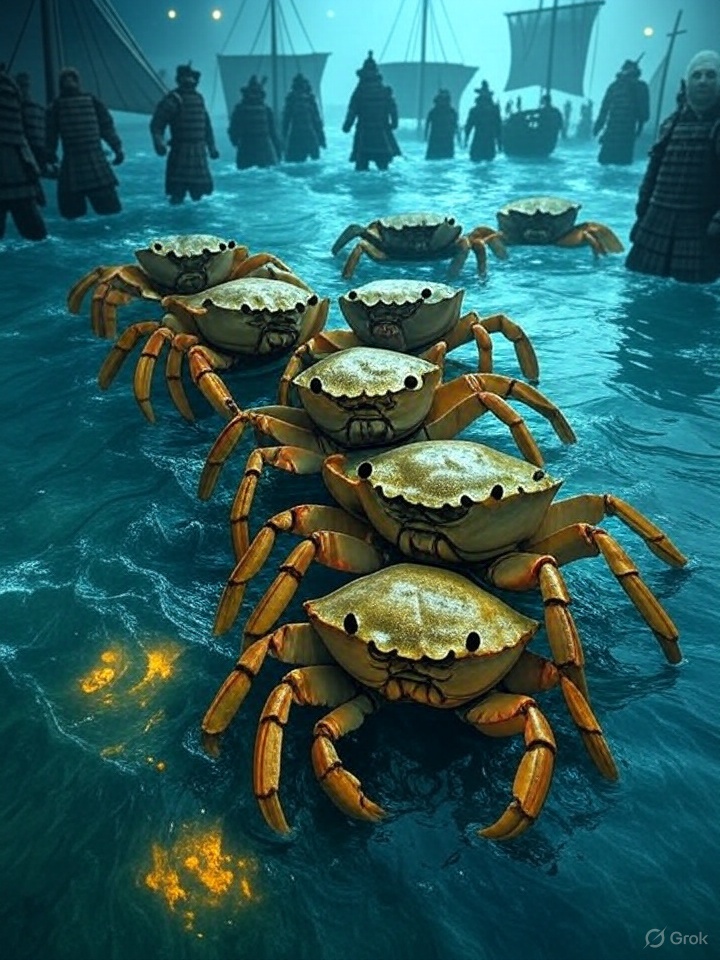
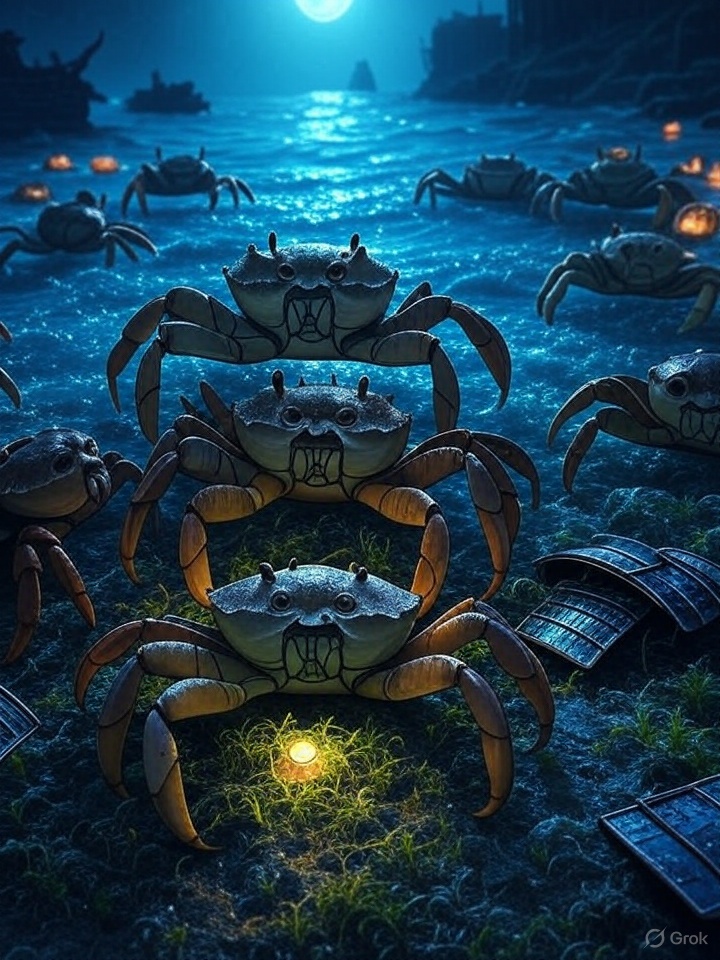

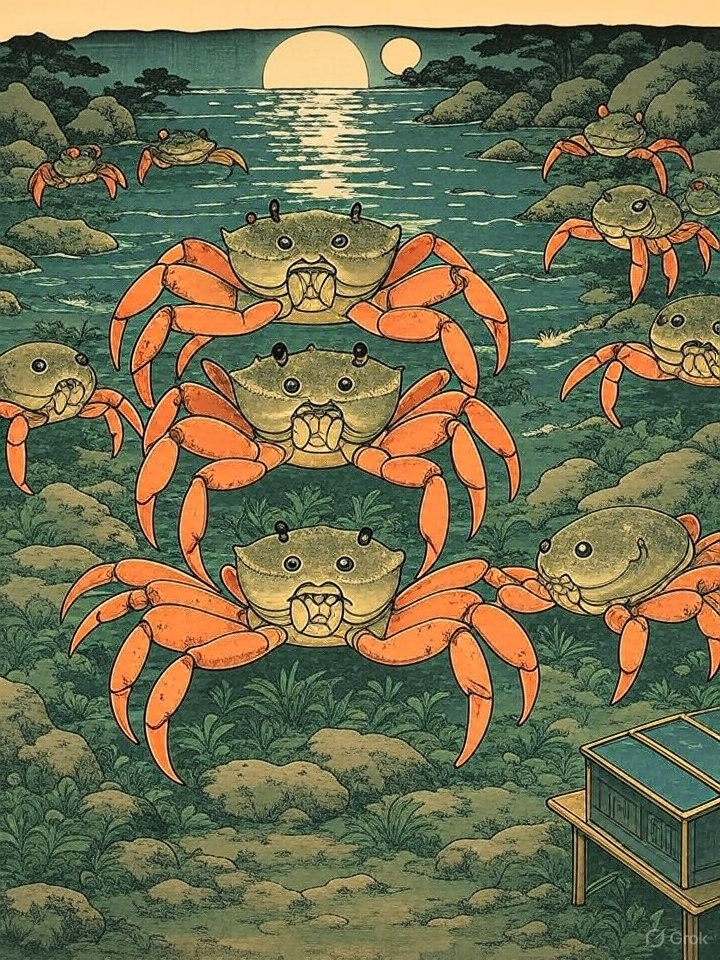
Illustrated folktale

In the whispering darkness of the Inland Sea, where the moon dipped into the waves like a silver sickle, the Heikegani crabs stirred. Their shells, like armor worn by ghosts, glinted in the fading light. The fishermen of Shimonoseki knew to tread softly around these crustaceans, lest they incur their wrath.
A lone fisherman, Takeshi, had wandered far from his village that evening. His nets were empty, and his thoughts were with his younger sister, who lay ill at home. As he gazed out upon the waves, a Heikegani caught his eye – its shell a twisted mockery of a samurai's face, eyes burning with an otherworldly fury.
Takeshi felt an eerie calm wash over him as he watched the crab scuttle across the seafloor. It was said that those who saw the Heikegani would be marked by their encounter, forever changed by the weight of history and memory. The fisherman's heart quickened, sensing a connection to his sister's plight.
As he approached the water's edge, the crab vanished into the darkness, leaving behind a whisper on the wind – a name: Kiyomori. Takeshi felt an inexplicable tug, as if the spirit of this samurai was drawing him deeper into the sea. He hesitated, yet his curiosity propelled him forward.
With each step, the water lapped at his ankles like a mournful sigh. The Inland Sea seemed to be sharing a secret with him – one that only the Heikegani knew. And when Takeshi finally submerged himself, he saw Kiyomori's face reflected in the waves: the same twisted features as the crab, but now imbued with a deep sorrow.
In this vision, Takeshi beheld the Battle of Dan-no-ura unfold – the clash of steel on steel, the cries of warriors and horses. He saw Kiyomori, once a proud leader, stumble upon the battlefield, his armor shattered by fate's cruel hand. The fisherman witnessed the weight of defeat crushing his spirit, and in that instant, understood why the Heikegani crabs still haunted these waters.
As Takeshi emerged from the sea, he felt an unseen presence – Kiyomori's restless soul – settle beside him. Together, they walked back to the village under the watchful gaze of the Inland Sea. When they reached his sister's bedside, her eyes fluttered open, and a faint smile creased her face.
In that moment, Takeshi knew the Heikegani crabs were not omens of vengeance but harbingers of peace – reminders that even the most troubled spirits can find solace in the stories of their past. The fisherman's heart swelled with compassion as he looked upon Kiyomori, now an unyielding presence by his side.
From that day on, Takeshi tended to his nets with reverence, knowing that the Heikegani crabs watched over him – and all who shared the secrets of the Inland Sea.
Yokai, oni, kitsune and spirits from folklore
Directory of Japanese board games and traditional games
Verified itch.io pixel-art gacha — fair odds, no ads
Reference guides for classic Japanese ham radios
Ancient joinery techniques of Japanese master craftsmen
Explore Japan's landmarks, shrines and hidden locations
SNES and Super Famicom collection tracker
Hoshi no Isan — a Japanese-aesthetic space RPG in development
Pixel art life sim MMO — start at zero, build your life
AI-powered educational stories for kids
Japanese-aesthetic design tokens & AI-ready UI prompts

Every day, one teaching. One moment of stillness.
Kanji, meaning, and a quiet reflection — rooted in the philosophy
behind Japan's forests, seasons, and sacred silences.
Content Warning: This website explores Japanese folklore and mythological beings—including yokai, oni, and other supernatural entities—that may be frightening to younger audiences or sensitive viewers. All material is presented for educational and cultural appreciation only. Viewer discretion is advised.
Parents and guardians are encouraged to preview content before sharing it with children. By continuing to use JapaneseMythicalCreatures.com, you acknowledge and accept this advisory.
Copyright © 2026 Japanese Mythical Creatures • All Rights Reserved.