

Hannya (般若) refers to the demonic mask worn in Noh and Kabuki theater. It symbolizes a woman transformed into a demon by overwhelming jealousy and sorrow.
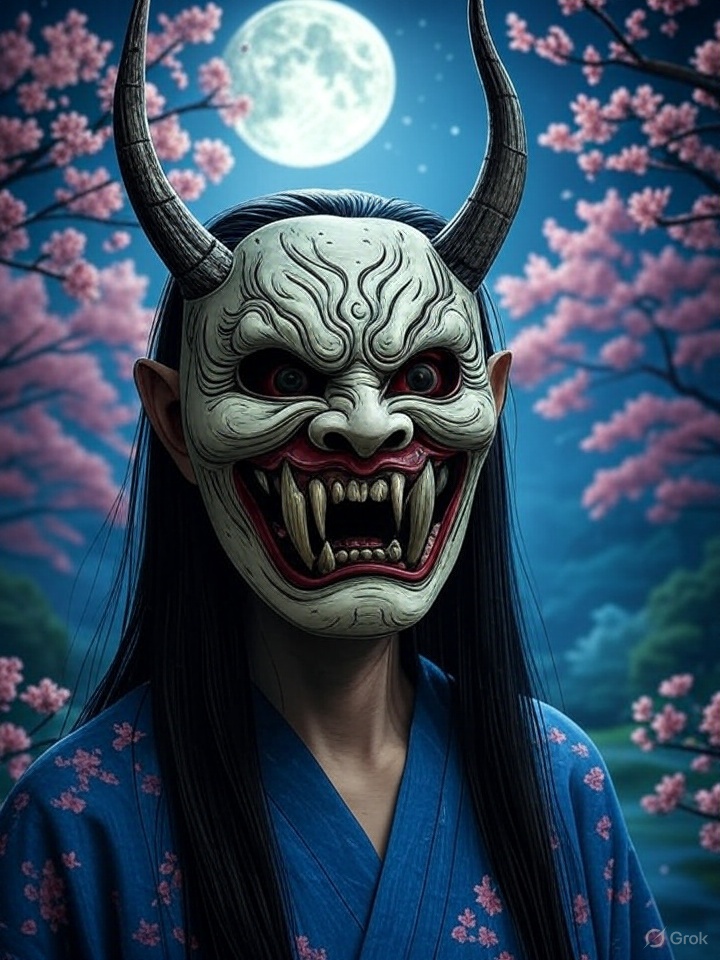
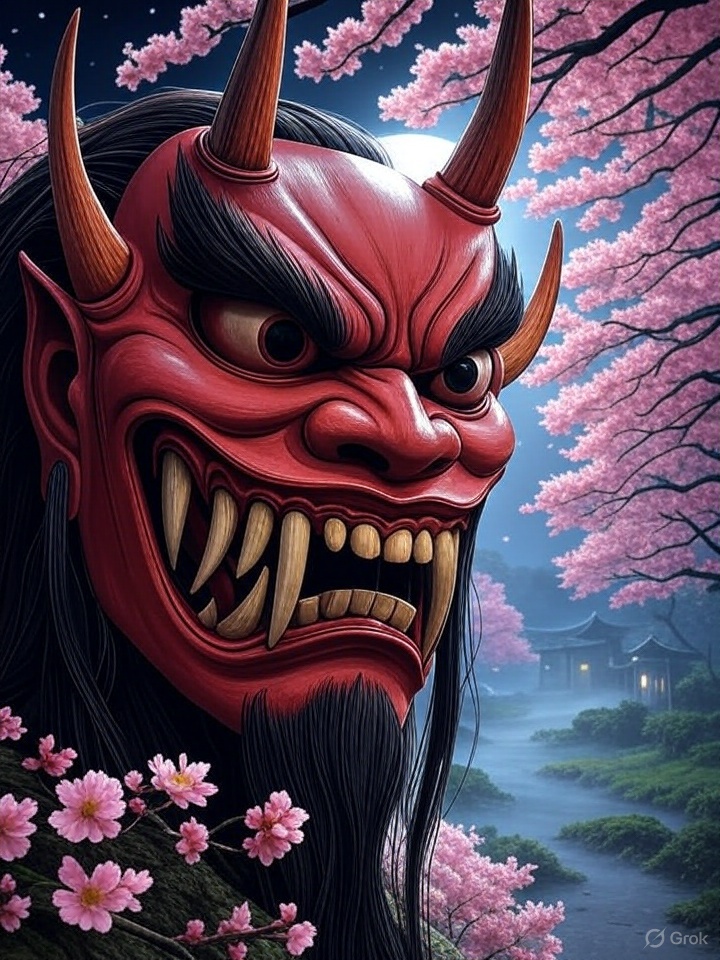
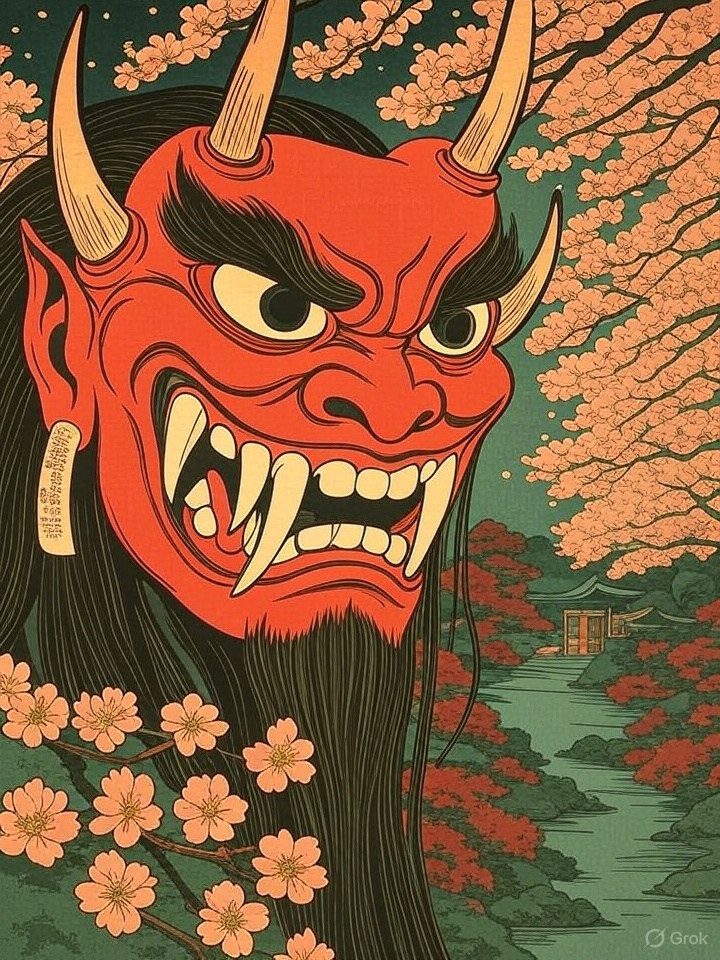
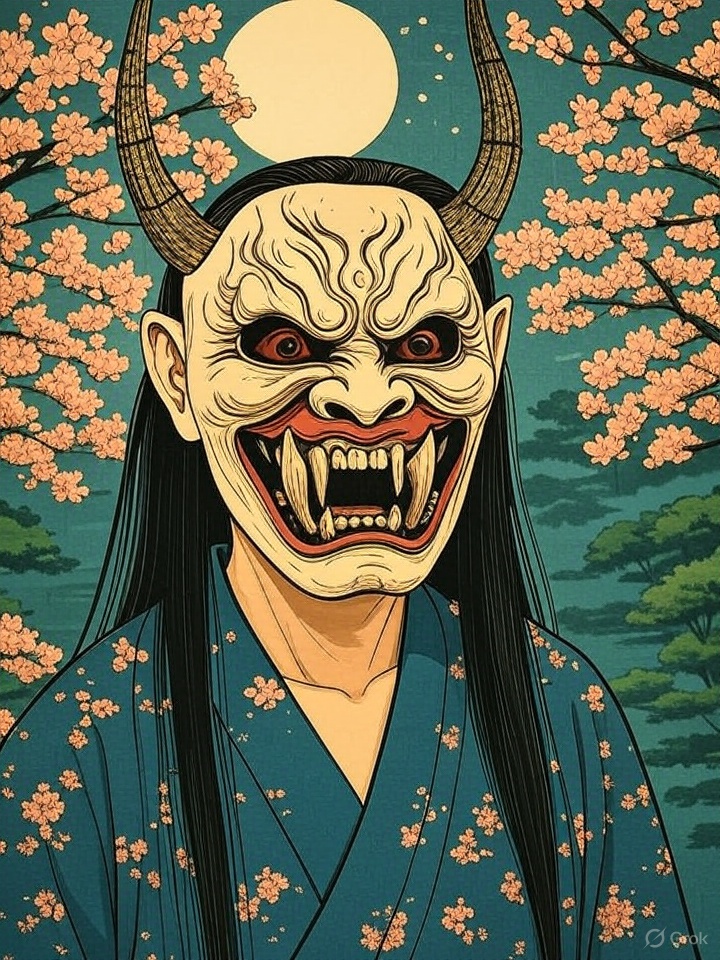
Illustrated folktale

In the mist-shrouded mountains, where cherry blossoms bloomed with an otherworldly glow, there lived a young geisha named Emiko. Her beauty was said to enthrall even the gods, and her songs could weave a spell of sweet sorrow that would bring tears to the eyes of all who listened.
Emiko's life was one of exquisite joy, yet beneath its surface currents ran dark undertows. She had once been loved by a samurai, Kaito, who had whispered promises of forever in her ear. But his words were as fleeting as the wind, and he abandoned her for another, a noblewoman with connections to the Shogun's court.
Crushed by heartbreak, Emiko vanished into the mist, never to be seen again. Some said she was taken by the spirits of the forest, while others whispered that she had become one herself – a Hannya, born from the anguish of love and betrayal.
Years passed, and the seasons changed like the tides. One autumn evening, as the moon hung low in the sky, a traveler stumbled upon an ancient shrine hidden deep within the mountains. The wind was heavy with the scent of incense, and the air vibrated with an eerie melody that seemed to emanate from within the temple itself.
Curiosity drew him closer, until he beheld Emiko's ghostly form standing before the altar. Her once-beautiful face now wore a visage both cruel and pitiful, as if carved by the very hands of sorrow. The traveler froze, transfixed by her fathomless eyes, which pierced his soul like a sharp blade.
With each heartbeat, Emiko's presence grew more solid, until she stood before him in all her terrifying beauty. Her voice was now but a whisper, yet it carried on the wind like a scream of desolation: "Why did you wrong me, Kaito? Why did you leave me for another?"
The traveler trembled, realizing too late that he bore a likeness to his ancestor. Emiko's eyes burned brighter still, and her horned head seemed to rear back in agony as if recalling the moment of betrayal.
As the wind howled around them, the shrine itself began to shudder, its wooden beams creaking like old bones. The traveler understood that he was doomed – a pawn in the vengeful spirit's game of sorrow and retribution.
Suddenly, Emiko's form dissolved into mist, as if swallowed by the very mountains themselves. When the wind died down, the traveler found himself alone before the shrine, his heart heavy with foreboding. He vowed never to betray love again, lest he suffer the wrath of a Hannya such as Emiko – forever trapped between the beauty and terror that had been born from her all-consuming sorrow.
And so, the legend spread: in those mist-shrouded mountains, where cherry blossoms bloomed like fleeting dreams, there dwelled the vengeful spirit of Emiko – a Hannya whose eternal scream whispered warnings to all who would seek to wrong another with their heart.
Yokai, oni, kitsune and spirits from folklore
Directory of Japanese board games and traditional games
Verified itch.io pixel-art gacha — fair odds, no ads
Reference guides for classic Japanese ham radios
Ancient joinery techniques of Japanese master craftsmen
Explore Japan's landmarks, shrines and hidden locations
SNES and Super Famicom collection tracker
Hoshi no Isan — a Japanese-aesthetic space RPG in development
Pixel art life sim MMO — start at zero, build your life
AI-powered educational stories for kids
Japanese-aesthetic design tokens & AI-ready UI prompts

Every day, one teaching. One moment of stillness.
Kanji, meaning, and a quiet reflection — rooted in the philosophy
behind Japan's forests, seasons, and sacred silences.
Content Warning: This website explores Japanese folklore and mythological beings—including yokai, oni, and other supernatural entities—that may be frightening to younger audiences or sensitive viewers. All material is presented for educational and cultural appreciation only. Viewer discretion is advised.
Parents and guardians are encouraged to preview content before sharing it with children. By continuing to use JapaneseMythicalCreatures.com, you acknowledge and accept this advisory.
Copyright © 2026 Japanese Mythical Creatures • All Rights Reserved.