

Gyūki (牛鬼) is another name for Ushi-oni, a monstrous yokai from western Japan. The term translates to "ox demon" or "ox ogre."
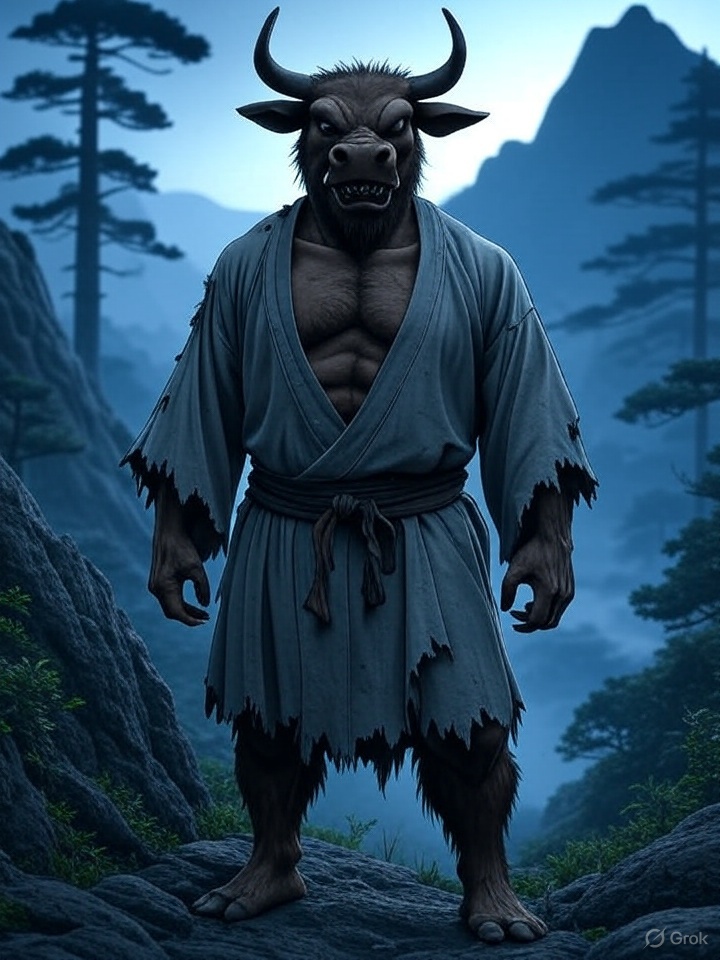
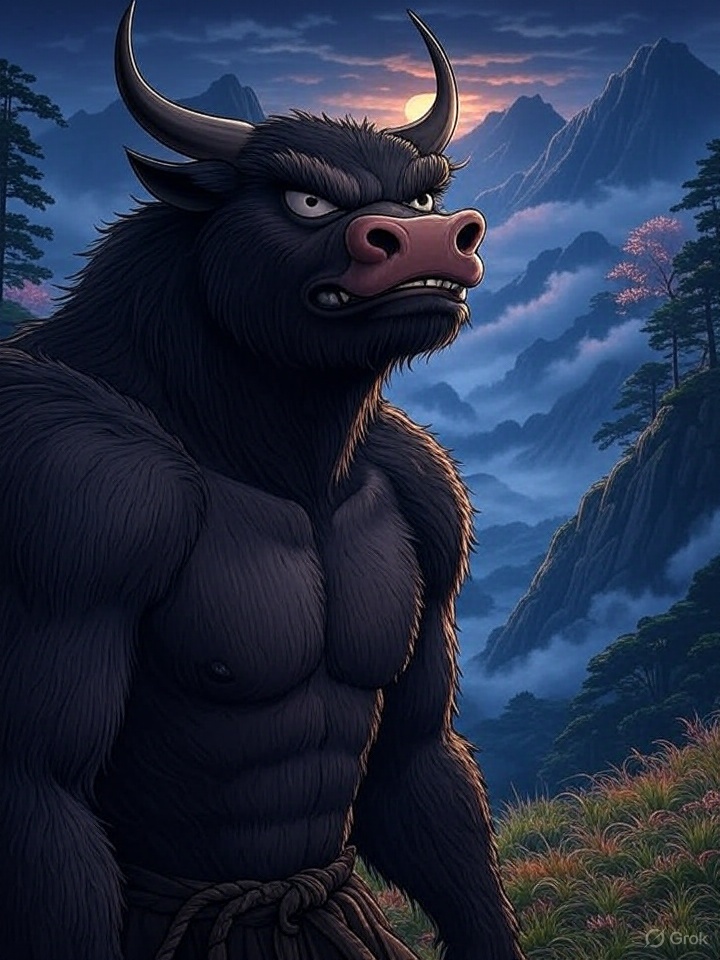
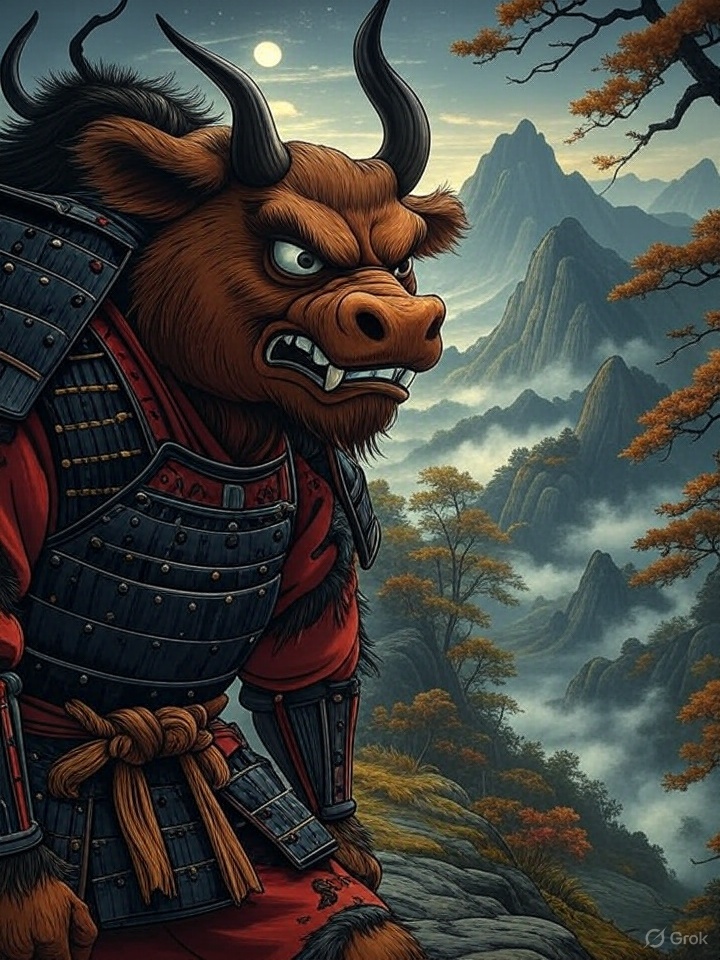
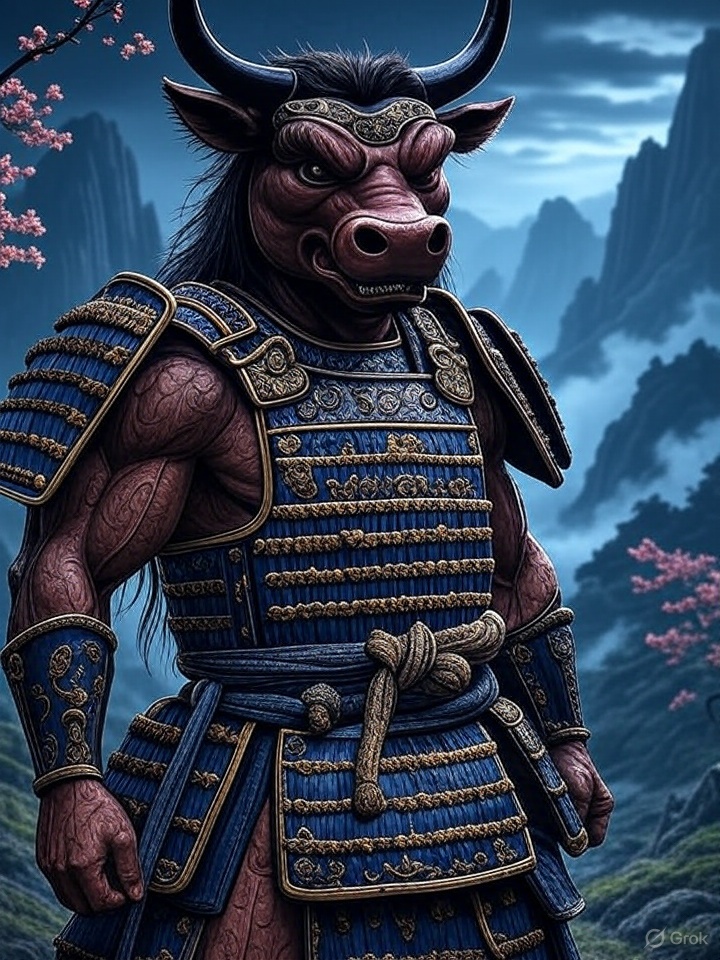
Illustrated folktale

In the mist-shrouded valleys of Shikoku's eastern coast, where the mountains meet the sea, there lived an elderly fisherman named Kaito. He was a humble soul, known for his kind heart and unwavering dedication to the tides. For generations, Kaito's family had sailed the waters, their boats returning with each new dawn laden with fresh catch.
But as the years went by, whispers began to spread of a creature that stalked the coast. Its name was whispered in terror: Gyūki, the ox-headed monster. Those who crossed paths with it spoke only of its malevolent presence, like a shadow on the water. Some said it breathed noxious fumes, while others claimed it cursed those who dared to venture near.
One autumn evening, as Kaito navigated his worn boat through the misty veil that shrouded the coastline, he spotted something amiss. A faint plume of smoke wafted from a cave hidden within the rocks, and Kaito sensed an eerie presence lurking beneath. The Gyūki, it seemed, had risen.
As the old fisherman drew closer to shore, his lantern casting eerie shadows on the waves, the air grew thick with an acrid stench. It was as if the very earth itself was exhaling its fury. Kaito's eyes watered, and he shielded them with a hand, but still he saw it: the Gyūki's head, an ox-like visage with horns that twisted towards the sky like living vines.
With each beat of his heart, the creature seemed to grow more enormous, its form blurring into something grotesque. Kaito felt the ground tremble beneath his feet as the Gyūki's tail lashed across the water, creating a maelstrom that churned the sea into froth. The old fisherman knew he had to act – for the safety of his family and the people who depended on him.
Kaito fumbled in his robes for the sacred token passed down through generations: a small wooden carving adorned with intricate symbols of protection. As he clutched it tightly, a surge of courage flowed through him. He began to chant the words of an ancient prayer, one whispered by his ancestors when facing such terrors.
The Gyūki's gaze fixed upon Kaito, its eyes burning like hot coals as it let out a deafening roar. The air grew thick with noxious fumes, and the old fisherman stumbled back, covering his face. Yet he continued to chant, his voice steady despite the chaos surrounding him.
Slowly, the winds died down, and the waves stilled. The Gyūki's form began to waver, its presence receding like a departing storm. As Kaito finished his prayer, a warm breeze rustled through the valley, carrying with it the sweet scent of autumn leaves. When he opened his eyes once more, the creature had vanished into the mists.
From that day on, fishermen and villagers alike spoke of Kaito's bravery in the face of the Gyūki's fury. Though some claimed to have seen the monster reappear on distant shores, its power seemed to wane with each passing season, as if it too felt the calming influence of the elderly fisherman's prayer. As for Kaito, he continued to tend to his nets and sail the waters, a symbol of hope against the primal fears that lurked within the shadows of Shikoku's rugged coast.
Yokai, oni, kitsune and spirits from folklore
Directory of Japanese board games and traditional games
Verified itch.io pixel-art gacha — fair odds, no ads
Reference guides for classic Japanese ham radios
Ancient joinery techniques of Japanese master craftsmen
Explore Japan's landmarks, shrines and hidden locations
SNES and Super Famicom collection tracker
Hoshi no Isan — a Japanese-aesthetic space RPG in development
Pixel art life sim MMO — start at zero, build your life
AI-powered educational stories for kids
Japanese-aesthetic design tokens & AI-ready UI prompts

Every day, one teaching. One moment of stillness.
Kanji, meaning, and a quiet reflection — rooted in the philosophy
behind Japan's forests, seasons, and sacred silences.
Content Warning: This website explores Japanese folklore and mythological beings—including yokai, oni, and other supernatural entities—that may be frightening to younger audiences or sensitive viewers. All material is presented for educational and cultural appreciation only. Viewer discretion is advised.
Parents and guardians are encouraged to preview content before sharing it with children. By continuing to use JapaneseMythicalCreatures.com, you acknowledge and accept this advisory.
Copyright © 2026 Japanese Mythical Creatures • All Rights Reserved.