

Gangi-kozō (岸小僧) translates to “Pier Boy” or “Harbor Lad,” a yokai known for haunting waterside areas and devouring fish.
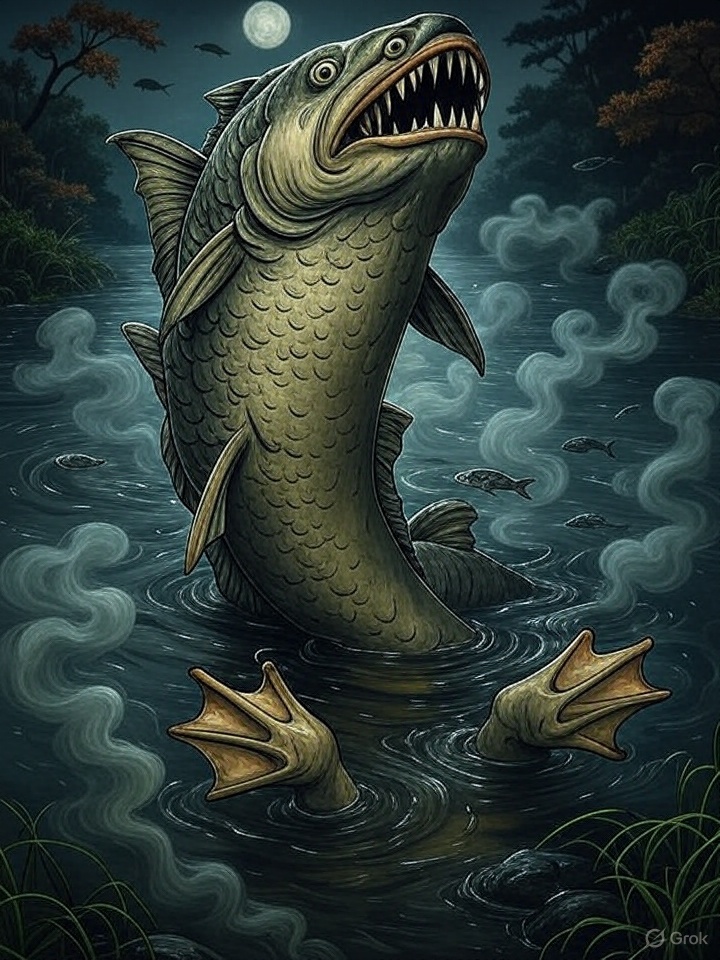
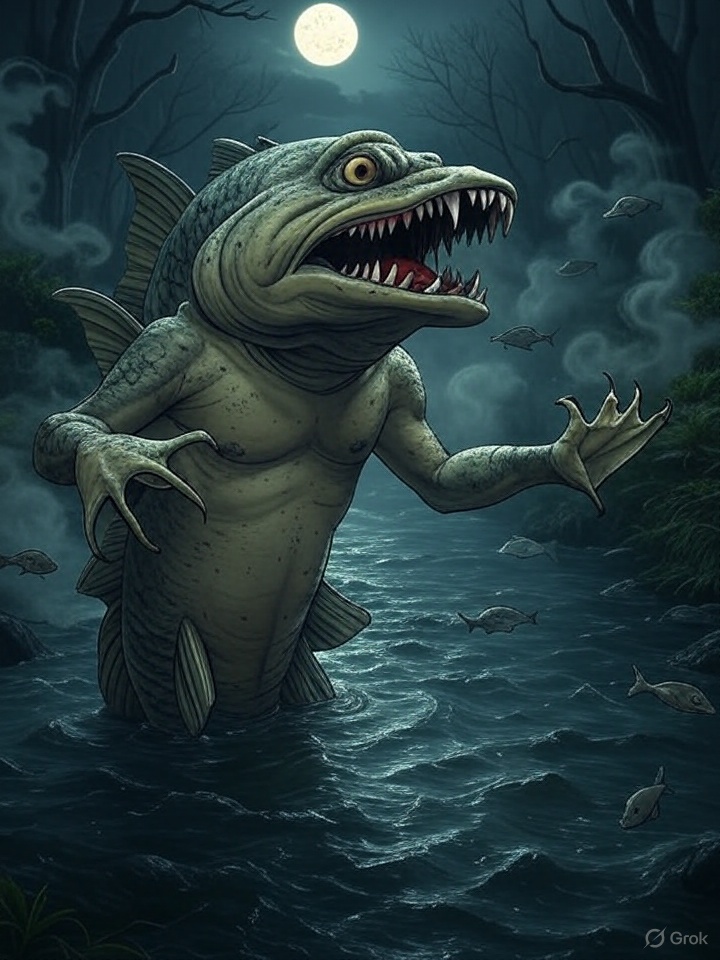
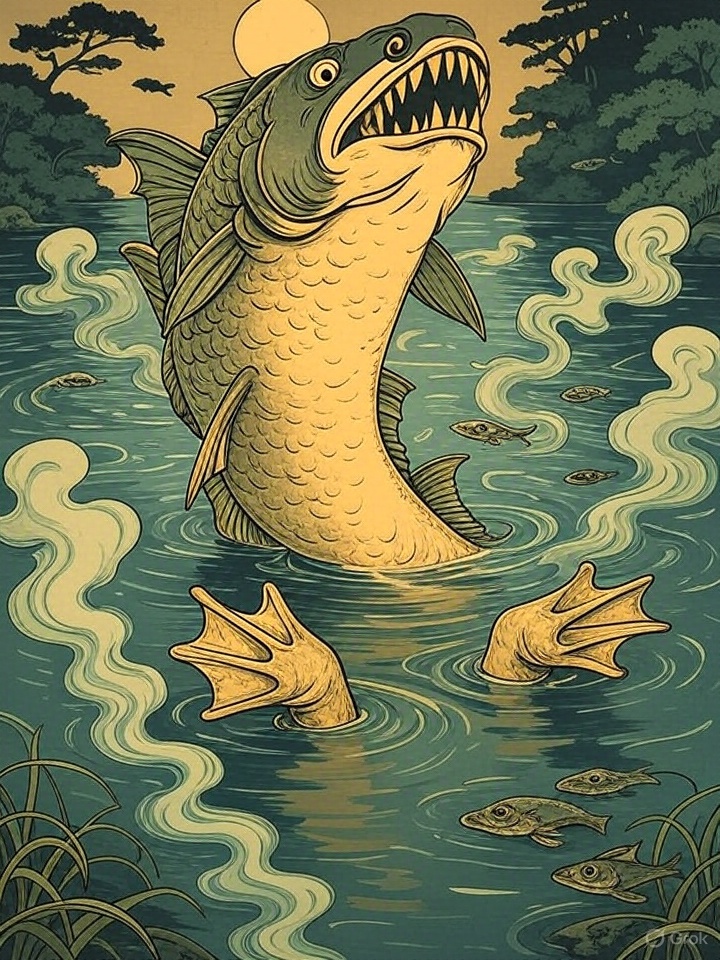
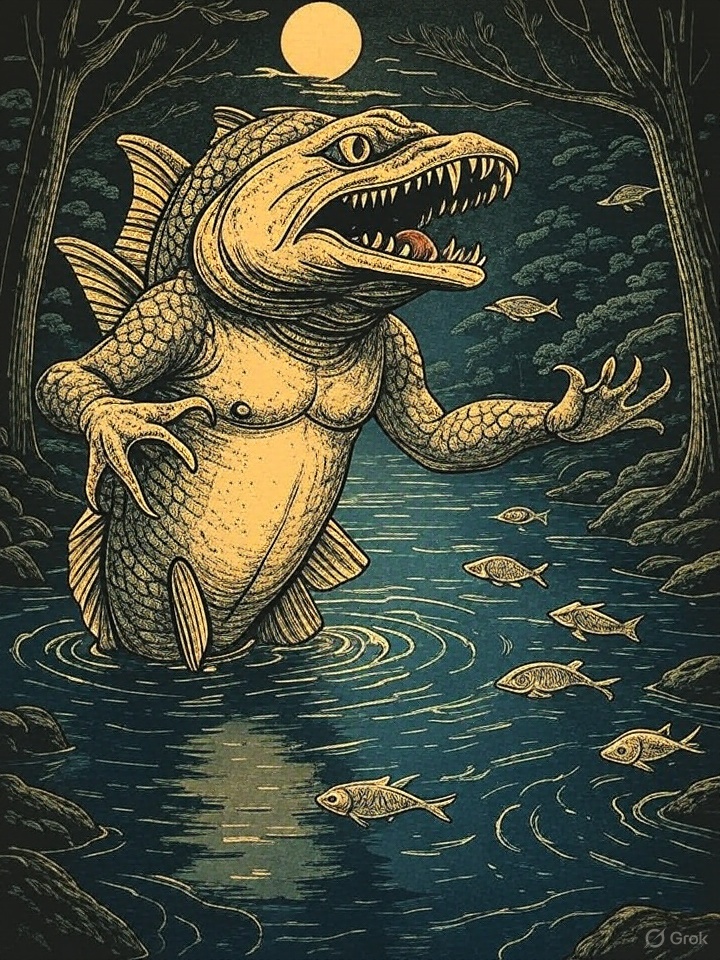
Illustrated folktale

In the sleepy fishing village of Katsuragi, where the misty dawn rose over the tranquil waters, there lived an elderly fisherman named Hiroshi. He had spent his life on those very waves, and knew them like a familiar friend. Yet, as he grew older, he began to sense that something was amiss.
Fish were vanishing from their nets, not just one or two, but scores of them, leaving the villagers to wonder if the great fish gods themselves had turned against them. Some claimed to have seen a glimpse of a small, mischievous figure flitting about the piers at dawn and dusk. They called it Gangi-kozō, a name that sent shivers down the spines of even the bravest villagers.
Hiroshi's own son, Taro, had recently fallen ill with a fever that seemed to stem from the damp air near the river. The old fisherman knew that his family had been warned about this strange creature for as long as anyone could remember: it was said that Gangi-kozō drew its power from the water itself, and those who crossed its path were marked by misfortune.
One fateful morning, Hiroshi decided to confront the Gangi-kozō once and for all. As he approached the river's edge, where a faint mist swirled about his ankles, he noticed that the air was heavy with an otherworldly energy. He called out softly into the fog, asking the creature why it stole from their nets and caused harm to their families.
A moment passed before Hiroshi saw a faint outline take shape in front of him: Gangi-kozō, no larger than his child's hand, its bulging eyes gazing up at him with an unnerving intensity. The creature's skin was slick with dew-kissed scales that glistened like moonstones.
"Why do you trouble us?" Hiroshi asked, his voice steady despite the tremble in his heart.
Gangi-kozō cocked its head to one side, and spoke in a tiny voice, "I feed on what's abundant. But there's something wrong with your waters, old fisherman – something dark. You've forgotten the delicate balance, and it's caused me to grow restless."
With that, the creature vanished into the fog as quickly as it appeared.
As Hiroshi stood stunned, trying to comprehend the meaning behind Gangi-kozō's words, a sudden gust of wind swept across the piers, sending fishing nets snapping free. A small school of silvery fish darted out from beneath the pier and swam frantically back into the depths. The villagers watched in awe as if possessed by some unseen force.
Hiroshi realized that Gangi-kozō was not a monster to be feared, but rather an omen – a guardian tasked with maintaining harmony between humans and the waters they exploited. Its mischief was a warning sign, urging them to respect the natural balance and replenish what had been lost.
From that day on, Hiroshi's family made it their duty to ensure that no more fish fell prey to careless nets or overzealous fishing practices. And though Taro eventually recovered from his illness, he never forgot the eerie encounter with Gangi-kozō by the river, which taught him and all who heard of it a valuable lesson about respecting Japan's mysterious waters.
Yokai, oni, kitsune and spirits from folklore
Directory of Japanese board games and traditional games
Verified itch.io pixel-art gacha — fair odds, no ads
Reference guides for classic Japanese ham radios
Ancient joinery techniques of Japanese master craftsmen
Explore Japan's landmarks, shrines and hidden locations
SNES and Super Famicom collection tracker
Hoshi no Isan — a Japanese-aesthetic space RPG in development
Pixel art life sim MMO — start at zero, build your life
AI-powered educational stories for kids
Japanese-aesthetic design tokens & AI-ready UI prompts

Every day, one teaching. One moment of stillness.
Kanji, meaning, and a quiet reflection — rooted in the philosophy
behind Japan's forests, seasons, and sacred silences.
Content Warning: This website explores Japanese folklore and mythological beings—including yokai, oni, and other supernatural entities—that may be frightening to younger audiences or sensitive viewers. All material is presented for educational and cultural appreciation only. Viewer discretion is advised.
Parents and guardians are encouraged to preview content before sharing it with children. By continuing to use JapaneseMythicalCreatures.com, you acknowledge and accept this advisory.
Copyright © 2026 Japanese Mythical Creatures • All Rights Reserved.