

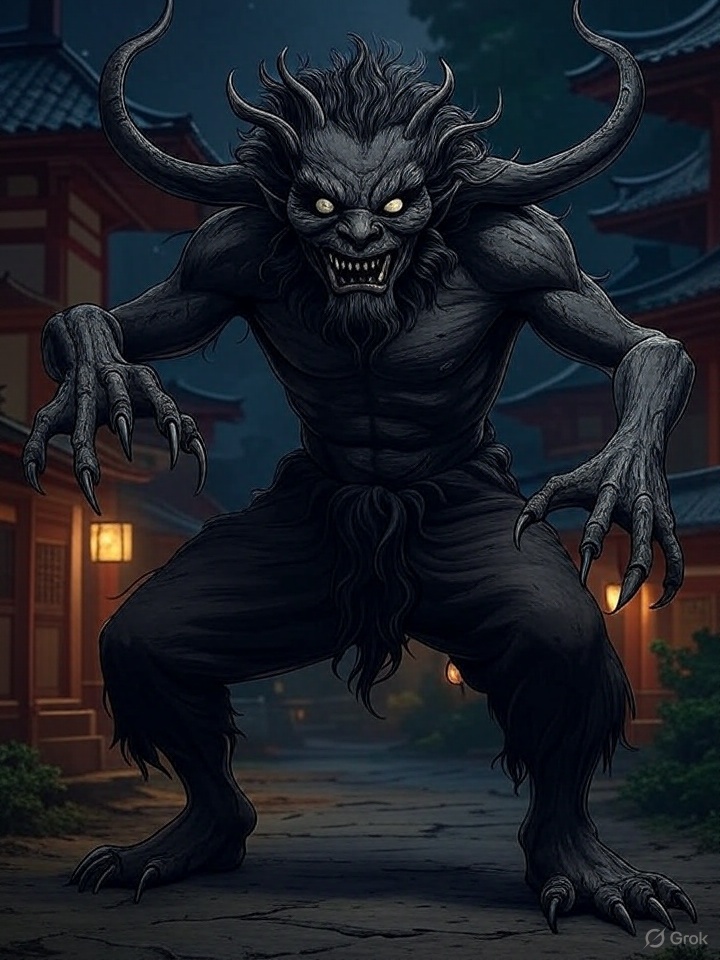
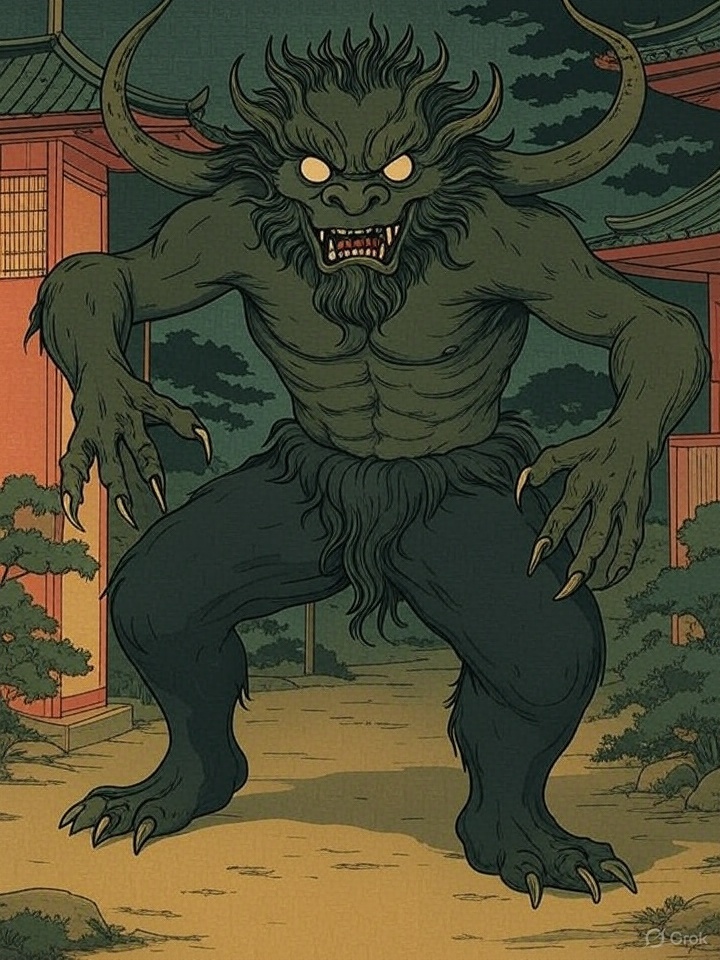
Gagoze (元興寺) is named after Gangō-ji Temple in Nara, where the legend originates. It refers to the demon that once terrorized the temple grounds and its young monks.
Illustrated folktale

In the misty hours before dawn, when the temple's lanterns flickered with a soft, ethereal glow, the novice Kaito would often take his morning walk among the trees. The quiet stillness of those moments soothed his soul, and he felt closest to the Buddha in the silence.
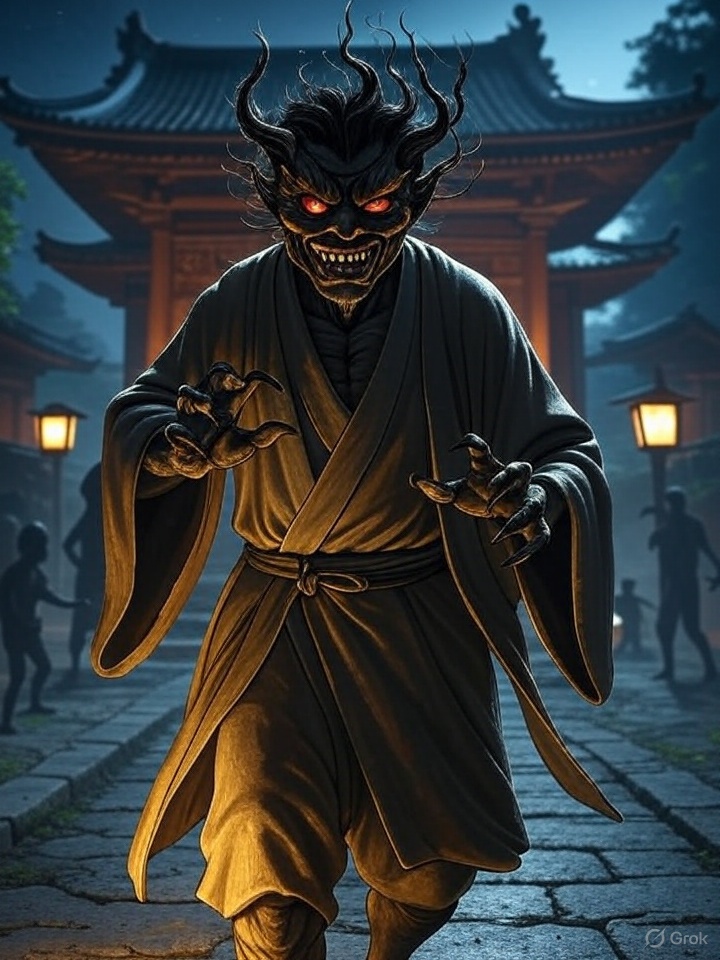
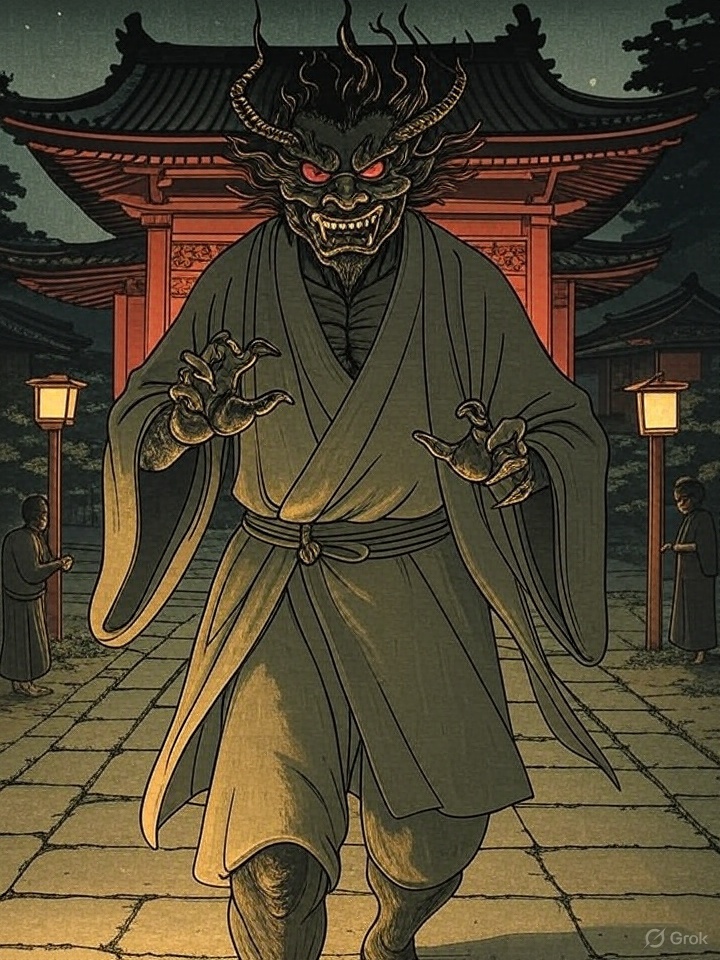
It was on one such evening that he first saw it: a fleeting glimpse of a twisted figure darting between the pillars. Its face seemed to burn with an otherworldly light, like a lantern left unattended on a winter's night. Kaito quickened his pace, but the apparition vanished into the shadows.
For several nights, the novice heard whispers and scurrying footsteps outside his cell. He tried to ignore it, focusing on his devotions, but the feeling of being watched grew unbearable. One evening, as he prepared for bed, he saw the creature more clearly: its long arms ended in razor-sharp claws, and its eyes glowed like embers from a dying fire.
Kaito knew then that this was no ordinary spirit. It stalked the temple, preying on young monks who ventured out alone at night. He decided to confront it, not as a hero, but as one who wished to protect his brothers in faith.
The following evening, Kaito waited beside a pillar, his heart pounding like a drum in the stillness. The creature emerged from the darkness, its eyes fixed on the novice. This time, however, Kaito stood firm, his hands clasped together in prayer. The gagoze halted before him, its hot breath reeking of decay and corruption.
As their gazes met, something unexpected happened: a gust of wind swept through the temple, extinguishing lanterns and sending scrolls fluttering to the ground. When the air stilled, Kaito saw that the creature's form had begun to shift. Its limbs elongated and twisted, its face contorting into an inhuman visage.
The gagoze was not a monster; it was a manifestation of the darkness within the temple itself – a reminder that evil lurked in every corner, waiting to pounce on the unwary. Kaito's resolve hardened as he beheld the creature's true form: a twisted mockery of a monk, clad in tattered robes and bound by unseen chains.
Without flinching, the novice reached out with his own hands, grasping the gagoze's wrists. "You are not the darkness," he said firmly. "You are its prisoner."
As Kaito spoke, the temple itself seemed to shudder and tremble. The wind picked up once more, extinguishing the last embers of the creature's malevolent energy. When the air stilled, only silence remained.
The novice stood tall, his heart still pounding with fear but also with a sense of triumph. He had faced the gagoze, unmasked its true form, and shone light upon its dark, twisted soul. And in that moment, he knew that he was not alone – for in the temple's depths, a presence stirred, watching over him, guiding him through the darkness.
From that night on, Kaito walked among the pillars with an unshakeable sense of protection and resolve. He had faced the gagoze, and emerged victorious, his spirit strengthened by the encounter. And as he continued to walk among the temple's shadows, he knew that the true battle was not against monsters or evil spirits, but within himself – a struggle for enlightenment, for compassion, and for the courage to shine light into every dark corner of the soul.
Yokai, oni, kitsune and spirits from folklore
Directory of Japanese board games and traditional games
Verified itch.io pixel-art gacha — fair odds, no ads
Reference guides for classic Japanese ham radios
Ancient joinery techniques of Japanese master craftsmen
Explore Japan's landmarks, shrines and hidden locations
SNES and Super Famicom collection tracker
Hoshi no Isan — a Japanese-aesthetic space RPG in development
Pixel art life sim MMO — start at zero, build your life
AI-powered educational stories for kids
Japanese-aesthetic design tokens & AI-ready UI prompts

Every day, one teaching. One moment of stillness.
Kanji, meaning, and a quiet reflection — rooted in the philosophy
behind Japan's forests, seasons, and sacred silences.
Content Warning: This website explores Japanese folklore and mythological beings—including yokai, oni, and other supernatural entities—that may be frightening to younger audiences or sensitive viewers. All material is presented for educational and cultural appreciation only. Viewer discretion is advised.
Parents and guardians are encouraged to preview content before sharing it with children. By continuing to use JapaneseMythicalCreatures.com, you acknowledge and accept this advisory.
Copyright © 2026 Japanese Mythical Creatures • All Rights Reserved.