

Bunbuku Chagama (分福茶釜) is a classic Japanese folktale involving a tanuki (raccoon dog) who shapeshifts into a chagama, or tea kettle, to repay the kindness of a poor man.
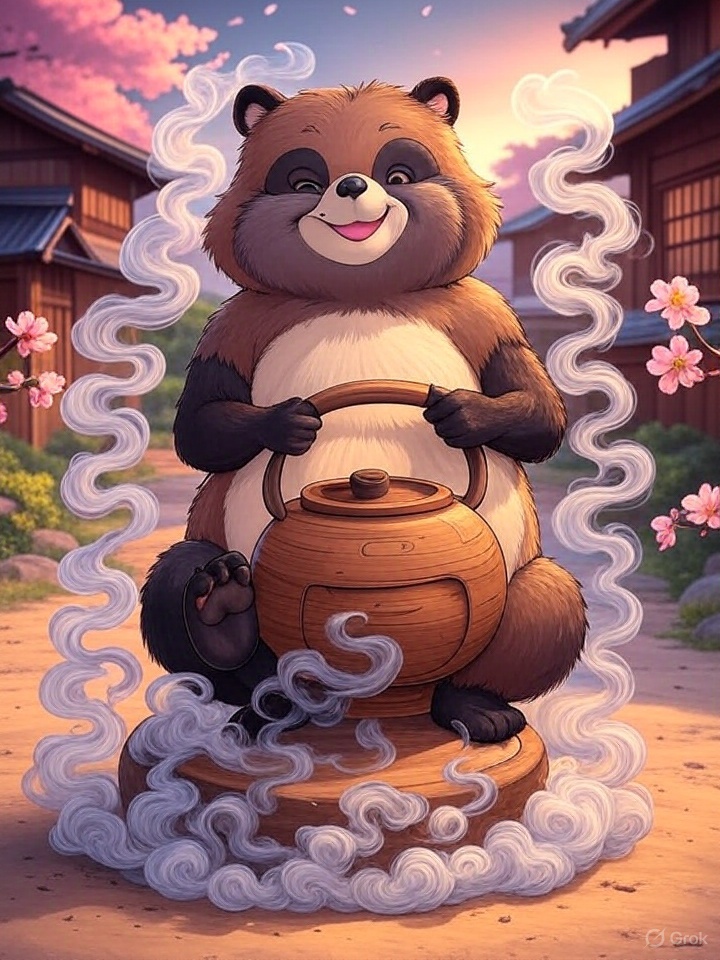
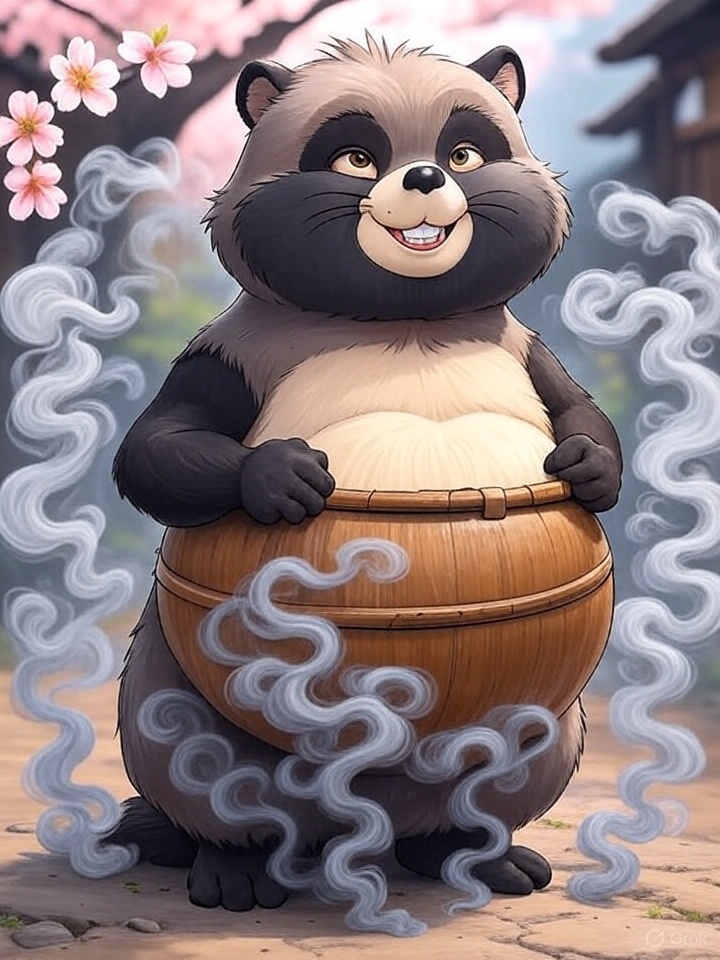
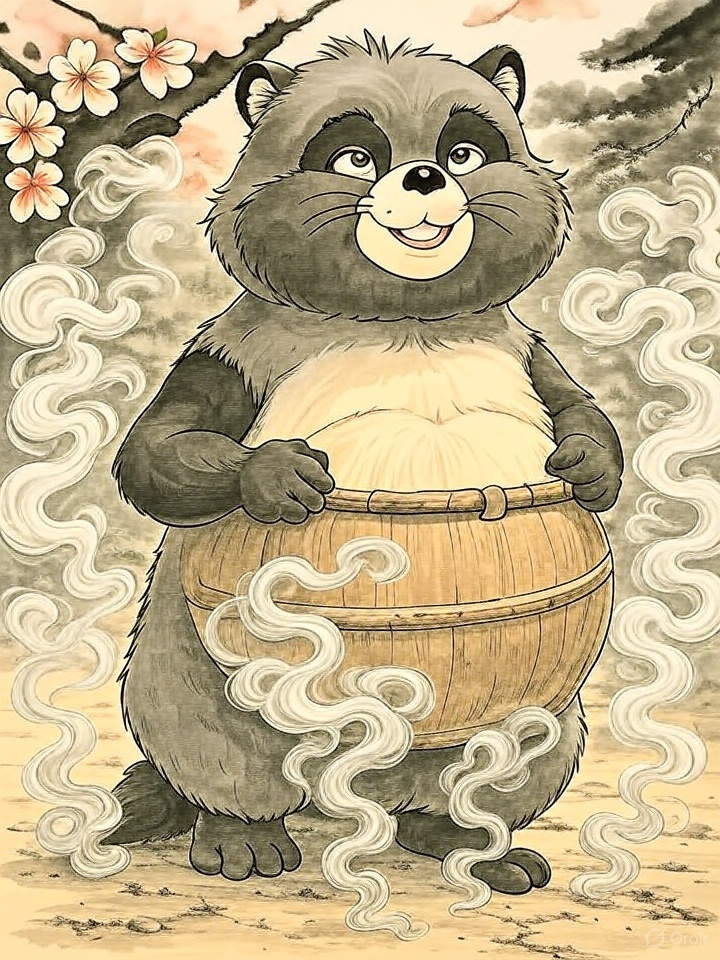

Illustrated folktale

In the misty hills of Gunma's mountainside, where cherry blossoms bloomed in the spring and autumn leaves rustled with golden whispers, stood the venerable Morinji Temple. Its halls had witnessed countless seasons, and its priests whispered secrets to the wind.
It was said that deep within the temple's heart, a small, wondrous creature resided – the Bunbuku Chagama. Some claimed it was nothing more than an enchanted tea kettle, forged by ancient hands, imbued with magic that danced like fireflies on summer evenings.
One day, during the warmest month of summer, a young traveling performer stumbled upon Morinji's sacred grounds. His name was Jiro, and his troupe had been performing acrobatic feats across the provinces for years. With his agile body and quick wit, he balanced on tightropes, mesmerizing audiences with each daring act.
As fate would have it, Jiro encountered an old temple priest, who offered him a peculiar task: to care for the Morinji's sacred tea kettle, said to possess mystical powers. The kettle, in its present form, appeared as nothing more than a plain, bronze vessel – but those attuned to the whispers of the ancient could sense the hidden energies within.
Jiro, intrigued by the mystery surrounding the kettle, accepted the task. As he carefully polished the kettle's surface, subtle changes began to manifest: his ears grew longer, and a fluffy tail curled around its handle. It was then that the true nature of the Bunbuku Chagama revealed itself – a mischievous tanuki, kind-hearted yet full of whimsy.
Under Jiro's care, the tanuki transformed back into its kettle form, allowing it to perform remarkable feats alongside him. The duo astounded onlookers with their balancing acts and conjured laughter from children and adults alike. Together, they brought a smile to Morinji's grounds, an era of peace unfolding beneath their feet.
With each performance, the magic of gratitude spread through the temple. Patrons offered gifts, not solely out of charity but because they felt blessed by the performances that connected them to something greater than themselves.
Years went by as Jiro and the Bunbuku Chagama's bond deepened. Eventually, they decided it was time for a quiet life, away from the stage lights. They settled in a secluded forest near Morinji, where ancient trees whispered secrets of their own. There, the tanuki and Jiro cultivated their love for nature, watching cherry blossoms bloom and autumn leaves dance.
One spring morning, while observing the new buds sprouting, the Bunbuku Chagama transformed into its kettle form once more. As it nestled into a small clearing, surrounded by greenery, it revealed one final message: gratitude was not only expressed in kind words or offerings but also through actions that brought balance and harmony to all living beings.
The enchanted kettle's legacy remained at Morinji Temple – a reminder of the bond forged between the magical creature and its devoted caretaker. To those who listen closely, whispers of their story still echo among the misty hills, as petals of cherry blossoms gently fall like golden dust upon the earth.
Yokai, oni, kitsune and spirits from folklore
Directory of Japanese board games and traditional games
Verified itch.io pixel-art gacha — fair odds, no ads
Reference guides for classic Japanese ham radios
Ancient joinery techniques of Japanese master craftsmen
Explore Japan's landmarks, shrines and hidden locations
SNES and Super Famicom collection tracker
Hoshi no Isan — a Japanese-aesthetic space RPG in development
Pixel art life sim MMO — start at zero, build your life
AI-powered educational stories for kids
Japanese-aesthetic design tokens & AI-ready UI prompts

Every day, one teaching. One moment of stillness.
Kanji, meaning, and a quiet reflection — rooted in the philosophy
behind Japan's forests, seasons, and sacred silences.
Content Warning: This website explores Japanese folklore and mythological beings—including yokai, oni, and other supernatural entities—that may be frightening to younger audiences or sensitive viewers. All material is presented for educational and cultural appreciation only. Viewer discretion is advised.
Parents and guardians are encouraged to preview content before sharing it with children. By continuing to use JapaneseMythicalCreatures.com, you acknowledge and accept this advisory.
Copyright © 2026 Japanese Mythical Creatures • All Rights Reserved.