

Binbōgami (貧乏神) literally means “poverty deity” or “spirit of misfortune.” Despite being called a god, it is often feared as a bringer of bad luck and financial ruin.
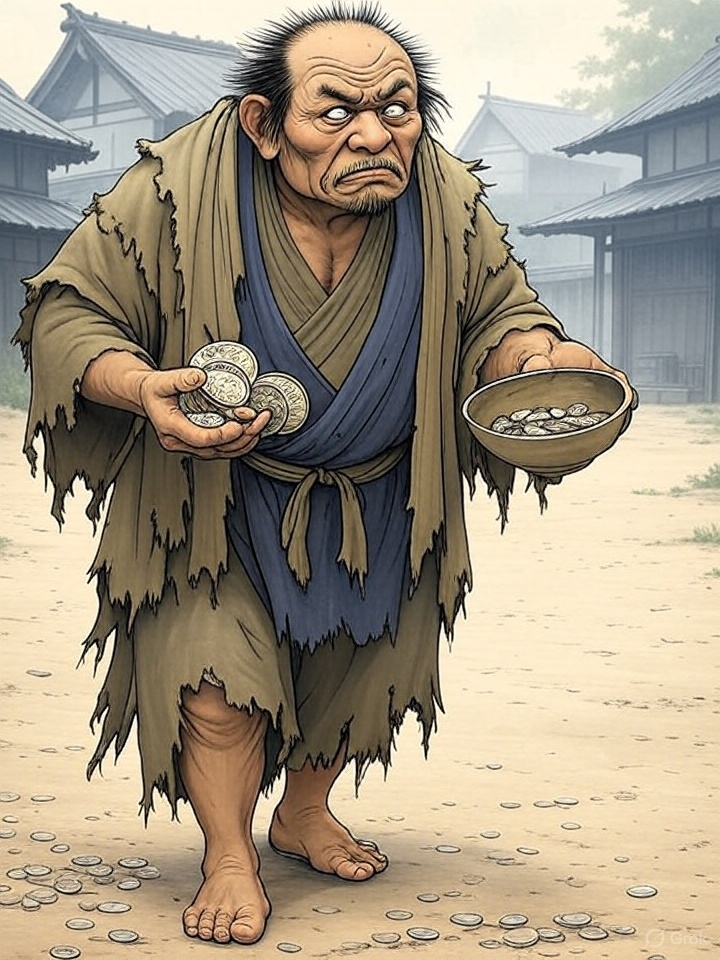
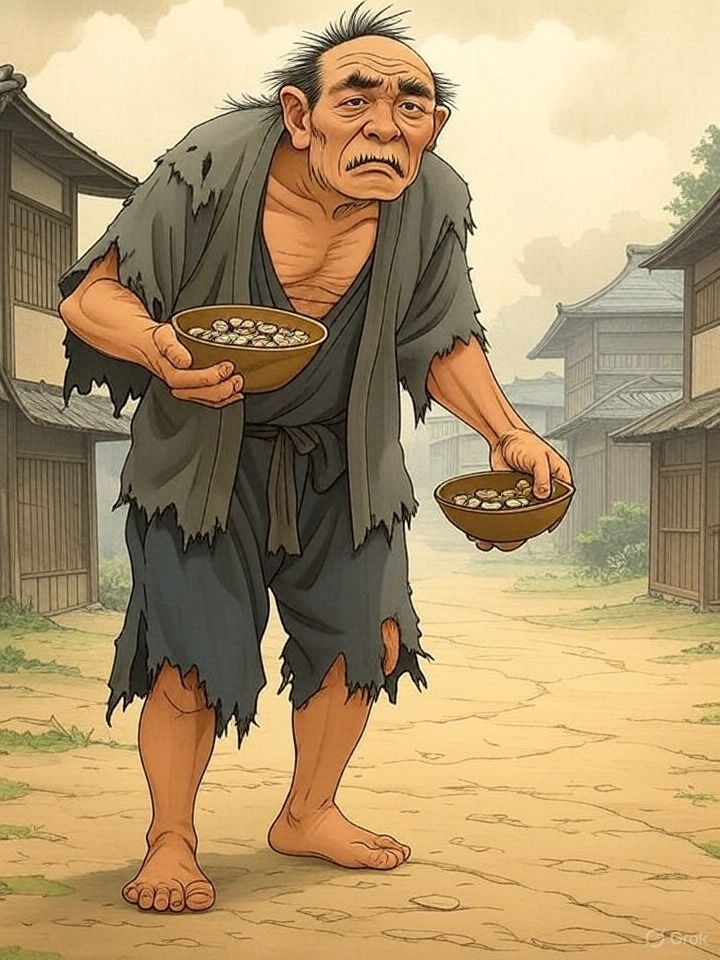
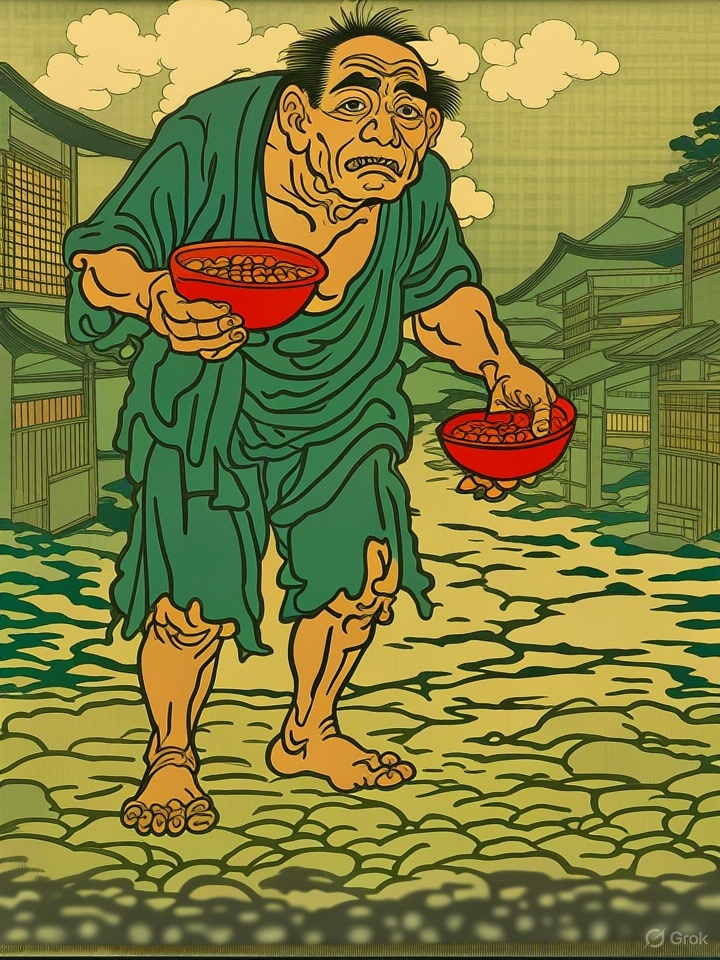
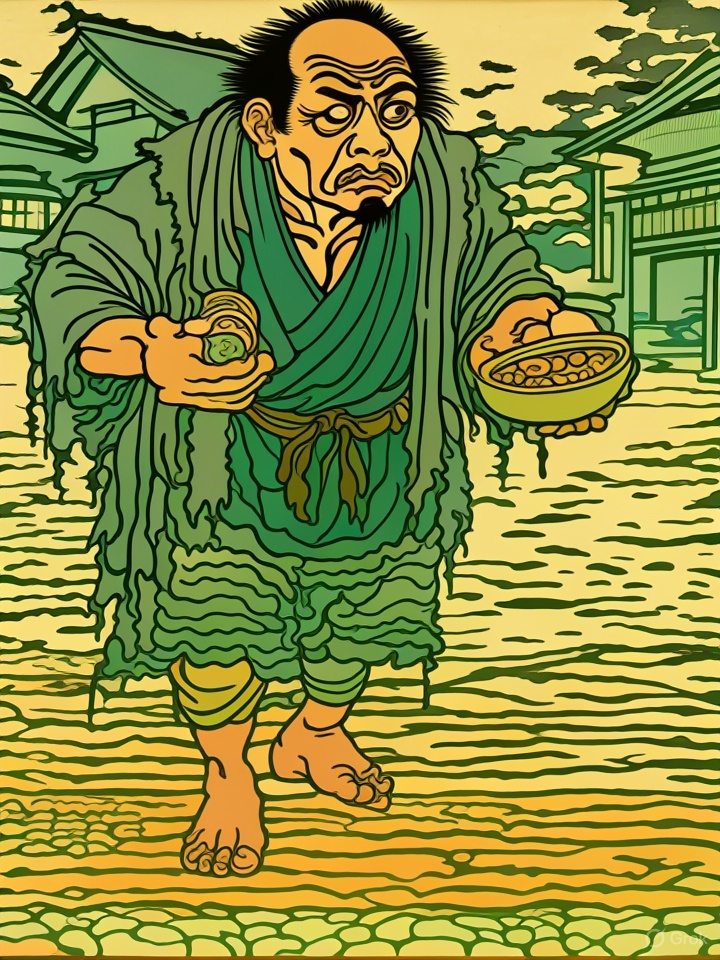
Illustrated folktale

In a small village nestled between two great mountains, there lived a young apprentice named Kaito. He was tasked with cleaning the family's humble tea shop, where travelers and locals alike would stop to rest and warm their hands by the fire.
Kaito, however, took his duties lightly. He'd often forget to sweep the floors or polish the wooden counter, leaving dust and dirt to accumulate like a thick layer of frost on a winter morning. His master, old Manjiro, would scold him good-naturedly, but Kaito just shrugged it off, thinking, "What's the harm in a bit of grime?"
One evening, as the sun dipped behind the mountains and painted the sky with hues of crimson and gold, Kaito dozed off by the fire. A sudden chill ran down his spine, and he opened his eyes to find an old man standing before him. The stranger's face was smeared with dirt, and his tattered clothes seemed woven from the same threads as the shadows themselves.
"Who are you?" Kaito asked, trying to hide his fear behind a brave tone.
"I am Binbōgami," the old man replied, his voice like the rustling of dry leaves. "I have come to claim this place as my own, for it is said that the house which harbors neglect and uncleanliness shall be mine to rule."
Kaito tried to brush off the feeling, thinking it mere superstition, but Binbōgami began to manifest his power. Flies swarmed the tea shop, buzzing angrily around Kaito's head as he tried to shoo them away. Crows perched on the windowsill, their black silhouettes stark against the fading light.
As night deepened, Kaito awoke to find his family's belongings scattered about, and the tea shop in disarray. His mother was ill with fever, and his father sat slumped over his account book, tears streaming down his face as he recounted lost sales and dwindling resources. Binbōgami cackled, a dry, mirthless sound that sent shivers through Kaito's bones.
The young apprentice realized too late the error of his ways. He had invited this malevolent spirit into their home, ignoring the whispered warnings from old Manjiro about the dangers of neglect and greed. Binbōgami reveled in their misfortune, feeding on their suffering like a ghoul on carrion.
Determined to rid himself of the pestilential presence, Kaito threw open the doors of the tea shop, letting in a blast of cold mountain air. He scoured every inch of the premises with hot water and soap, washing away not only the dirt but also his own guilt and complacency. As he scrubbed, Binbōgami's hold began to weaken.
One by one, the flies flew out into the night, and the crows took flight, disappearing into the darkness like dark omens vanishing before dawn. The old man himself vanished into thin air, leaving behind only a faint scent of dust and decay. Kaito's family slowly regained their health and fortunes, and from that day on, the young apprentice approached his duties with renewed zeal.
In the stillness of the night, as he swept the floors one last time before retiring to bed, Kaito caught a glimpse of Binbōgami in the mirror, an old man's face reflected back at him – but this time, it was his own visage that stared out from the shadows. He smiled wryly, knowing that he had confronted not just a malevolent spirit, but also the specter of his own laziness and neglect. And so, with every sweep and every polish, Kaito drove Binbōgami further into the recesses of his heart, keeping him at bay through kindness, gratitude, and a clean, tidy home.
Yokai, oni, kitsune and spirits from folklore
Directory of Japanese board games and traditional games
Verified itch.io pixel-art gacha — fair odds, no ads
Reference guides for classic Japanese ham radios
Ancient joinery techniques of Japanese master craftsmen
Explore Japan's landmarks, shrines and hidden locations
SNES and Super Famicom collection tracker
Hoshi no Isan — a Japanese-aesthetic space RPG in development
Pixel art life sim MMO — start at zero, build your life
AI-powered educational stories for kids
Japanese-aesthetic design tokens & AI-ready UI prompts

Every day, one teaching. One moment of stillness.
Kanji, meaning, and a quiet reflection — rooted in the philosophy
behind Japan's forests, seasons, and sacred silences.
Content Warning: This website explores Japanese folklore and mythological beings—including yokai, oni, and other supernatural entities—that may be frightening to younger audiences or sensitive viewers. All material is presented for educational and cultural appreciation only. Viewer discretion is advised.
Parents and guardians are encouraged to preview content before sharing it with children. By continuing to use JapaneseMythicalCreatures.com, you acknowledge and accept this advisory.
Copyright © 2026 Japanese Mythical Creatures • All Rights Reserved.