

Ato-oi-kozō (後追い小僧) translates to “the little boy who follows behind.” This yōkai is known for silently trailing people—especially when they walk alone through temples, graveyards, or wooded paths.
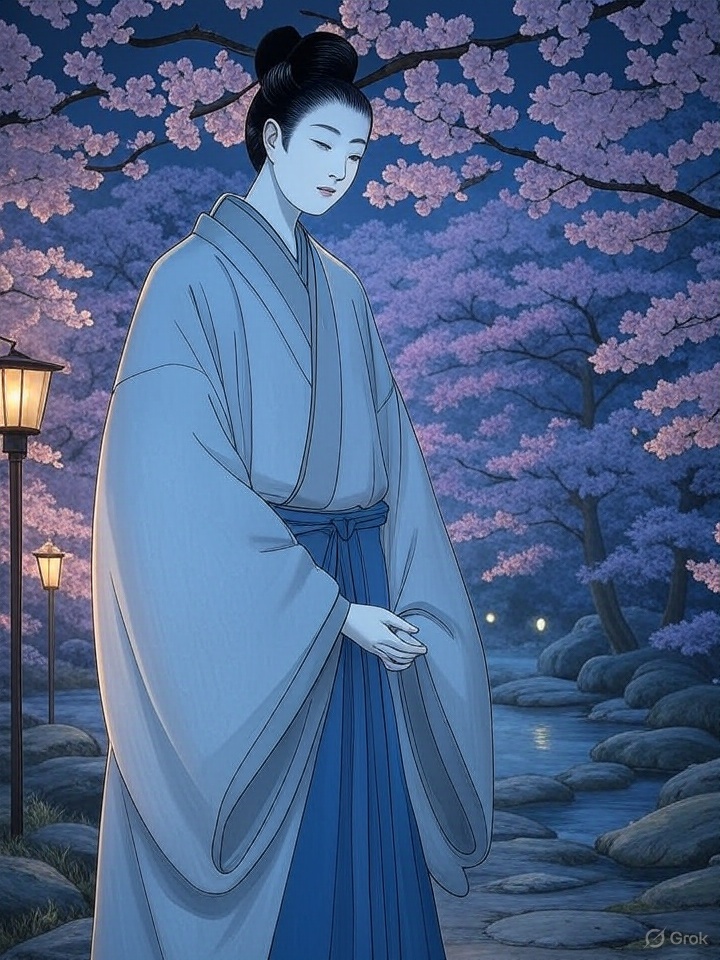
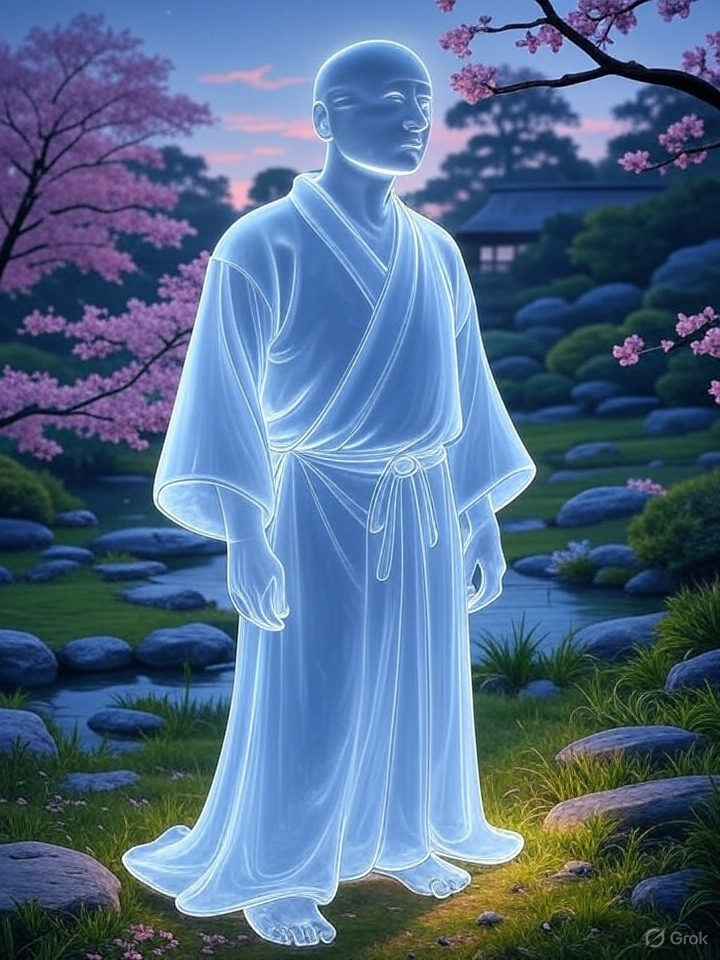
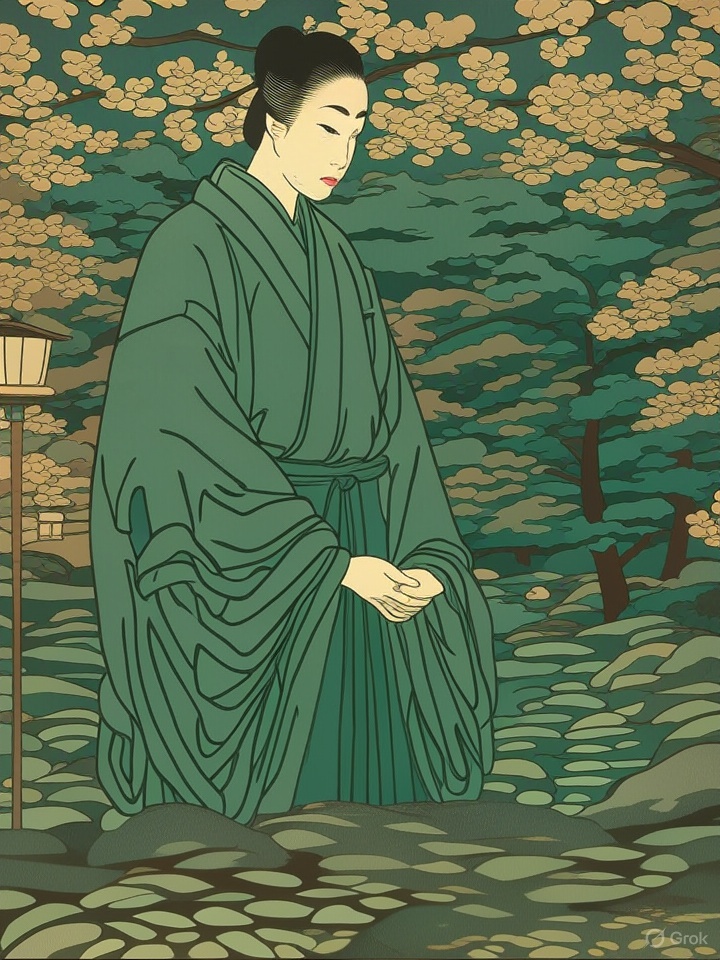

Illustrated folktale

In the mist-shrouded hills of Akakawa village, where cedars swayed like sentinels and cherry blossoms bloomed with an ethereal glow, there lived an elderly monk named Kaito. He was a man of great wisdom and compassion, renowned for his ability to sense the presence of the unseen. For years, he had tended to the sacred grounds of the old temple, listening to the whispers of the wind and the creaking of ancient trees.
One evening, as the sun dipped into the horizon, casting long shadows across the landscape, Kaito began his nightly vigil. He walked along the winding path that led to the temple's entrance, reciting sutras under his breath, and scattering incense sticks to purify the air. The moon had risen high in the sky, casting a silver glow over the surroundings.
As he turned a bend in the path, Kaito sensed it – a faint presence behind him. He halted, his eyes scanning the darkness for any sign of movement. But there was none. Only the soft rustle of leaves and the distant hooting of an owl. The monk's heart stirred with unease; this was no ordinary visitor.
He quickened his pace, reciting faster incantations to ward off whatever was following him. The presence drew closer, its footsteps light as a feather, yet unmistakable in its intent to keep pace with the old monk. Kaito knew he had to confront it, not just for his own sake but for the spirit's.
He stopped at the temple gates, the heavy wooden doors creaking open like a sigh of welcome. The presence halted behind him, and in that instant, Kaito felt a shiver run down his spine. Turning around, he beheld a fleeting glimpse – a small, shadowy figure clad in tattered robes, eyes wide with longing.
For an eternity, their gazes locked. Kaito recognized the Ato-oi-kozō, a spirit of great sorrow and unfulfilled yearning. The monk's heart swelled with compassion as he understood that this lost soul sought guidance on its journey. With reverent hands, he reached out to the boy, offering him a small wooden Buddha statue from his cloak.
The Ato-oi-kozō did not resist as Kaito gently placed the statue in his hands. The spirit's eyes shone with gratitude, and for an instant, its presence dissipated like mist at dawn. But when the monk released his grip, the boy reappeared behind him, now clutching the Buddha tight.
With a final nod of understanding, the Ato-oi-kozō vanished into thin air. The wind stilled, the trees ceased their whispers, and an unsettling silence fell over Akakawa village. Kaito, though shaken, knew he had set a restless spirit free from its earthly bonds. As he returned to his temple, the moon casting its silver light upon his face, the old monk felt a sense of peace settle within him – for in guiding that lost soul, he had ensured that the thin veil between worlds remained intact.
Yokai, oni, kitsune and spirits from folklore
Directory of Japanese board games and traditional games
Verified itch.io pixel-art gacha — fair odds, no ads
Reference guides for classic Japanese ham radios
Ancient joinery techniques of Japanese master craftsmen
Explore Japan's landmarks, shrines and hidden locations
SNES and Super Famicom collection tracker
Hoshi no Isan — a Japanese-aesthetic space RPG in development
Pixel art life sim MMO — start at zero, build your life
AI-powered educational stories for kids
Japanese-aesthetic design tokens & AI-ready UI prompts

Every day, one teaching. One moment of stillness.
Kanji, meaning, and a quiet reflection — rooted in the philosophy
behind Japan's forests, seasons, and sacred silences.
Content Warning: This website explores Japanese folklore and mythological beings—including yokai, oni, and other supernatural entities—that may be frightening to younger audiences or sensitive viewers. All material is presented for educational and cultural appreciation only. Viewer discretion is advised.
Parents and guardians are encouraged to preview content before sharing it with children. By continuing to use JapaneseMythicalCreatures.com, you acknowledge and accept this advisory.
Copyright © 2026 Japanese Mythical Creatures • All Rights Reserved.